Liberal Forum
Archive
‹
Political Chat Rooms
‹
No Holds Barred Political Forum
‹
Questions for both sides. Help me reconcile these...
Questions for both sides. Help me reconcile these...
By Vegas
13 Jan 2026 10:43 am in No Holds Barred Political Forum

13 Jan 2026 1:08 pm

I addressed maduro now you go about iran =============Vegas » 13 Jan 2026, 1:50 pm » wrote: ↑ That just seems off. The evidence I see is that the sole reason for the protest is against the oppressive regime.
Also, you still didn't answer the OP's questions. I won't ask again. I hate it when people willfully avoid my questions. I won't be answering to your view until my question is addressed.
, the Trump administration imposed significant sanctions on Iran, withdrawing from the Iran nuclear deal (JCPOA) in 2018 and reimposing and adding new sanctions as part of a "maximum pressure" campaign targeting Iran's oil, finance, shipping, and military sectors. These actions reimposed sanctions lifted under the nuclear deal and targeted major Iranian banks, the Central Bank of Iran, and hundreds of individuals and entities, aiming to compel Iran to negotiate a broader agreement.
Key Actions and Sanctions:
- Withdrawal from JCPOA (2018):
The U.S. ceased participation in the Joint Comprehensive Plan of Action (JCPOA) and reimposed all U.S. sanctions that had been lifted. - "Maximum Pressure" Campaign:
This policy aimed to exert severe economic pressure on the Iranian regime. - Targeted Sectors:
Sanctions hit critical sectors like energy, shipping, shipbuilding, and finance. - Key Targets:
Specific targets included major Iranian banks, the Central Bank, and over 700 individuals, entities, vessels, and aircraft. - New Designations:
In 2019, sanctions were added to prevent top Iranian officials, including Supreme Leader Ayatollah Khamenei, from accessing the international financial system. - Military & Space:
The administration also sanctioned the Islamic Revolutionary Guard Corps (IRGC) and Iran's space agency.
13 Jan 2026 1:08 pm

Are you happy for the people? They seem to be quite jubilant.jerrab » 13 Jan 2026, 2:02 pm » wrote: ↑ it is more about the oil in venezuela and we are lucky china and russia have not struck back.
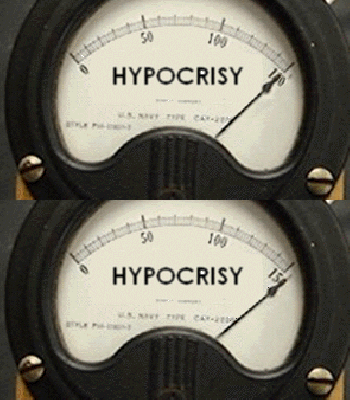
Blackvegatble's hypcorisy summed up in one post:
[/size]
Blackvegetable » 7 minutes ago » wrote: ↑7 minutes ago
Very simple questions...
From which you are running...
Blackvegetable » 7 minutes ago » wrote: ↑7 minutes ago
Very simple questions...
From which you are running...
13 Jan 2026 1:30 pm
---------------------------------------------------Vegas » 13 Jan 2026, 2:08 pm » wrote: ↑ Are you happy for the people? They seem to be quite jubilant.
- United States: In Doral, Florida ("Doralzuela"), hundreds gathered to sing the national anthem, wave flags, and express hope for their country's future.
- Chile: Over a thousand people celebrated in Santiago's Parque Almagro, with many expressing a strong desire to return home now that the regime had fallen.
- Other locations: Similar celebrations occurred in Spain, Colombia, and other parts of the world.
Inside Venezuela, the reaction has been notably different.
- Subdued Atmosphere: Footage from Caracas showed mostly empty streets, with residents staying home or waiting in long lines at supermarkets and pharmacies, seemingly afraid of potential repression or the unfolding uncertainty.
- Mixed Feelings: Some Venezuelans not in the diaspora reported mixed feelings, including a sense of relief that Maduro was gone but deep anxiety about the safety of their families and what the future held.
- Hope for the Future: Despite the caution, many in the country and abroad shared a common hope for a democratic transition and a path to stability after years of crisis that led over 7.7 million people to leave the country.
13 Jan 2026 1:32 pm
di·as·po·raVegas » 13 Jan 2026, 2:08 pm » wrote: ↑ Are you happy for the people? They seem to be quite jubilant.
/dīˈasp(ə)rə/

noun
- the dispersion or spread of a people from their original homeland.
"his parents were part of the Scots diaspora"- people who have spread or been dispersed from their homeland
==========================================
- unfolding uncertainty.
- Mixed Feelings: Some Venezuelans not in the diaspora reported mixed feelings, including a sense of relief that Maduro was gone but deep anxiety about the safety of their families and what the future held.
- Hope for the Future: Despite the caution, many in the country and abroad shared a common hope for a democratic transition and a path to stability after years of crisis that led over 7.7 million people to leave the country.
13 Jan 2026 1:46 pm
it is about the oil.Vegas » 13 Jan 2026, 2:08 pm » wrote: ↑ Are you happy for the people? They seem to be quite jubilant.
https://youtu.be/Pgwny1BiCYk?si=8JKMTV_L485-MNWS
13 Jan 2026 1:52 pm
Vegas » 13 Jan 2026, 2:08 pm » wrote: ↑ Are you happy for the people? They seem to be quite jubilant.
https://youtube.com/shorts/Le4EFIPA2TI? ... 1c7epJELx2
13 Jan 2026 2:03 pm
https://www.cnn.com/2026/01/12/americas ... latam-intlVegas » 13 Jan 2026, 2:08 pm » wrote: ↑ Are you happy for the people? They seem to be quite jubilant.
------------------------------
Venezuela’s promise last week to release “a significant number” of political prisoners is progressing far slower than many had hoped, as hundreds of families continue to wait in agony for their loved ones to be freed.Of the more than 800 people considered arbitrarily detained for political reasons, the government had released only 56 individuals as of Monday evening, according to human rights organization Penal Forum.That count is less than half of the 116 reported by Venezuelan authorities, who did not publish the identities of those freed or say which detention centers they had been released from.Venezuela began releasing high-profile prisoners on Thursday, including opposition politicians, at the demand of the United States.
It said the move was a gesture “to seek peace” with Washington days after US forces captured President Nicolás Maduro in a daring military operation.The Venezuelan government said the release of prisoners is part of a review of cases that had been initiated “voluntarily” by Maduro and is now continuing under the mandate of the acting president,
Delcy Rodríguez.The UN Fact-Finding Mission on Venezuela said Monday that it welcomed the releases, but said the numbers fell “far short” of Venezuela’s human rights obligations. It called for the immediate and unconditional release of all people being held in arbitrary detention, highlighting the trauma their families are also experiencing.“Relatives must be provided with clear and timely information about the fate, whereabouts, and legal status of their loved ones, as well as guaranteed access and regular visits,” the mission said.////////////////////////////
trump got the oil and that is all he cares about,
13 Jan 2026 3:18 pm
https://www.aljazeera.com/news/2026/1/1 ... ts-to-help
demonstrators flood Iranian streets in ongoing protests which started late last month, United States President Donald Trump has threatened military intervention, arguing that he wants to “help” protesters.He wrote in a post on his Truth Social platform on Saturday: “Iran is looking at FREEDOM, perhaps like never before. The USA stands ready to help!!!” He has since echoed those sentiments in other public statements.Recommended Stories
list of 4 itemslist 1 of 4 But ignored in his claims of wanting to help Iranians is a fact: decades of US-led sanctions against Iran, including ones that were toughened under Trump, have played a central role in the country’s economic crises that were the primary trigger for the current spate of protests.We unpack the impact of US sanctions on Iran and whether its track record in the country has been one of helping people.What is going on in Iran?
The protests in Iran started from Tehran’s Grand Bazaar on December 28, 2025, after the rial plunged to a record low against the US dollar. Shopkeepers shuttered their businesses to rally against rising prices in Iran.The protests have since spread to other provinces and have snowballed into a broader challenge to the country’s leadership.On Monday, the rial was trading at more than 1.4 million to the US dollar, a sharp decline from about 700,000 in January 2025 and approximately 900,000 in mid-2025.The plummeting currency has triggered steep inflation, with food prices 72 percent higher than last year on average.What are the US sanctions against Iran?Iran is one of the most heavily sanctioned countries in the world.
demonstrators flood Iranian streets in ongoing protests which started late last month, United States President Donald Trump has threatened military intervention, arguing that he wants to “help” protesters.He wrote in a post on his Truth Social platform on Saturday: “Iran is looking at FREEDOM, perhaps like never before. The USA stands ready to help!!!” He has since echoed those sentiments in other public statements.Recommended Stories
list of 4 itemslist 1 of 4 But ignored in his claims of wanting to help Iranians is a fact: decades of US-led sanctions against Iran, including ones that were toughened under Trump, have played a central role in the country’s economic crises that were the primary trigger for the current spate of protests.We unpack the impact of US sanctions on Iran and whether its track record in the country has been one of helping people.What is going on in Iran?
The protests in Iran started from Tehran’s Grand Bazaar on December 28, 2025, after the rial plunged to a record low against the US dollar. Shopkeepers shuttered their businesses to rally against rising prices in Iran.The protests have since spread to other provinces and have snowballed into a broader challenge to the country’s leadership.On Monday, the rial was trading at more than 1.4 million to the US dollar, a sharp decline from about 700,000 in January 2025 and approximately 900,000 in mid-2025.The plummeting currency has triggered steep inflation, with food prices 72 percent higher than last year on average.What are the US sanctions against Iran?Iran is one of the most heavily sanctioned countries in the world.
13 Jan 2026 3:22 pm
However, in 2018, during his first term, Trump announced the US withdrawal from the nuclear treaty and reimposed all sanctions on Iran that were lifted under the treaty.
In 2019, the Trump administration designated Iran’s Islamic Revolutionary Guard Corps (IRGC) a Foreign Terrorist Organization. Additionally, he imposed sanctions targeting petrochemicals, metals (steel, aluminium, copper) and senior Iranian officials. The intensifying sanctions were part of Trump’s maximum pressure campaign against Iran.
In September 2025, the UN sanctions were reimposed on Iran over its nuclear programme when the UNSC voted against permanently lifting economic sanctions on Iran.
How have these sanctions impacted Iran?
Incomes: Iran’s gross domestic product (GDP) per capita fell from more than $8,000 in 2012 to about $6,000 by 2017, and to a little above $5,000 in 2024, according to World Bank data.
The sharpest declines coincided with the reimposition and tightening of US sanctions under Trump’s campaign from 2018 onwards, which squeezed oil exports and access to global finance.
Oil exports and revenue: Iran’s oil exports fell by 60-80 percent after US sanctions were reimposed, stripping the government of tens of billions of dollars in annual revenue.
Ir
In 2019, the Trump administration designated Iran’s Islamic Revolutionary Guard Corps (IRGC) a Foreign Terrorist Organization. Additionally, he imposed sanctions targeting petrochemicals, metals (steel, aluminium, copper) and senior Iranian officials. The intensifying sanctions were part of Trump’s maximum pressure campaign against Iran.
In September 2025, the UN sanctions were reimposed on Iran over its nuclear programme when the UNSC voted against permanently lifting economic sanctions on Iran.
How have these sanctions impacted Iran?
Incomes: Iran’s gross domestic product (GDP) per capita fell from more than $8,000 in 2012 to about $6,000 by 2017, and to a little above $5,000 in 2024, according to World Bank data.
The sharpest declines coincided with the reimposition and tightening of US sanctions under Trump’s campaign from 2018 onwards, which squeezed oil exports and access to global finance.
Oil exports and revenue: Iran’s oil exports fell by 60-80 percent after US sanctions were reimposed, stripping the government of tens of billions of dollars in annual revenue.
Ir
13 Jan 2026 3:27 pm
Sanctions have certainly had a grave impact, but I believe it’s the way the corrupt elite have benefitted from them that has hurt ordinary people most,” Maryam Alemzadeh, an associate professor in history and politics of Iran at the University of Oxford, told Al Jazeera.
“They have created new opportunities for corruption and given rise to – sometimes nameless and faceless – moguls that have swallowed the country’s economy.”
How does this impact people?
Iran’s middle class – common people – have paid the highest price, say experts.
In a research paper published last year, Mohammad Reza Farzanegan, an economist at Germany’s Marburg University, and Nader Habibi, an economist at Brandeis University, built a “virtual Iran” using data from similar countries to illustrate the impact of the sanctions between 2012 and 2019.
They found that starting in 2012, Iran’s middle class began to shrink dramatically.
During the period, the sanctions caused an average 17 percentage points gap between the potential and actual size of Iran’s middle class.
After Trump launched his maximum pressure campaign against Iran, the middle class shrank even more dramatically. The middle class was now 28 percentage points smaller than it would have been in the absence of sanctions.
Farzanegan told Al Jazeera that sanctions are what have led to the collapse of the rial. “This decimated the purchasing power of fixed-salary earners like teachers and civil servants, many of whom fell from the middle class into the category of ‘working poor’.”
Purchasing power is the value of money, measured by the quantity of goods and services a unit of currency can buy.
“As formal businesses contracted, workers were pushed into ‘vulnerable employment’ and informal labour, characterised by lower pay and a lack of social protections,” Farzanegan added.
A research article published in 2020 shows that UN sanctions are directly associated with a marked drop in life expectancy: on average, sanctioned countries lose about 1.2 to 1.4 years, with women bearing a disproportionate share of this decline.
The impact on Iran is in keeping with the broader deadly impact of sanctions: since 1970, US and EU sanctions have killed 38 million people – equivalent to the population of Ukraine or Poland – according to research published last year.
Sanctions have disrupted medicine imports in Iran, leading to price spikes of up to 300 percent for some essential drugs such as anti-seizure medications, according to research published in 2023.
Sanctions have also taken a toll on the environment in Iran. Farzanegan explained that sanctions have hindered the adoption of cleaner fuel standards and slowed green innovation, leading to higher levels of air pollution in cities like Tehran.
“This has had a measurable negative impact on children’s cognitive abilities.”
“They have created new opportunities for corruption and given rise to – sometimes nameless and faceless – moguls that have swallowed the country’s economy.”
How does this impact people?
Iran’s middle class – common people – have paid the highest price, say experts.
In a research paper published last year, Mohammad Reza Farzanegan, an economist at Germany’s Marburg University, and Nader Habibi, an economist at Brandeis University, built a “virtual Iran” using data from similar countries to illustrate the impact of the sanctions between 2012 and 2019.
They found that starting in 2012, Iran’s middle class began to shrink dramatically.
During the period, the sanctions caused an average 17 percentage points gap between the potential and actual size of Iran’s middle class.
After Trump launched his maximum pressure campaign against Iran, the middle class shrank even more dramatically. The middle class was now 28 percentage points smaller than it would have been in the absence of sanctions.
Farzanegan told Al Jazeera that sanctions are what have led to the collapse of the rial. “This decimated the purchasing power of fixed-salary earners like teachers and civil servants, many of whom fell from the middle class into the category of ‘working poor’.”
Purchasing power is the value of money, measured by the quantity of goods and services a unit of currency can buy.
“As formal businesses contracted, workers were pushed into ‘vulnerable employment’ and informal labour, characterised by lower pay and a lack of social protections,” Farzanegan added.
A research article published in 2020 shows that UN sanctions are directly associated with a marked drop in life expectancy: on average, sanctioned countries lose about 1.2 to 1.4 years, with women bearing a disproportionate share of this decline.
The impact on Iran is in keeping with the broader deadly impact of sanctions: since 1970, US and EU sanctions have killed 38 million people – equivalent to the population of Ukraine or Poland – according to research published last year.
Sanctions have disrupted medicine imports in Iran, leading to price spikes of up to 300 percent for some essential drugs such as anti-seizure medications, according to research published in 2023.
Sanctions have also taken a toll on the environment in Iran. Farzanegan explained that sanctions have hindered the adoption of cleaner fuel standards and slowed green innovation, leading to higher levels of air pollution in cities like Tehran.
“This has had a measurable negative impact on children’s cognitive abilities.”
13 Jan 2026 5:02 pm

jerrab » 13 Jan 2026, 2:02 pm » wrote: ↑ it is more about the oil in venezuela and we are lucky china and russia have not struck back.
Why would they?
Please seat yourself.
I like the very things you hate.
I like the very things you hate.
13 Jan 2026 6:40 pm
we freaking stole their boats and their oil!

13 Jan 2026 7:07 pm
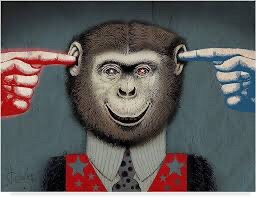
question for the left is convoluted at bestVegas » 13 Jan 2026, 11:43 am » wrote: ↑ Lefties: You all went ape **** for the "No king" protest. Then Trump captures a real dictator. A real tyrant. Now you are pissed off about it. Do you just prefer a specific kind of tyrant or something? I mean, maybe you have a type. Like some battered women have certain types of batterers that they fall in love with.
Righties: Musk will soon be a trillionaire. Probably this year. However, let's rephrase that title. Musk will soon be the first tax-funded trillionaire. Usually, if not always, you are against our taxes funding private companies. Our money created Musk's wealth. He didn't accumulate that wealth through his own hard work, perseverance, and using the American Dream. Why do you idolize Musk when he used our taxes as his foundation for his empire?
tRump taking out Maduro exemplifies what “no kings” was all about
Greenland and Iran are just more examples of why tRump is the farthest thing from “America first”
We worry about authoritarians in our country more than others
13 Jan 2026 8:09 pm
Are you at least happy for the people of Venezuela? They seem jubilant.Mrkelly » 13 Jan 2026, 8:07 pm » wrote: ↑ question for the left is convoluted at best
tRump taking out Maduro exemplifies what “no kings” was all about
Greenland and Iran are just more examples of why tRump is the farthest thing from “America first”
We worry about authoritarians in our country more than others
You need to research more about the Greenland issue. You are only looking at the surface.
Blackvegatble's hypcorisy summed up in one post:
[/size]
Blackvegetable » 7 minutes ago » wrote: ↑7 minutes ago
Very simple questions...
From which you are running...
Blackvegetable » 7 minutes ago » wrote: ↑7 minutes ago
Very simple questions...
From which you are running...
13 Jan 2026 10:12 pm
Whose boats and oil?

Please seat yourself.
I like the very things you hate.
I like the very things you hate.
14 Jan 2026 2:14 am
dont act stupid
---------------------
https://www.cnn.com/2026/01/07/politics ... us-seizure
The US has seized an oil tanker linked to Venezuela after tracking it across the Atlantic, according to a social media post from US European Command.Originally called the Bella 1, the tanker was sanctioned by the US in 2024 for operating within a “shadow fleet” of tankers transporting illicit oil.News of the seizure was first reported Wednesday by Reuters, which quoted two sources as saying the operation was being carried out by the Coast Guard and US military.The Russian military had started to move around naval assets and a Russian submarine to protect the Bella 1 leading up to the US seizure of the tanker, according to a US official. But it’s unclear how close those vessels were to the tanker when it was seized on Wednesday, the source said.The tanker was seized by the US is roughly 190 miles off the southern coast of Iceland in the northern Atlantic Ocean, according to ship-tracking website MarineTraffic.
14 Jan 2026 2:18 am
what can you add?Vegas » 13 Jan 2026, 9:09 pm » wrote: ↑ Are you at least happy for the people of Venezuela? They seem jubilant.
You need to research more about the Greenland issue. You are only looking at the surface.
14 Jan 2026 2:28 am
14 Jan 2026 2:59 am
The answer is "C" ya. I am not wasting any more time trying to engage in any dialogue with you Vegasna..
I offer a comment to your inquiry and I didn't see you even acknolwedge receipt.
But of Course, Any comment not directed at the Black Vegetable Centric Universe has no meaning for you.
DUMP THE TRUMP SLUMP 2026!
Bump Caps Recommended..
Bump Caps Recommended..

14 Jan 2026 6:13 am
Inquiring minds don't want to understand what their brain navigates between heart beats forward since conceived. Why people of character typecast saving a New World Order won't tolerate an honest sole from any current generation gap in this atmosphere.Blackvegetable » 13 Jan 2026, 1:12 pm » wrote: ↑ I think this should begin with The Rule on Questions.
Dictators are socially developed after birth, democracy serves tyranny developed in the previous 4 generations gaps lived so far educating each reality's next generation to save current social consensus or else.
Who is online
In total there are 5156 users online :: 8 registered, 17 bots, and 5131 guests
Registered users: Johnny You, Blackvegetable, RebelGator, Beekeeper, SouthernFried, Funny Guy, nefarious101, sole
Bots: aiohttp, ADmantX, DuckDuckBot, CensysInspect, YandexBot, Mediatoolkitbot, MicroMessenger, Bolt, Googlebot, facebookexternalhit, CriteoBot, Applebot, proximic, bingbot, curl/7, Baiduspider, Mediapartners-Google