Liberal Forum
Archive
‹
Political Chat Rooms
‹
No Holds Barred Political Forum
‹
Veritas; meaning Truth
Veritas; meaning Truth

By roadkill
26 Jan 2023 5:54 pm in No Holds Barred Political Forum
22 Oct 2022 2:51 pm

24 Oct 2022 4:26 pm

24 Oct 2022 4:40 pm
You wrote the book; "Malice in Wonderland" You ARE the book!
You deserve the "Goebbels, top propagandist reward!

24 Oct 2022 4:42 pm
nuckinfutz » 24 Oct 2022, 4:40 pm » wrote: ↑ You wrote the book; "Malice in Wonderland" You ARE the book!
You deserve the "Goebbels, top propagandist reward!
It's clear someone is feeding you.
24 Oct 2022 4:49 pm
We know who is feeding you B.S. The usual culprits; an endless supply of RWNJ propaganda.
Do you really think you are fooling people?
Wait! Yes you are, because you sheeple are the most stupid, most gullible people on earth!
@roadkill
25 Oct 2022 3:43 pm
https://www.youtube.com/watch?v=0wtp51bbsbYGHETTOBLASTER » 21 Jul 2022, 10:29 pm » wrote: ↑ Veritas has a solid reason to appeal.
I would like to get a good luck at the Judge who said there is no difference between a major news network accusing Veritas of lying versus accidentally filming someone's address.
25 Oct 2022 3:48 pm
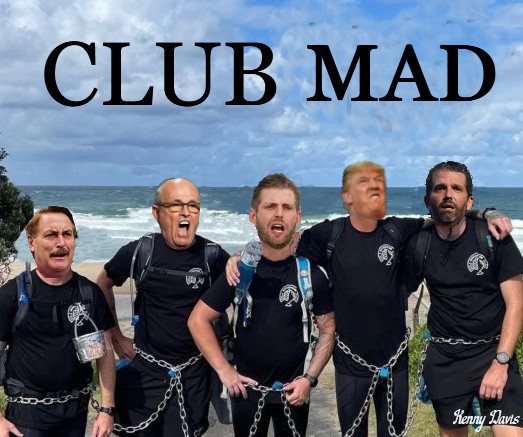
Look out! Mark Kelly is a fake!!!
25 Oct 2022 4:11 pm
Are leftists hiding from this? Of course they are.

1 Nov 2022 2:03 am
https://www.youtube.com/watch?v=2Oz6K9XFe68GHETTOBLASTER » 21 Jul 2022, 10:29 pm » wrote: ↑ Veritas has a solid reason to appeal.
I would like to get a good luck at the Judge who said there is no difference between a major news network accusing Veritas of lying versus accidentally filming someone's address.

1 Nov 2022 11:22 am
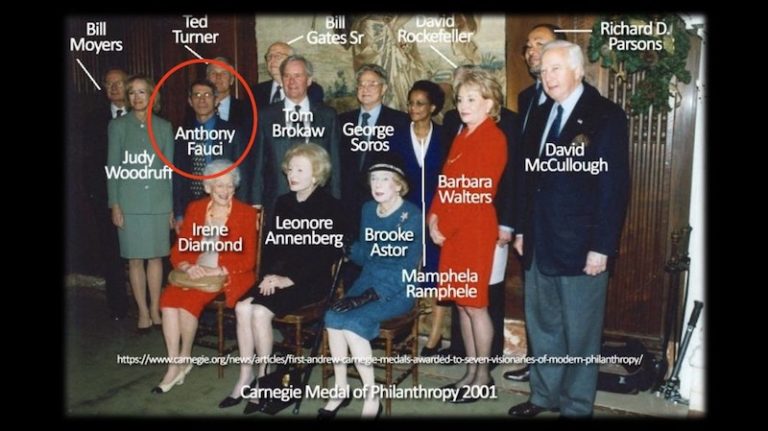
[[[THE AGENDA]]] is crystal clear and the timing of the outbreak was no coincidence.
The Globalists wanted to sabotage the gains that were made with Trump's crack down on Illegal Aliens and with elevating the status of the working class minorities
.
1 Nov 2022 11:29 am
GHETTOBLASTER » 01 Nov 2022, 11:22 am » wrote: ↑ [[[THE AGENDA]]] is crystal clear and the timing of the outbreak was no coincidence.
The Globalists wanted to sabotage the gains that were made with Trump's crack down on Illegal Aliens and with elevating the status of the working class minorities
.
Bingo

1 Nov 2022 1:49 pm
how many years has it been since minimum wage in urban sprawl when over $10.00 an hour. The fabricated statistical averages of wages going up is including that fiasco in the last 8 years. Government jobs paying going wages to private contractors using tax revenues to to fund the payroll. so many ways reality baits and switches symbolic values in place of time ancestors get adapting to space mutually evolving here now in series parallel compounding DNA results changing population adding last generation of great great grandchildren one at a time already born.GHETTO BLASTER » 01 Nov 2022, 11:22 am » wrote: ↑ [[[THE AGENDA]]] is crystal clear and the timing of the outbreak was no coincidence.
The Globalists wanted to sabotage the gains that were made with Trump's crack down on Illegal Aliens and with elevating the status of the working class minorities
.
3 Nov 2022 10:54 am
https://www.youtube.com/watch?v=i_-1ggzzi_4GHETTOBLASTER » 21 Jul 2022, 10:29 pm » wrote: ↑ Veritas has a solid reason to appeal.
I would like to get a good luck at the Judge who said there is no difference between a major news network accusing Veritas of lying versus accidentally filming someone's address.
3 Nov 2022 11:35 am
"Nevada Democrat Staffer Bashes Hispanic Voters 'Latino Republicans' Reason Dems Lose"
https://www.youtube.com/watch?v=cNZrZqPMDL4
3 Nov 2022 12:15 pm
NONE of the truth hating, free speech hating Libs at this forum will care about what is at stake here.
They see "Watch Dogs / Whistle Blowers" like Veritas as the enemy to the future of having a SINGLE PARTY / GLOBALIST CONTROLLED GOVERNMENT AND GOVERNMENT CONTROLLED MSM....[similar to TASS of the Soviet Union].
3 Nov 2022 12:28 pm
GHETTOBLASTER » 03 Nov 2022, 12:15 pm » wrote: ↑ NONE of the truth hating, free speech hating Libs at this forum will care about what is at stake here.
They see "Watch Dogs / Whistle Blowers" like Veritas as the enemy to the future of having a SINGLE PARTY / GLOBALIST CONTROLLED GOVERNMENT.
Exactly...the left here are the new Communist Party. They never learned from history.
7 Nov 2022 8:42 am
Boy oh boy...those leftist liars sure do get upset sometimes. The leftist in this video got really pissed off.GHETTOBLASTER » 03 Nov 2022, 12:15 pm » wrote: ↑ NONE of the truth hating, free speech hating Libs at this forum will care about what is at stake here.
They see "Watch Dogs / Whistle Blowers" like Veritas as the enemy to the future of having a SINGLE PARTY / GLOBALIST CONTROLLED GOVERNMENT AND GOVERNMENT CONTROLLED MSM....[similar to TASS of the Soviet Union].

No...not the political prostitute in the picture...it was a guy political prostitute later in the video.
https://www.youtube.com/watch?v=xz9tubdDaTY

7 Nov 2022 11:06 am

It is called unigovernment...roadkill » 07 Nov 2022, 9:42 am » wrote: ↑Boy oh boy...those leftist liars sure do get upset sometimes. The leftist in this video got really pissed off.GHETTOBLASTER » 03 Nov 2022, 12:15 pm » wrote: ↑ NONE of the truth hating, free speech hating Libs at this forum will care about what is at stake here.
They see "Watch Dogs / Whistle Blowers" like Veritas as the enemy to the future of having a SINGLE PARTY / GLOBALIST CONTROLLED GOVERNMENT AND GOVERNMENT CONTROLLED MSM....[similar to TASS of the Soviet Union].
No...not the political prostitute in the picture...it was a guy political prostitute later in the video.
https://www.youtube.com/watch?v=xz9tubdDaTY
Keep a weather-eye on the Republican Party as soon as the elections are over. Don’t expect them to rush head over heels to represent your views or actually do what you wanted them to. Trump did what the voters wanted and look what they did to him—and by “they” I mean the Republicans as much as the Democrats: You can serve the people or you can serve the government, but you can’t do both. Guess which side the GOP leadership is on?
Many people have written about the uniparty, but unfortunately the problem is more sinister than that. You may wonder why the American government seemed more bent on cooperating with the Chinese government than with Americans during the pandemic. You may wonder why ostensible democracies like England and Australia gave us sudden flashes of fascism, locking the potentially infected in concentration camps and having the police threaten people who came out of their houses.
It’s not just that the Republicans have more in common with the Democrats than they do with their voters. It’s that governments—all over the globe—have more in common with each other than they do with their people. We’re not just living in a uniparty country. We’re living in a unigovernment world.
Your elected representatives, the ones who have been in Washington for a couple of decades, have closer ties with Xi Jingping than they have with you. The top-level officers in our military have more in common with their opposite numbers in China than they have with you. Or with their enlisted men. (Remember when General Mark Milley actually bragged in public testimony that he’d promised to warn rather than attack the People’s Liberation Army.)
https://amgreatness.com/2022/11/06/the-unigovernment/
7 Nov 2022 11:11 am
Governments of the world, be they communist or fascist or even nominally democratic, all agree about one thing—they agree that people are dangerous. Our lives need to be run and controlled. And they are the boys for the job. Governments agree on so much, they may even agree it can be mutually beneficial to go to war with each other from time to time. There’s nothing that transfers power and wealth from people to governments so quickly and efficiently as a nice little war.
So when you look at a thoroughly confusing global situation and have trouble understanding which country benefits from insanities like the war in Ukraine, it’s because you’re asking the wrong question: You imagine that, just because countries seem to be on opposite sides of the political spectrum, or even on opposite sides of a military conflict, that those governments must be fighting against one another. In reality, those governments are fighting together against you: Stealing your life and your labor and your money to pay their own way.
Fortunately, America is uniquely positioned among all the nations in the world with a safety valve—albeit one we’ve forgotten about: We have states. We have states that are supposed to operate as a counterbalance to federal power. Before the Civil War, individual states (and groups of states) were forces to be reckoned with—and that meant Washington had to pay them, and their citizens, due consideration and respect. It couldn’t treat the nation as a monolith, a single network of local government offices, all singing from the same sheet of music, reliably enforcing federal dogma. The Civil War, whatever else it achieved, notched a huge victory in the belt of unigovernment when it destroyed the power of the states. But in fact that power is still there, in potential. It is simply dormant, unclaimed: Rusty, but still sharp underneath.
We need imaginative and courageous governors to remember that they are, in their way, as important as the president. We need state legislatures to remember that their duty is not simply to attend to local matters but to sit on the other end of the balance against the national legislature. And when Americans, en masse, begin to get the sense that the federal government is representing its own interests rather than our own, it is the responsibility of the states to say, “Not so fast, there: I think you’ve forgotten about us.”
https://amgreatness.com/2022/11/06/the-unigovernment/
So when you look at a thoroughly confusing global situation and have trouble understanding which country benefits from insanities like the war in Ukraine, it’s because you’re asking the wrong question: You imagine that, just because countries seem to be on opposite sides of the political spectrum, or even on opposite sides of a military conflict, that those governments must be fighting against one another. In reality, those governments are fighting together against you: Stealing your life and your labor and your money to pay their own way.
Fortunately, America is uniquely positioned among all the nations in the world with a safety valve—albeit one we’ve forgotten about: We have states. We have states that are supposed to operate as a counterbalance to federal power. Before the Civil War, individual states (and groups of states) were forces to be reckoned with—and that meant Washington had to pay them, and their citizens, due consideration and respect. It couldn’t treat the nation as a monolith, a single network of local government offices, all singing from the same sheet of music, reliably enforcing federal dogma. The Civil War, whatever else it achieved, notched a huge victory in the belt of unigovernment when it destroyed the power of the states. But in fact that power is still there, in potential. It is simply dormant, unclaimed: Rusty, but still sharp underneath.
We need imaginative and courageous governors to remember that they are, in their way, as important as the president. We need state legislatures to remember that their duty is not simply to attend to local matters but to sit on the other end of the balance against the national legislature. And when Americans, en masse, begin to get the sense that the federal government is representing its own interests rather than our own, it is the responsibility of the states to say, “Not so fast, there: I think you’ve forgotten about us.”
https://amgreatness.com/2022/11/06/the-unigovernment/
7 Nov 2022 11:23 am
Beware the eye in the climate of global political storms brewing from the whether or not one obeys social consensus or not faces the wrath of every reality fearing the end of relative time logistics has arrived.Buffalo » 07 Nov 2022, 12:06 pm » wrote: ↑ It is called unigovernment...
Keep a weather-eye on the Republican Party as soon as the elections are over. Don’t expect them to rush head over heels to represent your views or actually do what you wanted them to. Trump did what the voters wanted and look what they did to him—and by “they” I mean the Republicans as much as the Democrats: You can serve the people or you can serve the government, but you can’t do both. Guess which side the GOP leadership is on?
It did 16 years ago.
Who is online
In total there are 4809 users online :: 10 registered, 11 bots, and 4788 guests
Registered users: Johnny You, *Roshambo, Blackvegetable, Buck Naked, Buffalo, ROG62, RebelGator, Beekeeper, nefarious101, sole
Bots: MicroMessenger, okhttp, ADmantX, facebookexternalhit, Applebot, proximic, Mediapartners-Google, CriteoBot, bingbot, curl/7, Googlebot