Liberal Forum
Archive
‹
Political Chat Rooms
‹
No Holds Barred Political Forum
‹
Should there be price caps on housing rentals?
Should there be price caps on housing rentals?

By Monderegal
16 Apr 2023 10:08 am in No Holds Barred Political Forum
16 Apr 2023 10:08 am
Most economists will tell you that price caps are a short term fix. Some say that housing is too expensive in America. Should there be some limit on pricing when it comes to housing? Here's some AI help:
Sure, I'd be happy to explain the pros and cons of capping housing rental prices.
Positives:
Sure, I'd be happy to explain the pros and cons of capping housing rental prices.
Positives:
- Improved affordability for renters: If housing rental prices are capped, renters will be able to more easily afford their monthly rent payments, leading to a reduction in housing insecurity.
- Greater stability: Capped rental prices would offer greater certainty and stability for both renters and landlords. This stability can lead to reduced stress for tenants, who may not have to worry about rent increases beyond their budget.
- Reduced investment incentives: Capping rental prices could negatively impact the development of new rental housing. Developers may be less likely to build or renovate properties if they lack the ability to generate returns necessary to cover their costs.
- Decreased availability: Capping rental prices could also result in a lower supply of available rental units in a given area. If landlords struggle to generate sufficient profits, they may choose to exit the rental market or convert units into other types of properties such as condos.
- Unintended consequences: There is a risk that capping rental prices could lead to other unintended consequences, such as higher move-in fees, less upkeep on rental properties, or lower quality rental units.
Nothing is easier than defending the status quo.

16 Apr 2023 10:35 am

I'm guessing you never drove through the Bronx in NY, or Philly, or Detroit, or Baltimore, have you?Monderegal » 16 Apr 2023, 10:08 am » wrote: ↑ Most economists will tell you that price caps are a short term fix. Some say that housing is too expensive in America. Should there be some limit on pricing when it comes to housing? Here's some AI help:
Sure, I'd be happy to explain the pros and cons of capping housing rental prices.
Positives:Negatives:
- Improved affordability for renters: If housing rental prices are capped, renters will be able to more easily afford their monthly rent payments, leading to a reduction in housing insecurity.
- Greater stability: Capped rental prices would offer greater certainty and stability for both renters and landlords. This stability can lead to reduced stress for tenants, who may not have to worry about rent increases beyond their budget.
Overall, the pros and cons of capping rental prices are a topic of debate among economists, policy-makers, landlords, and renters. Any decision to implement caps would need to carefully weigh the potential benefits and drawbacks of the policy.
- Reduced investment incentives: Capping rental prices could negatively impact the development of new rental housing. Developers may be less likely to build or renovate properties if they lack the ability to generate returns necessary to cover their costs.
- Decreased availability: Capping rental prices could also result in a lower supply of available rental units in a given area. If landlords struggle to generate sufficient profits, they may choose to exit the rental market or convert units into other types of properties such as condos.
- Unintended consequences: There is a risk that capping rental prices could lead to other unintended consequences, such as higher move-in fees, less upkeep on rental properties, or lower quality rental units.
If you did, you'd see the dozens of abandoned apartment buildings in each of those Democrat-run cities, all due to the government sticking their noses in and capping the rent they'll allow to be charged in their own buildings while imposing piles of new regulations on their landlords and properties until the owners found it impossible to make a profit and left it for the government to run.
There is rarely any "positives" to giving the government control of anything!
If they ran the Mojave desert, in a few years they'd run out of sand!

16 Apr 2023 11:11 am

in democrat ran sewer systems you can buy a house for a few hundred dollars. You may get shot or robbed if you go outside. The democrat ghetto brings in all kind of rats.

16 Apr 2023 11:24 am
Zeets2 » 16 Apr 2023, 10:35 am » wrote: ↑ I'm guessing you never drove through the Bronx in NY, or Philly, or Detroit, or Baltimore, have you?
If you did, you'd see the dozens of abandoned apartment buildings in each of those Democrat-run cities, all due to the government sticking their noses in and capping the rent they'll allow to be charged in their own buildings while imposing piles of new regulations on their landlords and properties until the owners found it impossible to make a profit and left it for the government to run.
There is rarely any "positives" to giving the government control of anything!
If they ran the Mojave desert, in a few years they'd run out of sand!
i think we could construct an alternate theory about why places like detroit and baltimore have been abandoned...

16 Apr 2023 11:39 am
The moment they put a cap on prices, all prices will likely rise to the cap. So for the short term this is a bad idea. Price controls did not work for Nixon.
The tax system promotes higher rent.
There is a false assumption in the tax code that housing will depreciate 5% annually in value.
So every year the landlord gets to claim a 5% deduction, in addition to maintenance costs.
After the property is 100% depreciated in 20 years, it is worthless for tax purposes. In reality, it is worth much more.
So the landlord is motivated to SELL it, and he can do this,m make a huge profit, and invest in another rental income property.
The new landlord then gets a 5% annual deduction. But since the new landlord paid a lot more, he is forced to raise the rent to make a profit.
The tax system promotes higher rent.
There is a false assumption in the tax code that housing will depreciate 5% annually in value.
So every year the landlord gets to claim a 5% deduction, in addition to maintenance costs.
After the property is 100% depreciated in 20 years, it is worthless for tax purposes. In reality, it is worth much more.
So the landlord is motivated to SELL it, and he can do this,m make a huge profit, and invest in another rental income property.
The new landlord then gets a 5% annual deduction. But since the new landlord paid a lot more, he is forced to raise the rent to make a profit.

16 Apr 2023 12:13 pm

20 x 5% depreciation is about 65%.Xavier_Onassis » 16 Apr 2023, 11:39 am » wrote: ↑ The moment they put a cap on prices, all prices will likely rise to the cap. So for the short term this is a bad idea. Price controls did not work for Nixon.
The tax system promotes higher rent.
There is a false assumption in the tax code that housing will depreciate 5% annually in value.
So every year the landlord gets to claim a 5% deduction, in addition to maintenance costs.
After the property is 100% depreciated in 20 years, it is worthless for tax purposes. In reality, it is worth much more.
So the landlord is motivated to SELL it, and he can do this,m make a huge profit, and invest in another rental income property.
The new landlord then gets a 5% annual deduction. But since the new landlord paid a lot more, he is forced to raise the rent to make a profit.
Please seat yourself.

I like the very things you hate.
I like the very things you hate.
16 Apr 2023 12:14 pm
No.Monderegal » 16 Apr 2023, 10:08 am » wrote: ↑ Most economists will tell you that price caps are a short term fix. Some say that housing is too expensive in America. Should there be some limit on pricing when it comes to housing? Here's some AI help:
Sure, I'd be happy to explain the pros and cons of capping housing rental prices.
Positives:Negatives:
- Improved affordability for renters: If housing rental prices are capped, renters will be able to more easily afford their monthly rent payments, leading to a reduction in housing insecurity.
- Greater stability: Capped rental prices would offer greater certainty and stability for both renters and landlords. This stability can lead to reduced stress for tenants, who may not have to worry about rent increases beyond their budget.
Overall, the pros and cons of capping rental prices are a topic of debate among economists, policy-makers, landlords, and renters. Any decision to implement caps would need to carefully weigh the potential benefits and drawbacks of the policy.
- Reduced investment incentives: Capping rental prices could negatively impact the development of new rental housing. Developers may be less likely to build or renovate properties if they lack the ability to generate returns necessary to cover their costs.
- Decreased availability: Capping rental prices could also result in a lower supply of available rental units in a given area. If landlords struggle to generate sufficient profits, they may choose to exit the rental market or convert units into other types of properties such as condos.
- Unintended consequences: There is a risk that capping rental prices could lead to other unintended consequences, such as higher move-in fees, less upkeep on rental properties, or lower quality rental units.
Please seat yourself.
I like the very things you hate.
I like the very things you hate.
16 Apr 2023 12:16 pm
20 X 5% is 100%, why? Because 20 X 5 is 100.
The deduction is based on the price paid by the landlord to the previous owner.
16 Apr 2023 12:17 pm
Ok.Xavier_Onassis » 16 Apr 2023, 12:16 pm » wrote: ↑ 20 X 5% is 100%, why? Because 20 X 5 is 100.
The deduction is based on the price paid by the landlord to the previous owner.
Please seat yourself.
I like the very things you hate.
I like the very things you hate.

16 Apr 2023 12:20 pm

Those pros/cons are pretty obvious. If that is the best that AI can come up with, then it should change its name from Artificial Intelligence to Artificial No-****.Monderegal » 16 Apr 2023, 10:08 am » wrote: ↑ Most economists will tell you that price caps are a short term fix. Some say that housing is too expensive in America. Should there be some limit on pricing when it comes to housing? Here's some AI help:
Sure, I'd be happy to explain the pros and cons of capping housing rental prices.
Positives:Negatives:
- Improved affordability for renters: If housing rental prices are capped, renters will be able to more easily afford their monthly rent payments, leading to a reduction in housing insecurity.
- Greater stability: Capped rental prices would offer greater certainty and stability for both renters and landlords. This stability can lead to reduced stress for tenants, who may not have to worry about rent increases beyond their budget.
Overall, the pros and cons of capping rental prices are a topic of debate among economists, policy-makers, landlords, and renters. Any decision to implement caps would need to carefully weigh the potential benefits and drawbacks of the policy.
- Reduced investment incentives: Capping rental prices could negatively impact the development of new rental housing. Developers may be less likely to build or renovate properties if they lack the ability to generate returns necessary to cover their costs.
- Decreased availability: Capping rental prices could also result in a lower supply of available rental units in a given area. If landlords struggle to generate sufficient profits, they may choose to exit the rental market or convert units into other types of properties such as condos.
- Unintended consequences: There is a risk that capping rental prices could lead to other unintended consequences, such as higher move-in fees, less upkeep on rental properties, or lower quality rental units.
Blackvegatble's hypcorisy summed up in one post:
[/size]
Blackvegetable » 7 minutes ago » wrote: ↑7 minutes ago
Very simple questions...
From which you are running...
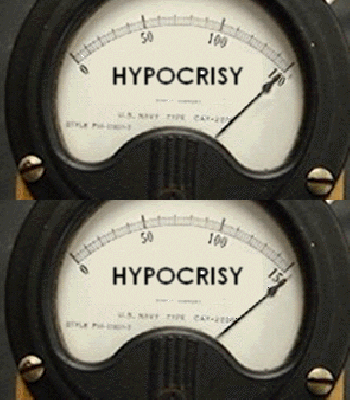
Blackvegetable » 7 minutes ago » wrote: ↑7 minutes ago
Very simple questions...
From which you are running...
16 Apr 2023 12:57 pm
im a landlord so im gonna vote no here lol.Monderegal » 16 Apr 2023, 10:08 am » wrote: ↑ Most economists will tell you that price caps are a short term fix. Some say that housing is too expensive in America. Should there be some limit on pricing when it comes to housing? Here's some AI help:
Sure, I'd be happy to explain the pros and cons of capping housing rental prices.
Positives:Negatives:
- Improved affordability for renters: If housing rental prices are capped, renters will be able to more easily afford their monthly rent payments, leading to a reduction in housing insecurity.
- Greater stability: Capped rental prices would offer greater certainty and stability for both renters and landlords. This stability can lead to reduced stress for tenants, who may not have to worry about rent increases beyond their budget.
Overall, the pros and cons of capping rental prices are a topic of debate among economists, policy-makers, landlords, and renters. Any decision to implement caps would need to carefully weigh the potential benefits and drawbacks of the policy.
- Reduced investment incentives: Capping rental prices could negatively impact the development of new rental housing. Developers may be less likely to build or renovate properties if they lack the ability to generate returns necessary to cover their costs.
- Decreased availability: Capping rental prices could also result in a lower supply of available rental units in a given area. If landlords struggle to generate sufficient profits, they may choose to exit the rental market or convert units into other types of properties such as condos.
- Unintended consequences: There is a risk that capping rental prices could lead to other unintended consequences, such as higher move-in fees, less upkeep on rental properties, or lower quality rental units.

16 Apr 2023 2:07 pm
...why not cap food prices? car prices? gas prices? clothing prices? land prices? labor prices? etc. ad fkn. nauseam...[careful pp don't give 'em any ideas!!Monderegal » 16 Apr 2023, 10:08 am » wrote: ↑ Most economists will tell you that price caps are a short term fix. Some say that housing is too expensive in America. Should there be some limit on pricing when it comes to housing? Here's some AI help:
Sure, I'd be happy to explain the pros and cons of capping housing rental prices.
Positives:Negatives:
- Improved affordability for renters: If housing rental prices are capped, renters will be able to more easily afford their monthly rent payments, leading to a reduction in housing insecurity.
- Greater stability: Capped rental prices would offer greater certainty and stability for both renters and landlords. This stability can lead to reduced stress for tenants, who may not have to worry about rent increases beyond their budget.
Overall, the pros and cons of capping rental prices are a topic of debate among economists, policy-makers, landlords, and renters. Any decision to implement caps would need to carefully weigh the potential benefits and drawbacks of the policy.
- Reduced investment incentives: Capping rental prices could negatively impact the development of new rental housing. Developers may be less likely to build or renovate properties if they lack the ability to generate returns necessary to cover their costs.
- Decreased availability: Capping rental prices could also result in a lower supply of available rental units in a given area. If landlords struggle to generate sufficient profits, they may choose to exit the rental market or convert units into other types of properties such as condos.
- Unintended consequences: There is a risk that capping rental prices could lead to other unintended consequences, such as higher move-in fees, less upkeep on rental properties, or lower quality rental units.
 ]
]...the idiots who bung up any semblance of a free/egalitarian market are now debating how to fix the problems they are at least partially responsible for creating in the first place... good grief! ugh....
16 Apr 2023 2:11 pm
Zeets2 » 16 Apr 2023, 10:35 am » wrote: ↑ There is rarely any "positives" to giving the government control of anything!
If they ran the Mojave desert, in a few years they'd run out of sand!


...that's ripe coming from a big government puppet-sucking republic#nt!... [and monetary ignoramus!]



16 Apr 2023 2:16 pm

Did you see the News? We made Fox- Portland? 1000's of immigrants ... Portland cant pay for them?peepee » 16 Apr 2023, 2:11 pm » wrote: ↑
...that's ripe coming from a big government puppet-sucking republic#nt!... [and monetary ignoramus!]
Homeless in tents- must be kind of cold- ship em back down south? what fools!

16 Apr 2023 2:28 pm
...is it possible that the policies of your $hit-puppet republic#nts contributes to the 'refugee/migration problem?'sootedupCyndi » 16 Apr 2023, 2:16 pm » wrote: ↑ Did you see the News? We made Fox- Portland? 1000's of immigrants ... Portland cant pay for them?
Homeless in tents- must be kind of cold- ship em back down south? what fools!
..did i hear that your $hit-puppet trump wants to bomb mexico in 'the war on [some] drugs'... cause you know, prohibition works...
#morenumbthanapoundedthumb

16 Apr 2023 2:34 pm
16 Apr 2023 2:45 pm
you fool! this has nothing to do with you... or the war on drugs? Do you know ANY immigrant worker who wants to set up- in my garage- and pile wood? LOL better then being on the streets?peepee » 16 Apr 2023, 2:28 pm » wrote: ↑ ...is it possible that the policies of your $hit-puppet republic#nts contributes to the 'refugee/migration problem?'
..did i hear that your $hit-puppet trump wants to bomb mexico in 'the war on [some] drugs'... cause you know, prohibition works...
#morenumbthanapoundedthumb

16 Apr 2023 4:39 pm
To calculate the total depreciation over 20 years for tax purposes, you can use the straight-line depreciation method, where an equal amount of depreciation is taken each year.The formula for straight-line depreciation is:(depreciable cost) / (useful life) = annual depreciation expensewhere the depreciable cost is the original purchase price minus the estimated salvage value (i.e., if the property is sold at the end of its useful life, how much it is expected to be worth), and the useful life is the number of years over which the property is expected to be useful (in this case, 20 years).Let's assume the property was purchased for $100,000 and is expected to have no salvage value after 20 years. Then:($100,000 - $0) / 20 = $5,000The property will depreciate by $5,000 every year for 20 years, totaling $100,000 in depreciation over the entire period for tax purposes.Xavier_Onassis » 16 Apr 2023, 11:39 am » wrote: ↑ The moment they put a cap on prices, all prices will likely rise to the cap. So for the short term this is a bad idea. Price controls did not work for Nixon.
The tax system promotes higher rent.
There is a false assumption in the tax code that housing will depreciate 5% annually in value.
So every year the landlord gets to claim a 5% deduction, in addition to maintenance costs.
After the property is 100% depreciated in 20 years, it is worthless for tax purposes. In reality, it is worth much more.
So the landlord is motivated to SELL it, and he can do this,m make a huge profit, and invest in another rental income property.
The new landlord then gets a 5% annual deduction. But since the new landlord paid a lot more, he is forced to raise the rent to make a profit.
Nothing is easier than defending the status quo.
16 Apr 2023 4:41 pm
The useful life of a rental property in accounting refers to the estimated amount of time the property will be in service and earn revenue for its owner. Typically, the useful life of a rental property is considered to be 27.5 years, according to IRS guidelines. This is known as the straight-line depreciation period, which means the property owner can take yearly depreciation deductions over a period of 27.5 years as a way to offset the cost of the property and reduce their taxable income. However, it's important to note that useful life can vary based on factors such as maintenance, upgrades, and the condition of the property.
Nothing is easier than defending the status quo.
16 Apr 2023 4:42 pm
Not according to straight line depreciation which uses the equation the AI states.
Nothing is easier than defending the status quo.
Who is online
In total there are 3255 users online :: 5 registered, 20 bots, and 3230 guests
Bots: Mediatoolkitbot, TTD-Content, CriteoBot, Yahoo! Slurp, Firefox/7.0, ADmantX, DuckDuckBot, okhttp, Not, NING, proximic, sqlmap, YandexBot, Googlebot, Baiduspider, Applebot, facebookexternalhit, bingbot, Mediapartners-Google, curl/7