Liberal Forum
Archive
‹
Political Chat Rooms
‹
No Holds Barred Political Forum
‹
Even Philly BLACK VOTERS know that Kamaly Khameleon's ECONOMIC POLICIES HAVE FAILED!! Voting TRUMP!!
Even Philly BLACK VOTERS know that Kamaly Khameleon's ECONOMIC POLICIES HAVE FAILED!! Voting TRUMP!!
By Beekeeper
15 Aug 2024 6:04 am in No Holds Barred Political Forum

17 Aug 2024 8:02 am
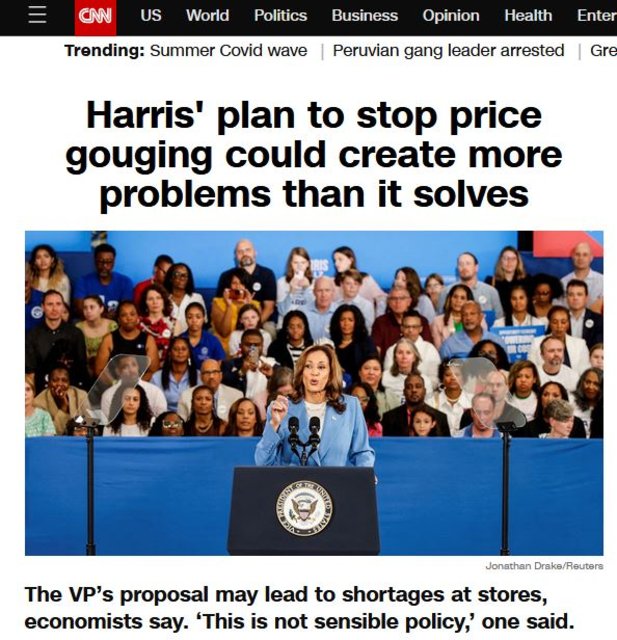
How can @maineman consider voting for her?Jantje_Smit » 17 Aug 2024, 1:04 am » wrote: ↑ I read about the Ho's 'plan', you know it won't be going anywhere when even CNNLOL calls it a bad idea... stop price gouging.. lol..

17 Aug 2024 8:23 am

How can anyone think of voting for the communist cackling ho?
They have to be ****, America hating, loony liberals!!!

17 Aug 2024 9:21 am
Democrats are not only the most gullible cretins in the country, but are also the most economically uneducated reprobates that this country has ever seen.Buffalo » 17 Aug 2024, 8:23 am » wrote: ↑ How can anyone think of voting for the communist cackling ho?
They have to be ****, America hating, loony liberals!!!
It's really not any more complicated than that.
17 Aug 2024 9:25 am
Yet, dangerous as hell!!!Zeets2 » 17 Aug 2024, 9:21 am » wrote: ↑ Democrats are not only the most gullible cretins in the country, but are also the most economically uneducated reprobates that this country has ever seen.
It's really not any more complicated than that.

17 Aug 2024 9:54 am
it's easy... I just pause for a moment... consider the alternative.... laugh my *** off, and then, voting for Harris is the only game in town.

17 Aug 2024 9:56 am
Zeets2 » 17 Aug 2024, 9:21 am » wrote: ↑ Democrats are not only the most gullible cretins in the country, but are also the most economically uneducated reprobates that this country has ever seen.
It's really not any more complicated than that.
kinda bugs you that she's surging in the polls even before the DNC lovefest next week? amirite?
17 Aug 2024 10:23 am
Are you considering:maineman » 17 Aug 2024, 9:54 am » wrote: ↑ it's easy... I just pause for a moment... consider the alternative.... laugh my *** off, and then, voting for Harris is the only game in town.
lower taxes
safer communities
no wars
lower gas prices
no ban on fracking
lower food prices
No Tampons in boys bathrooms
lower energy prices
17 Aug 2024 10:35 am
You're living under the misunderstanding that I would believe any polls at this point in the campaign because they are both meaningless and fraudulent.maineman » 17 Aug 2024, 9:56 am » wrote: ↑ kinda bugs you that she's surging in the polls even before the DNC lovefest next week? amirite?
In virtually every election season, liberal polling companies skew their polls in the hope it will legitimize the competence of the Democrat nominee against the far more formidable accomplishments of Trump. They are NOT "reflecting" the opinions of the populace, but rather attempting to direct their own preferences, and they inevitably only begin to provide honest polling much closer to Election day than we are today.
But by all means, you're certainly free to be gullible enough to believe in how this incompetent nobody is being propped up by the biased media as they provide us with stats compiled from registered voters rather than from likely voters which are far more accurate, while at the same time over-sampling people from heavily Democrat urban cities at the expense of suburban and rural voters who remain favorable to Trump.
So enjoy your phony polls while you can, and while your idiot whore remains panic-stricken over holding a press conference, even those where she's guaranteed to get nothing but softball questions exactly as Biden received (What flavor ice cream did you get, Mr. President?) from the fawning media you so ignorantly still believe in. Consider yourself lucky that being so gullible is not a crime, or you'd be in serious trouble.
Quite the contrary to your suggestion, we LOVE to see you peacocks strut around with a stupid grin on your face over such phony polls because it makes the crash back down to earth so much more painful when the pollsters stop trying to direct voters to their own favorite and are forced to poll more realistically in another month to maintain their credibility when your Marxist duo gets exposed to the sunlight, just like the vampire who feeds off the blood of the dying, which actually saves them time and effort because they don't need to rely so heavily on maintaining their voting roles of dead voters.
17 Aug 2024 11:57 am
Zeets2 » 17 Aug 2024, 10:35 am » wrote: ↑ You're living under the misunderstanding that I would believe any polls at this point in the campaign because they are both meaningless and fraudulent.
In virtually every election season, liberal polling companies skew their polls in the hope it will legitimize the competence of the Democrat nominee against the far more formidable accomplishments of Trump. They are NOT "reflecting" the opinions of the populace, but rather attempting to direct their own preferences, and they inevitably only begin to provide honest polling much closer to Election day than we are today.
But by all means, you're certainly free to be gullible enough to believe in how this incompetent nobody is being propped up by the biased media as they provide us with stats compiled from registered voters rather than from likely voters which are far more accurate, while at the same time over-sampling people from heavily Democrat urban cities at the expense of suburban and rural voters who remain favorable to Trump.
So enjoy your phony polls while you can, and while your idiot whore remains panic-stricken over holding a press conference, even those where she's guaranteed to get nothing but softball questions exactly as Biden received (What flavor ice cream did you get, Mr. President?) from the fawning media you so ignorantly still believe in. Consider yourself lucky that being so gullible is not a crime, or you'd be in serious trouble.
Quite the contrary to your suggestion, we LOVE to see you peacocks strut around with a stupid grin on your face over such phony polls because it makes the crash back down to earth so much more painful when the pollsters stop trying to direct voters to their own favorite and are forced to poll more realistically in another month to maintain their credibility when your Marxist duo gets exposed to the sunlight, just like the vampire who feeds off the blood of the dying, which actually saves them time and effort because they don't need to rely so heavily on maintaining their voting roles of dead voters.
I plan on substituting MAGA tears for the vermouth in my martini on November 6th!

17 Aug 2024 11:59 am
maineman » 17 Aug 2024, 11:57 am » wrote: ↑ I plan on substituting MAGA tears for the vermouth in my martini on November 6th!
Clinton supporters had that attitude in 2016.

BV is in question time out indefinitely, but no earlier than Mar 2026.
Popular Vote Totals 2024 viewtopic.php?p=2685476#p2685476
BV's Sporter Losshttps: viewtopic.php?p=2610828#p2610828
BV 33 miles: viewtopic.php?p=2747521#p2747521
The answer viewtopic.php?p=2573481#p2573481
Sources viewtopic.php?p=2589152#p2589152
Popular Vote Totals 2024 viewtopic.php?p=2685476#p2685476
BV's Sporter Losshttps: viewtopic.php?p=2610828#p2610828
BV 33 miles: viewtopic.php?p=2747521#p2747521
The answer viewtopic.php?p=2573481#p2573481
Sources viewtopic.php?p=2589152#p2589152
17 Aug 2024 12:03 pm
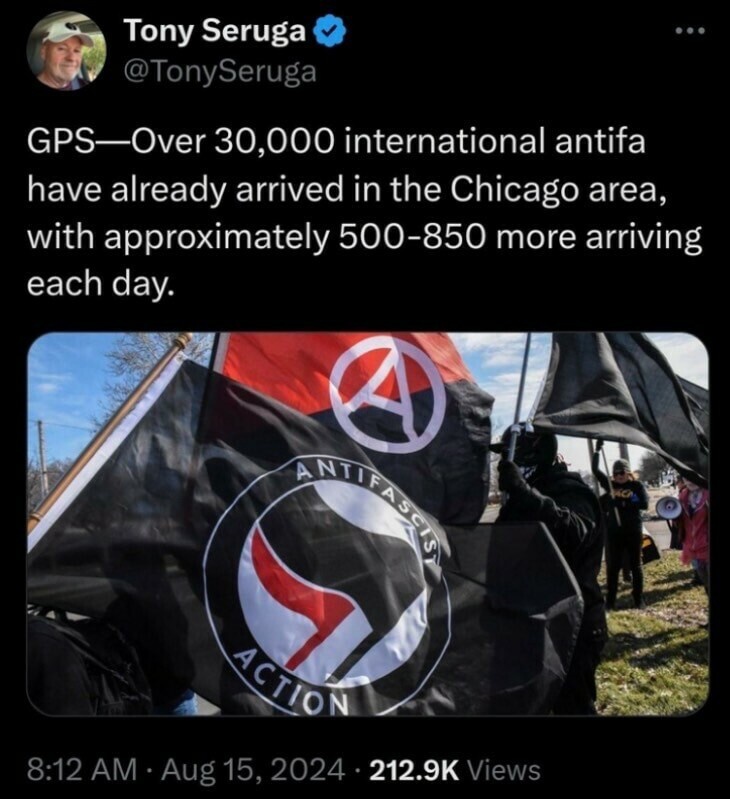
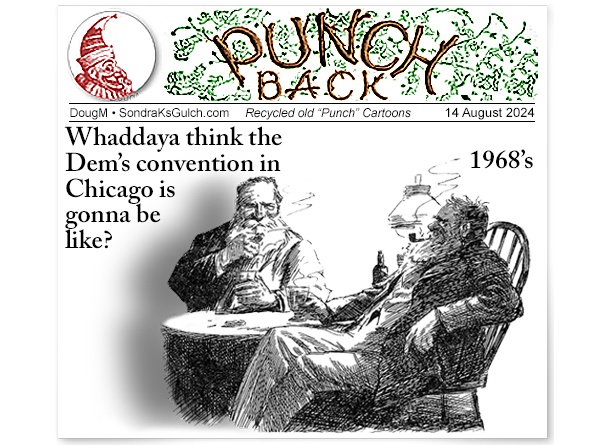
Let the lovefest begin...LOL!!! Gonna be a riot (pun intended)!!!maineman » 17 Aug 2024, 9:56 am » wrote: ↑ kinda bugs you that she's surging in the polls even before the DNC lovefest next week? amirite?
17 Aug 2024 12:10 pm
Good, you do that!maineman » 17 Aug 2024, 11:57 am » wrote: ↑ I plan on substituting MAGA tears for the vermouth in my martini on November 6th!
There will certainly be millions who will have tears of joy you can gather easily enough while you drown your sorrows in alcohol!
17 Aug 2024 1:14 pm
Tony Seruga. Now that's what I call an objective news source!Buffalo » 17 Aug 2024, 12:03 pm » wrote: ↑ Let the lovefest begin...LOL!!! Gonna be a riot (pun intended)!!!
17 Aug 2024 1:16 pm
Zeets2 » 17 Aug 2024, 12:10 pm » wrote: ↑ Good, you do that!
There will certainly be millions who will have tears of joy you can gather easily enough while you drown your sorrows in alcohol!
time will tell.
time will tell.
I like the trend line...

17 Aug 2024 1:26 pm
You are the biggest idiot here!!!Harris’ Big Plan For Price Controls: The Economy’s Next Big Disaster?maineman » 17 Aug 2024, 9:54 am » wrote: ↑ it's easy... I just pause for a moment... consider the alternative.... laugh my *** off, and then, voting for Harris is the only game in town.
I & I Editorial Board
August 16, 2024We’re finally getting some inkling of what the Democrats’ anointed presidential candidate Kamala Harris has in store for Americans when it comes to the economy. It’s not good. Indeed, it’s a disaster in the making, one that would set the U.S. economy back decades, destroy businesses, create shortages and lead to even higher prices.
Harris has a big problem. She’s the No. 2 official in an administration that many economists consider the worst in decades. How do you escape that? Of course, you deny it’s your fault, then promise radical, unworkable new policies to replace the old failed ones. The ol’ switcheroo.
“Harris won’t say it this bluntly in public,” left-leaning Axios reported, “but her advisers do so privately: She wants to break with Biden on issues on which he’s unpopular. First up: rising prices. This is part of a highly choreographed effort to define herself — in some cases, redefine herself — as a different kind of Democrat.”
Well, she’s not too “different,” if by that you mean replacing obviously failed economic policies with even worse ones. Democrats do it all the time.
What remains of the Biden administration is in no mood to accommodate the fantasy of her non-involvement. Biden spokeswoman Karine Jean-Pierre, as Gateway Pundit’s Christina Laila pointed out, “threw Kamala Harris under the bus and said she is indeed responsible for the inflation crisis.”
So how does Harris plan to avoid blame for the economic pain most Americans feel is due to Bidenomics?
By coming up with even worse solutions to the inflation problem that has left millions of Americans worse off than they were four years ago.
Harris now proposes a “first-ever federal ban on price gouging on food and groceries — setting clear rules of the road to make clear that big corporations can’t unfairly exploit consumers to run up excessive corporate profits on food and groceries.”
Worse, as Fox News reports, “The proposal would give authority to the Federal Trade Commission and state attorneys general to impose harsh penalties on companies for setting excessively high prices.
17 Aug 2024 1:36 pm
Issues & Insights?Buffalo » 17 Aug 2024, 1:26 pm » wrote: ↑ You are the biggest idiot here!!!Harris’ Big Plan For Price Controls: The Economy’s Next Big Disaster?
I & I Editorial Board
https://mediabiasfactcheck.com/issues-insights/
17 Aug 2024 1:42 pm
For those of a certain age, this is reminiscent of the 1970s, when both parties went in for wage and price controls to control inflation. They failed miserably, leading to rationing, higher prices and shortages, making the ’70s one of the worst decades in U.S. economic history.
Just what we need: Law-abiding companies — struggling with soaring labor and product costs, not to mention massive increases in theft as leftist attorneys general stop punishing crime — being scapegoated again for far-left Democrats’ repeated policy failures.
There’s one major reason for this inflationary mess: The Democrats’ utterly unnecessary $5 trillion spending binge during the COVID economic lockdown, massive supply-chain disruptions, plus the $1.2 trillion “Inflation Reduction Act.” Taken together, they injected trillions of dollars into a shrunken economy. The inevitable result: inflation, as more money chased fewer goods.
It had nothing at all to do with “corporate consolidation in the market.” It had everything to do with the Biden-Harris administration’s economic incompetence, on full display again with Harris’ plan to control grocery store prices and give first-time homebuyers up to $25,000 to buy a house and to spend $40 billion on “innovative housing construction,” whatever that is.
Problem is, grocery stores are not “price gouging.” Indeed, the average profit margin in the supermarket trade is around 1.2%, give or take a couple of points. To accuse store chains of gouging is a lie, straight up, as the chart below shows:

.Source: @JaredWalczak, at X
Price gouging? Absolutely insane.
So what happens if price controls do go into effect? Overnight, shortages will emerge, followed shortly by a black market. Stores cannot continue to sell products they lose money on. They’ll go out of business.
After price controls, inflation doesn’t go away. It gets worse, as formerly profitable enterprises go bankrupt and the supply of goods shrinks.
Less supply = higher prices.
Someone reading this somewhere is thinking, “this is just right-wing (or libertarian) propaganda. By forcing stores to charge less, inflation will go down.”
In fact, almost all economists, left and right, disagree with that.
The World Bank, in a 2020 paper argued: “Although they are sometimes used as a tool for social policy, price controls can dampen investment and growth, worsen poverty outcomes, cause countries to incur heavy fiscal burdens, and complicate the effective conduct of monetary policy.”
Meanwhile, a recent Federal Reserve Bank of St. Louis paper, “Why Price Controls Should Stay in the History Books,” summed up the U.S. experience: “(E)conomic theory and analysis of history show that broad price controls would be costly and of limited effectiveness.”
If anything, that’s an understatement.
Even the Washington Post has thoroughly (and correctly) bashed Harris’ idea: “It’s hard to exaggerate how bad this policy is. It is, in all but name, a sweeping set of government-enforced price controls across every industry, not only food. Supply and demand would no longer determine prices or profit levels. Far-off Washington bureaucrats would. The FTC would be able to tell, say, a Kroger in Ohio the acceptable price it can charge for milk.”
There are lots of other bad ideas in Kamala Harris’ plan, and we’ll deal with those later, one by one. Suffice to say, forcing price controls on private companies is the worst anti-inflationary strategy possible. The big question is, does the Democratic Party ever learn anything from its disasters?
— Written by the I&I Editorial Board
Just what we need: Law-abiding companies — struggling with soaring labor and product costs, not to mention massive increases in theft as leftist attorneys general stop punishing crime — being scapegoated again for far-left Democrats’ repeated policy failures.
There’s one major reason for this inflationary mess: The Democrats’ utterly unnecessary $5 trillion spending binge during the COVID economic lockdown, massive supply-chain disruptions, plus the $1.2 trillion “Inflation Reduction Act.” Taken together, they injected trillions of dollars into a shrunken economy. The inevitable result: inflation, as more money chased fewer goods.
It had nothing at all to do with “corporate consolidation in the market.” It had everything to do with the Biden-Harris administration’s economic incompetence, on full display again with Harris’ plan to control grocery store prices and give first-time homebuyers up to $25,000 to buy a house and to spend $40 billion on “innovative housing construction,” whatever that is.
Problem is, grocery stores are not “price gouging.” Indeed, the average profit margin in the supermarket trade is around 1.2%, give or take a couple of points. To accuse store chains of gouging is a lie, straight up, as the chart below shows:
.Source: @JaredWalczak, at X
Price gouging? Absolutely insane.
So what happens if price controls do go into effect? Overnight, shortages will emerge, followed shortly by a black market. Stores cannot continue to sell products they lose money on. They’ll go out of business.
After price controls, inflation doesn’t go away. It gets worse, as formerly profitable enterprises go bankrupt and the supply of goods shrinks.
Less supply = higher prices.
Someone reading this somewhere is thinking, “this is just right-wing (or libertarian) propaganda. By forcing stores to charge less, inflation will go down.”
In fact, almost all economists, left and right, disagree with that.
The World Bank, in a 2020 paper argued: “Although they are sometimes used as a tool for social policy, price controls can dampen investment and growth, worsen poverty outcomes, cause countries to incur heavy fiscal burdens, and complicate the effective conduct of monetary policy.”
Meanwhile, a recent Federal Reserve Bank of St. Louis paper, “Why Price Controls Should Stay in the History Books,” summed up the U.S. experience: “(E)conomic theory and analysis of history show that broad price controls would be costly and of limited effectiveness.”
If anything, that’s an understatement.
Even the Washington Post has thoroughly (and correctly) bashed Harris’ idea: “It’s hard to exaggerate how bad this policy is. It is, in all but name, a sweeping set of government-enforced price controls across every industry, not only food. Supply and demand would no longer determine prices or profit levels. Far-off Washington bureaucrats would. The FTC would be able to tell, say, a Kroger in Ohio the acceptable price it can charge for milk.”
There are lots of other bad ideas in Kamala Harris’ plan, and we’ll deal with those later, one by one. Suffice to say, forcing price controls on private companies is the worst anti-inflationary strategy possible. The big question is, does the Democratic Party ever learn anything from its disasters?
— Written by the I&I Editorial Board
17 Aug 2024 1:44 pm
Prove them wrong or shut the **** upp, asshole!!!maineman » 17 Aug 2024, 1:36 pm » wrote: ↑ Issues & Insights?
https://mediabiasfactcheck.com/issues-insights/
17 Aug 2024 1:46 pm
How does one prove an op-ed wrong? It is, by definition, an OPINION.
moron

17 Aug 2024 2:01 pm
maineman » 17 Aug 2024, 1:46 pm » wrote: ↑ How does one prove an op-ed wrong? It is, by definition, an OPINION.
moron
STFU YOU CHINESE COCKSUCKER
Who is online
In total there are 4570 users online :: 5 registered, 14 bots, and 4551 guests
Bots: Bolt, Adsbot, proximic, ADmantX, Googlebot, facebookexternalhit, okhttp, CriteoBot, YandexBot, Mediapartners-Google, bingbot, Applebot, Baiduspider, curl/7