Black Fatigue

By Vegas
12 Jul 2025 10:15 am in No Holds Barred Political Forum
13 Jul 2025 3:22 pm

HEY EINSTEIN.....GOOGLE "MAOA CHIMPOUT GENE"Mrkelly » 13 Jul 2025, 3:11 pm » wrote: ↑Not justified
it’s just a natural tendency
I thought that whitey was the smart one

13 Jul 2025 3:33 pm

Yep. You didn't read a word. Just as I expected. At least you admit that you have no critical thinking skills.Mrkelly » 13 Jul 2025, 3:11 pm » wrote: ↑
it’s just a natural tendency
I thought that whitey was the smart one
Blackvegatble's hypcorisy summed up in one post:
[/size]
Blackvegetable » 7 minutes ago » wrote: ↑7 minutes ago
Very simple questions...
From which you are running...
Blackvegetable » 7 minutes ago » wrote: ↑7 minutes ago
Very simple questions...
From which you are running...
13 Jul 2025 3:34 pm
https://www.amren.com/news/2017/10/mora ... fferences/
Posted on October 15, 2017
Racial Differences in Morality and Abstract Thinking
Gedaliah Braun, American Renaissance, February 2009
Brain
"I am an American who taught philosophy in several African universities from 1976 to 1988, and have lived since that time in South Africa. When I first came to Africa, I knew virtually nothing about the continent or its people, but I began learning quickly. I noticed, for example, that Africans rarely kept promises and saw no need to apologize when they broke them. It was as if they were unaware they had done anything that called for an apology.
It took many years for me to understand why Africans behaved this way but I think I can now explain this and other behavior that characterizes Africa. I believe that morality requires abstract thinking — as does planning for the future — and that a relative deficiency in abstract thinking may explain many things that are typically African.
What follow are not scientific findings. There could be alternative explanations for what I have observed, but my conclusions are drawn from more than 30 years of living among Africans.
My first inklings about what may be a deficiency in abstract thinking came from what I began to learn about African languages. In a conversation with students in Nigeria I asked how you would say that a coconut is about halfway up the tree in their local language. “You can’t say that,” they explained. “All you can say is that it is ‘up’.” “How about right at the top?” “Nope; just ‘up’.” In other words, there appeared to be no way to express gradations.
Posted on October 15, 2017
Racial Differences in Morality and Abstract Thinking
Gedaliah Braun, American Renaissance, February 2009
Brain
"I am an American who taught philosophy in several African universities from 1976 to 1988, and have lived since that time in South Africa. When I first came to Africa, I knew virtually nothing about the continent or its people, but I began learning quickly. I noticed, for example, that Africans rarely kept promises and saw no need to apologize when they broke them. It was as if they were unaware they had done anything that called for an apology.
It took many years for me to understand why Africans behaved this way but I think I can now explain this and other behavior that characterizes Africa. I believe that morality requires abstract thinking — as does planning for the future — and that a relative deficiency in abstract thinking may explain many things that are typically African.
What follow are not scientific findings. There could be alternative explanations for what I have observed, but my conclusions are drawn from more than 30 years of living among Africans.
My first inklings about what may be a deficiency in abstract thinking came from what I began to learn about African languages. In a conversation with students in Nigeria I asked how you would say that a coconut is about halfway up the tree in their local language. “You can’t say that,” they explained. “All you can say is that it is ‘up’.” “How about right at the top?” “Nope; just ‘up’.” In other words, there appeared to be no way to express gradations.
13 Jul 2025 3:36 pm
few years later, in Nairobi, I learned something else about African languages when two women expressed surprise at my English dictionary. “Isn’t English your language?” they asked. “Yes,” I said. “It’s my only language.” “Then why do you need a dictionary?”
They were puzzled that I needed a dictionary, and I was puzzled by their puzzlement. I explained that there are times when you hear a word you’re not sure about and so you look it up. “But if English is your language,” they asked, “how can there be words you don’t know?” “What?” I said. “No one knows all the words of his language.”
“But we know all the words of Kikuyu; every Kikuyu does,” they replied. I was even more surprised, but gradually it dawned on me that since their language is entirely oral, it exists only in the minds of Kikuyu speakers. Since there is a limit to what the human brain can retain, the overall size of the language remains more or less constant. A written language, on the other hand, existing as it does partly in the millions of pages of the written word, grows far beyond the capacity of anyone to know it in its entirety. But if the size of a language is limited, it follows that the number of concepts it contains will also be limited and hence that both language and thinking will be impoverished.
African languages were, of necessity, sufficient in their pre-colonial context. They are impoverished only by contrast to Western languages and in an Africa trying to emulate the West. While numerous dictionaries have been compiled between European and African languages, there are few dictionaries within a single African language, precisely because native speakers have no need for them. I did find a Zulu-Zulu dictionary, but it was a small-format paperback of 252 pages.
They were puzzled that I needed a dictionary, and I was puzzled by their puzzlement. I explained that there are times when you hear a word you’re not sure about and so you look it up. “But if English is your language,” they asked, “how can there be words you don’t know?” “What?” I said. “No one knows all the words of his language.”
“But we know all the words of Kikuyu; every Kikuyu does,” they replied. I was even more surprised, but gradually it dawned on me that since their language is entirely oral, it exists only in the minds of Kikuyu speakers. Since there is a limit to what the human brain can retain, the overall size of the language remains more or less constant. A written language, on the other hand, existing as it does partly in the millions of pages of the written word, grows far beyond the capacity of anyone to know it in its entirety. But if the size of a language is limited, it follows that the number of concepts it contains will also be limited and hence that both language and thinking will be impoverished.
African languages were, of necessity, sufficient in their pre-colonial context. They are impoverished only by contrast to Western languages and in an Africa trying to emulate the West. While numerous dictionaries have been compiled between European and African languages, there are few dictionaries within a single African language, precisely because native speakers have no need for them. I did find a Zulu-Zulu dictionary, but it was a small-format paperback of 252 pages.
13 Jul 2025 3:38 pm
I guess that would explain why they don't have much tech advances.*GHETTOBLASTER » 13 Jul 2025, 3:34 pm » wrote: ↑
My first inklings about what may be a deficiency in abstract thinking came from what I began to learn about African languages. In a conversation with students in Nigeria I asked how you would say that a coconut is about halfway up the tree in their local language. “You can’t say that,” they explained. “All you can say is that it is ‘up’.” “How about right at the top?” “Nope; just ‘up’.” In other words, there appeared to be no way to express gradations.
Blackvegatble's hypcorisy summed up in one post:
[/size]
Blackvegetable » 7 minutes ago » wrote: ↑7 minutes ago
Very simple questions...
From which you are running...
Blackvegetable » 7 minutes ago » wrote: ↑7 minutes ago
Very simple questions...
From which you are running...
13 Jul 2025 3:39 pm
My queries into Zulu began when I rang the African Language Department at the University of Witwatersrand in Johannesburg and spoke to a white guy. Did “precision” exist in the Zulu language prior to European contact? “Oh,” he said, “that’s a very Eurocentric question!” and simply wouldn’t answer. I rang again, spoke to another white guy, and got a virtually identical response.
So I called the University of South Africa, a large correspondence university in Pretoria, and spoke to a young black guy. As has so often been my experience in Africa, we hit it off from the start. He understood my interest in Zulu and found my questions of great interest. He explained that the Zulu word for “precision” means “to make like a straight line.” Was this part of indigenous Zulu? No; this was added by the compilers of the dictionary.
But, he assured me, it was otherwise for “promise.” I was skeptical. How about “obligation?” We both had the same dictionary (English-Zulu, Zulu-English Dictionary, published by Witwatersrand University Press in 1958), and looked it up. The Zulu entry means “as if to bind one’s feet.” He said that was not indigenous but was added by the compilers. But if Zulu didn’t have the concept of obligation, how could it have the concept of a promise, since a promise is simply the oral undertaking of an obligation? I was interested in this, I said, because Africans often failed to keep promises and never apologized — as if this didn’t warrant an apology.
A light bulb seemed to go on in his mind. Yes, he said; in fact, the Zulu word for promise — isithembiso — is not the correct word. When a black person “promises” he means “maybe I will and maybe I won’t.” But, I said, this makes nonsense of promising, the very purpose of which is to bind one to a course of action. When one is not sure he can do something he may say, “I will try but I can’t promise.” He said he’d heard whites say that and had never understood it till now. As a young Romanian friend so aptly summed it up, when a black person “promises” he means “I’ll try.”
So I called the University of South Africa, a large correspondence university in Pretoria, and spoke to a young black guy. As has so often been my experience in Africa, we hit it off from the start. He understood my interest in Zulu and found my questions of great interest. He explained that the Zulu word for “precision” means “to make like a straight line.” Was this part of indigenous Zulu? No; this was added by the compilers of the dictionary.
But, he assured me, it was otherwise for “promise.” I was skeptical. How about “obligation?” We both had the same dictionary (English-Zulu, Zulu-English Dictionary, published by Witwatersrand University Press in 1958), and looked it up. The Zulu entry means “as if to bind one’s feet.” He said that was not indigenous but was added by the compilers. But if Zulu didn’t have the concept of obligation, how could it have the concept of a promise, since a promise is simply the oral undertaking of an obligation? I was interested in this, I said, because Africans often failed to keep promises and never apologized — as if this didn’t warrant an apology.
A light bulb seemed to go on in his mind. Yes, he said; in fact, the Zulu word for promise — isithembiso — is not the correct word. When a black person “promises” he means “maybe I will and maybe I won’t.” But, I said, this makes nonsense of promising, the very purpose of which is to bind one to a course of action. When one is not sure he can do something he may say, “I will try but I can’t promise.” He said he’d heard whites say that and had never understood it till now. As a young Romanian friend so aptly summed it up, when a black person “promises” he means “I’ll try.”

13 Jul 2025 3:47 pm
 JuCo 5 percenter...72
“Show me the man and I’ll find you the crime” ~ LAVRENTIY BERIA
"Try to get past your passionate ignorance and learn to accept what actually happened." ~ brown's unheeded words of wisdom
If gender is not sex, why should a gender claim change what sex you shower with?
"Libruls are often fascists on vacation..."
JuCo 5 percenter...72
“Show me the man and I’ll find you the crime” ~ LAVRENTIY BERIA
"Try to get past your passionate ignorance and learn to accept what actually happened." ~ brown's unheeded words of wisdom
If gender is not sex, why should a gender claim change what sex you shower with?
"Libruls are often fascists on vacation..." 
13 Jul 2025 3:52 pm

When things go bad they turn black, the die and drop off. Nature's way of saying black things are bad.
13 Jul 2025 3:53 pm
WINNER WINNER CHICKEN DINNER...!!!Vegas » 13 Jul 2025, 3:38 pm » wrote: ↑ I guess that would explain why they don't have much tech advances.
In order for White Men to make the technological advances we did it required so much mutual trust, cooperation and a sense of selfless devotion to the greater good.
Same goes for the success and evolution of prehistoric societies Northern Africa, Mediterranean Europe and beyond] that were struggling to emerge from more animalistic origins back in 100% Negroid Sub Saharan Africa
There was much cooperation that extended between nations.
In every day society there needs to ne the same level of trust and altruistic behavior.
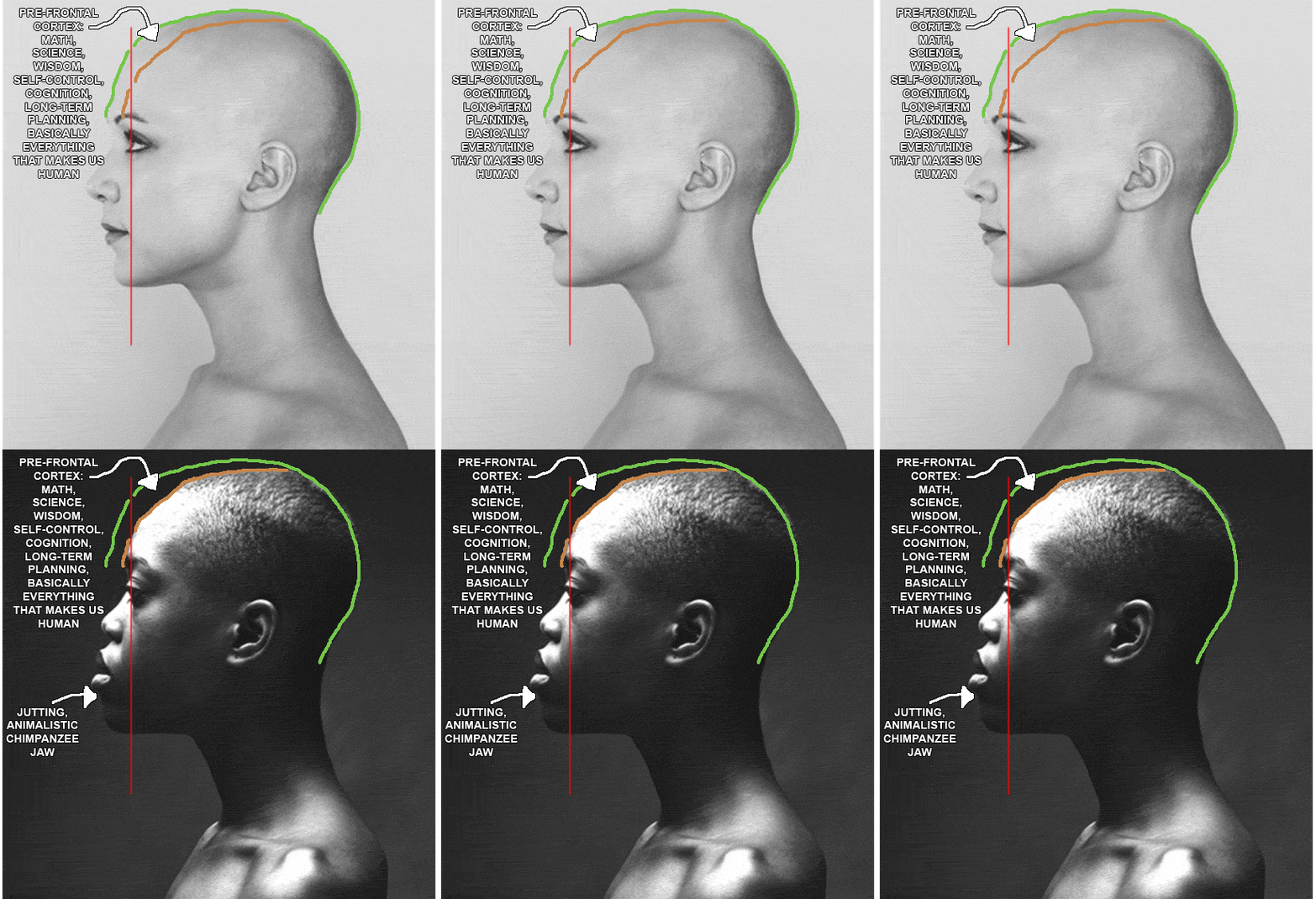
The part of the brain that is responsible for such forward thinking ability didn't "just happen"........it took 100,000 years worth of natural selectivity that took place 1000s of miles apart from where the more primitive negro race lived in isolation from the developing world.
13 Jul 2025 3:57 pm
Cannonpointer » 12 Jul 2025, 11:37 am » wrote: ↑ THIS is black fatigue:
https://www.youtube.com/watch?v=f3PJF0YE-x4
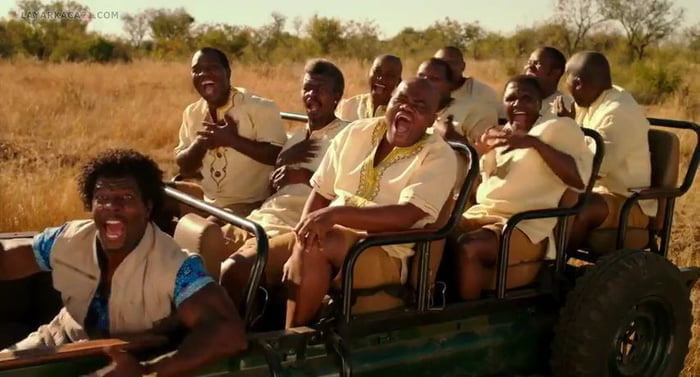
Such brutality....
JuCo 5 percenter...72
“Show me the man and I’ll find you the crime” ~ LAVRENTIY BERIA
"Try to get past your passionate ignorance and learn to accept what actually happened." ~ brown's unheeded words of wisdom
If gender is not sex, why should a gender claim change what sex you shower with?
"Libruls are often fascists on vacation..."
13 Jul 2025 4:04 pm
Quite prevalent during February's 'black history month' that lasts to mid March...RebelGator » 12 Jul 2025, 7:57 pm » wrote: ↑ *** fatigue is a condition that makes white men get tired of watching *** being promoted as a super race. Rarely do you see a TV commercial featuring a couple without a black man and a white woman. When a *** and a white man are featured, the white man is subservient and the *** is a brain surgeon.
Hope this helps....BTW, I believe I was the first to ever use the phrase.
JuCo 5 percenter...72
“Show me the man and I’ll find you the crime” ~ LAVRENTIY BERIA
"Try to get past your passionate ignorance and learn to accept what actually happened." ~ brown's unheeded words of wisdom
If gender is not sex, why should a gender claim change what sex you shower with?
"Libruls are often fascists on vacation..." 
13 Jul 2025 4:15 pm
Vegas » 13 Jul 2025, 3:33 pm » wrote: ↑ Yep. You didn't read a word. Just as I expected. At least you admit that you have no critical thinking skills.
yet I quoted most of it back to you to you
critical thinking means that someone must agree with you
13 Jul 2025 4:16 pm
Mrkelly » 13 Jul 2025, 4:15 pm » wrote: ↑
to you
critical thinking means that someone must agree with you
You clearly didn't comprehend it. Was it too sciency for you?
Blackvegatble's hypcorisy summed up in one post:
[/size]
Blackvegetable » 7 minutes ago » wrote: ↑7 minutes ago
Very simple questions...
From which you are running...
Blackvegetable » 7 minutes ago » wrote: ↑7 minutes ago
Very simple questions...
From which you are running...
13 Jul 2025 4:18 pm
Anybody got AI Fatigue Yet? It is much better on a well done steak than ketchup.
AI Overview
Artificial Intelligence (AI) and its potential impact on Black communities present a complex and multifaceted landscape, encompassing both significant opportunities and considerable risks.
Risks and Challenges
Bias and Discrimination: AI systems, trained on biased or incomplete historical data, can perpetuate and amplify existing societal biases, leading to discriminatory outcomes in areas like housing, hiring, criminal justice, and financial lending.
Job Displacement: Black workers are overrepresented in occupations most susceptible to automation, raising concerns about potential job loss and widening the racial economic gap without targeted reskilling and training initiatives.
Algorithmic Redlining: Over-reliance on algorithms in sensitive decision-making can inadvertently exclude Black individuals from opportunities, creating a form of "algorithmic redlining" according to Stanford HAI.
Privacy and Surveillance: AI-driven surveillance technologies have raised concerns about disproportionate impact on marginalized communities, including Black communities, who have historically faced unjust surveillance practices.
Opportunities and Potential Benefits
Improved Healthcare: AI can enhance healthcare access and outcomes in Black communities through AI-driven diagnostics tools, personalized treatment plans, and addressing health disparities.
Educational Advancement: AI can assist educators in tailoring lessons to individual student needs, potentially closing achievement gaps for students from low-income and minority backgrounds.
Economic Empowerment: AI can support Black entrepreneurs and businesses through market analysis, customer insights, process optimization, and providing access to resources, according to Forbes.
Preserving Black Culture and History: Platforms like the CollinAI GPT Library utilize AI to document, analyze, and share Black culture and history, ensuring its preservation and celebration.
Financial Inclusion: AI can create smarter financial tools, expand access to banking services, and help build generational wealth in Black communities.
Social Justice Advocacy: AI analytics can enhance the effectiveness of social justice campaigns by predicting trends and outcomes.
Towards Equitable AI
Diverse Representation: Ensuring the active participation and representation of Black individuals in AI development, research, and policy is critical to minimize bias and develop more inclusive and effective systems.
Ethical AI Governance: Implementing ethical principles, regulations, and oversight mechanisms are essential to ensure AI development and deployment are fair, transparent, accountable, and protect civil rights.
Targeted Reskilling and Training: Investing in accessible training programs in data analytics, AI ethics, cybersecurity, and software development for Black professionals can help them adapt to the evolving workforce and capitalize on new opportunities, according to www.drkaidupe.net.
Human-Centered Design: Developing AI solutions with a focus on the needs, values, and cultural context of Black communities can lead to more adaptable and beneficial technologies, according to Forbes.
In conclusion, a critical and intentional approach to AI development and deployment is needed to ensure it benefits Black communities and fosters a more equitable society. This requires prioritizing diversity and inclusion in the field, addressing algorithmic bias, investing in education and training, and developing AI with a human-centered approach.
AI Overview
Artificial Intelligence (AI) and its potential impact on Black communities present a complex and multifaceted landscape, encompassing both significant opportunities and considerable risks.
Risks and Challenges
Bias and Discrimination: AI systems, trained on biased or incomplete historical data, can perpetuate and amplify existing societal biases, leading to discriminatory outcomes in areas like housing, hiring, criminal justice, and financial lending.
Job Displacement: Black workers are overrepresented in occupations most susceptible to automation, raising concerns about potential job loss and widening the racial economic gap without targeted reskilling and training initiatives.
Algorithmic Redlining: Over-reliance on algorithms in sensitive decision-making can inadvertently exclude Black individuals from opportunities, creating a form of "algorithmic redlining" according to Stanford HAI.
Privacy and Surveillance: AI-driven surveillance technologies have raised concerns about disproportionate impact on marginalized communities, including Black communities, who have historically faced unjust surveillance practices.
Opportunities and Potential Benefits
Improved Healthcare: AI can enhance healthcare access and outcomes in Black communities through AI-driven diagnostics tools, personalized treatment plans, and addressing health disparities.
Educational Advancement: AI can assist educators in tailoring lessons to individual student needs, potentially closing achievement gaps for students from low-income and minority backgrounds.
Economic Empowerment: AI can support Black entrepreneurs and businesses through market analysis, customer insights, process optimization, and providing access to resources, according to Forbes.
Preserving Black Culture and History: Platforms like the CollinAI GPT Library utilize AI to document, analyze, and share Black culture and history, ensuring its preservation and celebration.
Financial Inclusion: AI can create smarter financial tools, expand access to banking services, and help build generational wealth in Black communities.
Social Justice Advocacy: AI analytics can enhance the effectiveness of social justice campaigns by predicting trends and outcomes.
Towards Equitable AI
Diverse Representation: Ensuring the active participation and representation of Black individuals in AI development, research, and policy is critical to minimize bias and develop more inclusive and effective systems.
Ethical AI Governance: Implementing ethical principles, regulations, and oversight mechanisms are essential to ensure AI development and deployment are fair, transparent, accountable, and protect civil rights.
Targeted Reskilling and Training: Investing in accessible training programs in data analytics, AI ethics, cybersecurity, and software development for Black professionals can help them adapt to the evolving workforce and capitalize on new opportunities, according to www.drkaidupe.net.
Human-Centered Design: Developing AI solutions with a focus on the needs, values, and cultural context of Black communities can lead to more adaptable and beneficial technologies, according to Forbes.
In conclusion, a critical and intentional approach to AI development and deployment is needed to ensure it benefits Black communities and fosters a more equitable society. This requires prioritizing diversity and inclusion in the field, addressing algorithmic bias, investing in education and training, and developing AI with a human-centered approach.
DUMP THE TRUMP SLUMP 2026!
Bump Caps Recommended..
Bump Caps Recommended..
13 Jul 2025 4:23 pm
Vegas » 13 Jul 2025, 4:16 pm » wrote: ↑ You clearly didn't comprehend it. Was it too sciency for you?
Too stupidI mean
you’re right

13 Jul 2025 4:24 pm
Ramblings of a jackass.Mrkelly » 12 Jul 2025, 1:17 pm » wrote: ↑ Face it
All of you **** would be ***
If, when you walked into a store
People followed you around
They always ask for your receipt when you walked out of the store
People locked their car doors when you walked by them
If you knew the small towns to avoid driving through, because they pulled *** over, just because
In certain parts all over the country, you would be one of those ***
If you wouldn’t
You have no self respect
13 Jul 2025 4:26 pm
So science is too stupid.

Blackvegatble's hypcorisy summed up in one post:
[/size]
Blackvegetable » 7 minutes ago » wrote: ↑7 minutes ago
Very simple questions...
From which you are running...
Blackvegetable » 7 minutes ago » wrote: ↑7 minutes ago
Very simple questions...
From which you are running...
13 Jul 2025 4:27 pm
awww … cute kid
got mommies phone again?
13 Jul 2025 4:27 pm
Yep. Especially when Evangelists are dead certain the white bearded white benovelent dude knows it all.
Condoms can work, much to the dismay of the Vatican
https://i.postimg.cc/CLLPdsgt/The-Secret.png

DUMP THE TRUMP SLUMP 2026!
Bump Caps Recommended..
Bump Caps Recommended..
13 Jul 2025 4:27 pm
Who is online
In total there are 2734 users online :: 14 registered, 17 bots, and 2703 guests
Registered users: Johnny You, *Roshambo, roadkill, Blackvegetable, Buck Naked, RebelGator, Beekeeper, LowIQTrash, PhiloBeddo, SouthernFried, Deezer Shoove, nefarious101, ….., Huey
Bots: okhttp, YandexBot, Bolt, DuckDuckGo, Baiduspider, DuckDuckBot, GPTBot, CriteoBot, proximic, NING, Googlebot, ADmantX, facebookexternalhit, Mediapartners-Google, curl/7, Applebot, bingbot