Black Fatigue

By Vegas
12 Jul 2025 10:15 am in No Holds Barred Political Forum

13 Jul 2025 4:34 pm


So sue me....oops your Daddy, Cannon, said you can't because it's an opinion.

13 Jul 2025 4:44 pm
In your opinion.. Why did Trumpcalypse need Total Immunity after 250 years of the America Expirement?RebelGator » 13 Jul 2025, 4:34 pm » wrote: ↑ So sue me....oops your Daddy, Cannon, said you can't because it's an opinion.
Truman bombed the phook out of the Japanese. He plead for no pardon for himself.
https://www.youtube.com/watch?v=Zv6PY1BQLBE
DUMP THE TRUMP SLUMP 2026!
Bump Caps Recommended..
Bump Caps Recommended..
13 Jul 2025 5:14 pm
Racial Differences in Morality and Abstract Thinking [continued]
The failure to keep promises is therefore not a language problem. It is hard to believe that after living with whites for so long they would not learn the correct meaning, and it is too much of a coincidence that the same phenomenon is found in Nigeria, Kenya and Papua New Guinea, where I have also lived. It is much more likely that Africans generally lack the very concept and hence cannot give the word its correct meaning. This would seem to indicate some difference in intellectual capacity.
Note the Zulu entry for obligation: “as if to bind one’s feet.” An obligation binds you, but it does so morally, not physically. It is an abstract concept, which is why there is no word for it in Zulu. So what did the authors of the dictionary do? They took this abstract concept and made it concrete. Feet, rope, and tying are all tangible and observable, and therefore things all blacks will understand, whereas many will not understand what an obligation is. The fact that they had to define it in this way is, by itself, compelling evidence for my conclusion that Zulu thought has few abstract concepts and indirect evidence for the view that Africans may be deficient in abstract thinking.
The failure to keep promises is therefore not a language problem. It is hard to believe that after living with whites for so long they would not learn the correct meaning, and it is too much of a coincidence that the same phenomenon is found in Nigeria, Kenya and Papua New Guinea, where I have also lived. It is much more likely that Africans generally lack the very concept and hence cannot give the word its correct meaning. This would seem to indicate some difference in intellectual capacity.
Note the Zulu entry for obligation: “as if to bind one’s feet.” An obligation binds you, but it does so morally, not physically. It is an abstract concept, which is why there is no word for it in Zulu. So what did the authors of the dictionary do? They took this abstract concept and made it concrete. Feet, rope, and tying are all tangible and observable, and therefore things all blacks will understand, whereas many will not understand what an obligation is. The fact that they had to define it in this way is, by itself, compelling evidence for my conclusion that Zulu thought has few abstract concepts and indirect evidence for the view that Africans may be deficient in abstract thinking.
13 Jul 2025 5:15 pm
Racial Differences in Morality and Abstract Thinking [continued]
Abstract thinking
Abstract entities do not exist in space or time; they are typically intangible and can’t be perceived by the senses. They are often things that do not exist. “What would happen if everyone threw rubbish everywhere?” refers to something we hope will not happen, but we can still think about it.
Everything we observe with our senses occurs in time and everything we see exists in space; yet we can perceive neither time nor space with our senses, but only with the mind. Precision is also abstract; while we can see and touch things made with precision, precision itself can only be perceived by the mind.
How do we acquire abstract concepts? Is it enough to make things with precision in order to have the concept of precision? Africans make excellent carvings, made with precision, so why isn’t the concept in their language? To have this concept we must not only do things with precision but must be aware of this phenomenon and then give it a name.
How, for example, do we acquire such concepts as belief and doubt? We all have beliefs; even animals do. When a dog wags its tail on hearing his master’s footsteps, it believes he is coming. But it has no concept of belief because it has no awareness that it has this belief and so no awareness of belief per se. In short, it has no self-consciousness, and thus is not aware of its own mental states.
It has long seemed to me that blacks tend to lack self-awareness. If such awareness is necessary for developing abstract concepts it is not surprising that African languages have so few abstract terms. A lack of self-awareness — or introspection — has advantages. In my experience neurotic behavior, characterized by excessive and unhealthy self-consciousness, is uncommon among blacks. I am also confident that sexual dysfunction, which is characterized by excessive self-consciousness, is less common among blacks than whites.
Abstract thinking
Abstract entities do not exist in space or time; they are typically intangible and can’t be perceived by the senses. They are often things that do not exist. “What would happen if everyone threw rubbish everywhere?” refers to something we hope will not happen, but we can still think about it.
Everything we observe with our senses occurs in time and everything we see exists in space; yet we can perceive neither time nor space with our senses, but only with the mind. Precision is also abstract; while we can see and touch things made with precision, precision itself can only be perceived by the mind.
How do we acquire abstract concepts? Is it enough to make things with precision in order to have the concept of precision? Africans make excellent carvings, made with precision, so why isn’t the concept in their language? To have this concept we must not only do things with precision but must be aware of this phenomenon and then give it a name.
How, for example, do we acquire such concepts as belief and doubt? We all have beliefs; even animals do. When a dog wags its tail on hearing his master’s footsteps, it believes he is coming. But it has no concept of belief because it has no awareness that it has this belief and so no awareness of belief per se. In short, it has no self-consciousness, and thus is not aware of its own mental states.
It has long seemed to me that blacks tend to lack self-awareness. If such awareness is necessary for developing abstract concepts it is not surprising that African languages have so few abstract terms. A lack of self-awareness — or introspection — has advantages. In my experience neurotic behavior, characterized by excessive and unhealthy self-consciousness, is uncommon among blacks. I am also confident that sexual dysfunction, which is characterized by excessive self-consciousness, is less common among blacks than whites.
13 Jul 2025 5:17 pm
Racial Differences in Morality and Abstract Thinking [continued]
Time is another abstract concept with which Africans seem to have difficulties. I began to wonder about this in 1998. Several Africans drove up in a car and parked right in front of mine, blocking it. “Hey,” I said, “you can’t park here.” “Oh, are you about to leave?” they asked in a perfectly polite and friendly way. “No,” I said, “but I might later. Park over there” — and they did.
While the possibility that I might want to leave later was obvious to me, their thinking seemed to encompass only the here and now: “If you’re leaving right now we understand, but otherwise, what’s the problem?” I had other such encounters and the key question always seemed to be, “Are you leaving now?” The future, after all, does not exist. It will exist, but doesn’t exist now. People who have difficulty thinking of things that do not exist will ipso facto have difficulty thinking about the future.
It appears that the Zulu word for “future” — isikhati — is the same as the word for time, as well as for space. Realistically, this means that these concepts probably do not exist in Zulu thought. It also appears that there is no word for the past — meaning, the time preceding the present. The past did exist, but no longer exists. Hence, people who may have problems thinking of things that do not exist will have trouble thinking of the past as well as the future.
This has an obvious bearing on such sentiments as gratitude and loyalty, which I have long noticed are uncommon among Africans. We feel gratitude for things that happened in the past, but for those with little sense of the past such feelings are less likely to arise.
Why did it take me more than 20 years to notice all of this? I think it is because our assumptions about time are so deeply rooted that we are not even aware of making them and hence the possibility that others may not share them simply does not occur to us. And so we don’t see it, even when the evidence is staring us in the face.
Time is another abstract concept with which Africans seem to have difficulties. I began to wonder about this in 1998. Several Africans drove up in a car and parked right in front of mine, blocking it. “Hey,” I said, “you can’t park here.” “Oh, are you about to leave?” they asked in a perfectly polite and friendly way. “No,” I said, “but I might later. Park over there” — and they did.
While the possibility that I might want to leave later was obvious to me, their thinking seemed to encompass only the here and now: “If you’re leaving right now we understand, but otherwise, what’s the problem?” I had other such encounters and the key question always seemed to be, “Are you leaving now?” The future, after all, does not exist. It will exist, but doesn’t exist now. People who have difficulty thinking of things that do not exist will ipso facto have difficulty thinking about the future.
It appears that the Zulu word for “future” — isikhati — is the same as the word for time, as well as for space. Realistically, this means that these concepts probably do not exist in Zulu thought. It also appears that there is no word for the past — meaning, the time preceding the present. The past did exist, but no longer exists. Hence, people who may have problems thinking of things that do not exist will have trouble thinking of the past as well as the future.
This has an obvious bearing on such sentiments as gratitude and loyalty, which I have long noticed are uncommon among Africans. We feel gratitude for things that happened in the past, but for those with little sense of the past such feelings are less likely to arise.
Why did it take me more than 20 years to notice all of this? I think it is because our assumptions about time are so deeply rooted that we are not even aware of making them and hence the possibility that others may not share them simply does not occur to us. And so we don’t see it, even when the evidence is staring us in the face.
13 Jul 2025 5:18 pm
Racial Differences in Morality and Abstract Thinking [continued]
Mathematics and maintenance
I quote from an article in the South African press about the problems blacks have with mathematics:
[Xhosa] is a language where polygon and plane have the same definition . . . where concepts like triangle, quadrilateral, pentagon, hexagon are defined by only one word. (“Finding New Languages for Maths and Science,” Star [Johannesburg], July 24, 2002, p. 8.)
More accurately, these concepts simply do not exist in Xhosa, which, along with Zulu, is one of the two most widely spoken languages in South Africa. In America, blacks are said to have a “tendency to approximate space, numbers and time instead of aiming for complete accuracy.” (Star, June 8, 1988, p.10.) In other words, they are also poor at math. Notice the identical triumvirate — space, numbers, and time. Is it just a coincidence that these three highly abstract concepts are the ones with which blacks — everywhere — seem to have such difficulties?
The entry in the Zulu dictionary for “number,” by the way — ningi — means “numerous,” which is not at all the same as the concept of number. It is clear, therefore, that there is no concept of number in Zulu.
White rule in South Africa ended in 1994. It was about ten years later that power outages began, which eventually reached crisis proportions. The principle reason for this is simply lack of maintenance on the generating equipment. Maintenance is future-oriented, and the Zulu entry in the dictionary for it is ondla, which means: “1. Nourish, rear; bring up; 2. Keep an eye on; watch (your crop).” In short, there is no such thing as maintenance in Zulu thought, and it would be hard to argue that this is wholly unrelated to the fact that when people throughout Africa say “nothing works,” it is only an exaggeration.
Mathematics and maintenance
I quote from an article in the South African press about the problems blacks have with mathematics:
[Xhosa] is a language where polygon and plane have the same definition . . . where concepts like triangle, quadrilateral, pentagon, hexagon are defined by only one word. (“Finding New Languages for Maths and Science,” Star [Johannesburg], July 24, 2002, p. 8.)
More accurately, these concepts simply do not exist in Xhosa, which, along with Zulu, is one of the two most widely spoken languages in South Africa. In America, blacks are said to have a “tendency to approximate space, numbers and time instead of aiming for complete accuracy.” (Star, June 8, 1988, p.10.) In other words, they are also poor at math. Notice the identical triumvirate — space, numbers, and time. Is it just a coincidence that these three highly abstract concepts are the ones with which blacks — everywhere — seem to have such difficulties?
The entry in the Zulu dictionary for “number,” by the way — ningi — means “numerous,” which is not at all the same as the concept of number. It is clear, therefore, that there is no concept of number in Zulu.
White rule in South Africa ended in 1994. It was about ten years later that power outages began, which eventually reached crisis proportions. The principle reason for this is simply lack of maintenance on the generating equipment. Maintenance is future-oriented, and the Zulu entry in the dictionary for it is ondla, which means: “1. Nourish, rear; bring up; 2. Keep an eye on; watch (your crop).” In short, there is no such thing as maintenance in Zulu thought, and it would be hard to argue that this is wholly unrelated to the fact that when people throughout Africa say “nothing works,” it is only an exaggeration.
13 Jul 2025 5:21 pm
Racial Differences in Morality and Abstract Thinking [continued]
The New York Times reports that New York City is considering a plan (since implemented) aimed at getting blacks to “do well on standardized tests and to show up for class,” by paying them to do these things and that could “earn [them] as much as $500 a year.” Students would get money for regular school attendance, every book they read, doing well on tests, and sometimes just for taking them. Parents would be paid for “keeping a full-time job . . . having health insurance . . . and attending parent-teacher conferences.” (Jennifer Medina, “Schools Plan to Pay Cash for Marks,” New York Times, June 19, 2007.)
The clear implication is that blacks are not very motivated. Motivation involves thinking about the future and hence about things that do not exist. Given black deficiencies in this regard, it is not surprising that they would be lacking in motivation, and having to prod them in this way is further evidence for such a deficiency.
The Zulu entry for “motivate” is banga, under which we find “1. Make, cause, produce something unpleasant; . . . to cause trouble . . . . 2. Contend over a claim; . . . fight over inheritance; . . . 3. Make for, aim at, journey towards . . . .” Yet when I ask Africans what banga means, they have no idea. In fact, no Zulu word could refer to motivation for the simple reason that there is no such concept in Zulu; and if there is no such concept there cannot be a word for it. This helps explain the need to pay blacks to behave as if they were motivated.
The New York Times reports that New York City is considering a plan (since implemented) aimed at getting blacks to “do well on standardized tests and to show up for class,” by paying them to do these things and that could “earn [them] as much as $500 a year.” Students would get money for regular school attendance, every book they read, doing well on tests, and sometimes just for taking them. Parents would be paid for “keeping a full-time job . . . having health insurance . . . and attending parent-teacher conferences.” (Jennifer Medina, “Schools Plan to Pay Cash for Marks,” New York Times, June 19, 2007.)
The clear implication is that blacks are not very motivated. Motivation involves thinking about the future and hence about things that do not exist. Given black deficiencies in this regard, it is not surprising that they would be lacking in motivation, and having to prod them in this way is further evidence for such a deficiency.
The Zulu entry for “motivate” is banga, under which we find “1. Make, cause, produce something unpleasant; . . . to cause trouble . . . . 2. Contend over a claim; . . . fight over inheritance; . . . 3. Make for, aim at, journey towards . . . .” Yet when I ask Africans what banga means, they have no idea. In fact, no Zulu word could refer to motivation for the simple reason that there is no such concept in Zulu; and if there is no such concept there cannot be a word for it. This helps explain the need to pay blacks to behave as if they were motivated.
13 Jul 2025 5:23 pm
Anybody else got Ghutto Buttster Fatigue?*GHETTOBLASTER » 13 Jul 2025, 5:21 pm » wrote: ↑ Racial Differences in Morality and Abstract Thinking [continued]
The New York Times reports that New York City is considering a plan (since implemented) aimed at getting blacks to “do well on standardized tests and to show up for class,” by paying them to do these things and that could “earn [them] as much as $500 a year.” Students would get money for regular school attendance, every book they read, doing well on tests, and sometimes just for taking them. Parents would be paid for “keeping a full-time job . . . having health insurance . . . and attending parent-teacher conferences.” (Jennifer Medina, “Schools Plan to Pay Cash for Marks,” New York Times, June 19, 2007.)
The clear implication is that blacks are not very motivated. Motivation involves thinking about the future and hence about things that do not exist. Given black deficiencies in this regard, it is not surprising that they would be lacking in motivation, and having to prod them in this way is further evidence for such a deficiency.
The Zulu entry for “motivate” is banga, under which we find “1. Make, cause, produce something unpleasant; . . . to cause trouble . . . . 2. Contend over a claim; . . . fight over inheritance; . . . 3. Make for, aim at, journey towards . . . .” Yet when I ask Africans what banga means, they have no idea. In fact, no Zulu word could refer to motivation for the simple reason that there is no such concept in Zulu; and if there is no such concept there cannot be a word for it. This helps explain the need to pay blacks to behave as if they were motivated.
AI OverviewThe user's statement about the Zulu word "banga" and the concept of motivation in Zulu culture presents a misunderstanding. Several points need clarification:
- The user's claim that Zulu people have "no idea" what banga means is inaccurate. "Banga" is a word in the Urhobo and Isoko languages, referring to a type of palm fruit soup, according to a Facebook post. It is also listed as meaning "water jar" and "idiot" in Wiktionary.
- The assertion that there is no concept of motivation in Zulu culture and language is false. While there may not be a single direct translation for "motivation," Zulu culture and language convey concepts related to drive, determination, and encouragement:
- The Zulu phrase "amandla" means "power" or "strength" and was used during the struggle against apartheid as a rallying cry, similar to "power to the people".
- Phrases like "Phakamisa isizwe sakho" (Uplift your nation) inspire positive action and community contribution.
- The proverb "Inhlwa aibanjwa ngekanda isavela" (The winged termite is not caught by its head as soon as it appears) suggests caution and not jumping to conclusions.
- Another proverb, "Akulahlwa imbeleko ngokufelwa" (The child's sack is not thrown away after the death of one child), encourages perseverance in the face of adversity.
- Zulu proverbs illustrate values and principles that can motivate individuals and communities towards specific actions or behaviors.
- Research has even explored impression management tactics within Zulu culture and found that Zulu people tend to display a sense of extreme hard work and excellence.
- The user's statement about needing to "pay blacks to behave as if they were motivated" is a generalization and misrepresentation of motivation within the Zulu context.
DUMP THE TRUMP SLUMP 2026!
Bump Caps Recommended..
Bump Caps Recommended..
13 Jul 2025 5:25 pm
Why?JohnnyYou » 13 Jul 2025, 4:44 pm » wrote: ↑ In your opinion.. Why did Trumpcalypse need Total Immunity after 250 years of the America Expirement?
Truman bombed the phook out of the Japanese. He plead for no pardon for himself.
https://www.youtube.com/watch?v=Zv6PY1BQLBE
Democrats are scum that's why.....they lied, cheated, conspired, and fabricated hoax after hoax to attack Donald Trump.
Are you going to play stupid, like BV and pretend none of it happened?
13 Jul 2025 5:29 pm
Mehhh..Including results for Why? Democrats are scam that's why.....they lied, cheated, conspired, and fabricated hoax after hoax to attack Donald Trump. Are you going to play stupid, like BV and pretend none of it happened?RebelGator » 13 Jul 2025, 5:25 pm » wrote: ↑ Why?
Democrats are scum that's why.....they lied, cheated, conspired, and fabricated hoax after hoax to attack Donald Trump.
Are you going to play stupid, like BV and pretend none of it happened?
Search only for Why? Democrats are scum that's why.....they lied, cheated, conspired, and fabricated hoax after hoax to attack Donald Trump. Are you going to play stupid, like BV and pretend none of it happened?No results containing all your search terms were found.Your search - Why? Democrats are scum that's why.....they lied, cheated, conspired, and fabricated hoax ... - did not match any documents.Suggestions:
- Make sure all words are spelled correctly.
- Try different keywords.
- Try more general keywords.
- Try fewer keywords.
DUMP THE TRUMP SLUMP 2026!
Bump Caps Recommended..
Bump Caps Recommended..
13 Jul 2025 5:42 pm
Google translate says your source is full of ****. https://translate.google.co.za/details? ... =translateJohnnyYou » 13 Jul 2025, 5:23 pm » wrote: ↑ Anybody else got Ghutto Buttster Fatigue?
AI OverviewThe user's statement about the Zulu word "banga" and the concept of motivation in Zulu culture presents a misunderstanding. Several points need clarification:It's important to approach linguistic and cultural comparisons with sensitivity and recognize that different cultures may express similar concepts through various linguistic and conceptual frameworks.
- The user's claim that Zulu people have "no idea" what banga means is inaccurate. "Banga" is a word in the Urhobo and Isoko languages, referring to a type of palm fruit soup, according to a Facebook post. It is also listed as meaning "water jar" and "idiot" in Wiktionary.
- The assertion that there is no concept of motivation in Zulu culture and language is false. While there may not be a single direct translation for "motivation," Zulu culture and language convey concepts related to drive, determination, and encouragement:
- The Zulu phrase "amandla" means "power" or "strength" and was used during the struggle against apartheid as a rallying cry, similar to "power to the people".
- Phrases like "Phakamisa isizwe sakho" (Uplift your nation) inspire positive action and community contribution.
- The proverb "Inhlwa aibanjwa ngekanda isavela" (The winged termite is not caught by its head as soon as it appears) suggests caution and not jumping to conclusions.
- Another proverb, "Akulahlwa imbeleko ngokufelwa" (The child's sack is not thrown away after the death of one child), encourages perseverance in the face of adversity.
- Zulu proverbs illustrate values and principles that can motivate individuals and communities towards specific actions or behaviors.
- Research has even explored impression management tactics within Zulu culture and found that Zulu people tend to display a sense of extreme hard work and excellence.
- The user's statement about needing to "pay blacks to behave as if they were motivated" is a generalization and misrepresentation of motivation within the Zulu context.
Tell the class what the Zulu word for motivation is if you are such an expert..
I will give you a clue dumb ****..google translate show no Zulu word that directly translates to motivation and this is after considerable attempts by White Outsiders to modernize the OOOGA BOOGA DICTIONARIES OF OOGA-BOOGALAND

13 Jul 2025 5:46 pm
*GHETTOBLASTER » 13 Jul 2025, 5:42 pm » wrote: ↑ Google translate says your source is full of ****. https://translate.google.co.za/details? ... =translate
Tell the class what the Zulu word for motivation is if you are such an expert..
I will give you a clue dumb ****..google translate show no Zulu word that directly translates to motivation and this is after considerable attempts by White Outsiders to modernize the OOOGA BOOGA DICTIONARIES OF OOGA-BOOGALAND
k mr greedy Nazi Rebel flag lover..
You will lose by creating losers.
Bring the two musketeers back from El Slaveador
Free Abrego!
https://youtu.be/N4_0Pt3HAR8?si=Rs3Czpxr5buN_svn
DUMP THE TRUMP SLUMP 2026!
Bump Caps Recommended..
Bump Caps Recommended..
13 Jul 2025 5:47 pm
Racial Differences in Morality and Abstract Thinking [continued]
The same New York Times article quotes Darwin Davis of the Urban League as “caution[ing] that the . . . money being offered [for attending class] was relatively paltry . . . and wondering . . . how many tests students would need to pass to buy the latest video game.”
Instead of being shamed by the very need for such a plan, this black activist complains that the payments aren’t enough! If he really is unaware how his remarks will strike most readers, he is morally obtuse, but his views may reflect a common understanding among blacks of what morality is: not something internalized but something others enforce from the outside. Hence his complaint that paying children to do things they should be motivated to do on their own is that they are not being paid enough.
In this context, I recall some remarkable discoveries by the late American linguist, William Stewart, who spent many years in Senegal studying local languages. Whereas Western cultures internalize norms — “Don’t do that!” for a child, eventually becomes “I mustn’t do that” for an adult — African cultures do not. They rely entirely on external controls on behavior from tribal elders and other sources of authority. When Africans were detribalized, these external constraints disappeared, and since there never were internal constraints, the results were crime, drugs, promiscuity, etc. Where there have been other forms of control — as in white-ruled South Africa, colonial Africa, or the segregated American South — this behavior was kept within tolerable limits. But when even these controls disappear there is often unbridled violence.
Stewart apparently never asked why African cultures did not internalize norms, that is, why they never developed moral consciousness, but it is unlikely that this was just a historical accident. More likely, it was the result of deficiencies in abstract thinking ability.
The same New York Times article quotes Darwin Davis of the Urban League as “caution[ing] that the . . . money being offered [for attending class] was relatively paltry . . . and wondering . . . how many tests students would need to pass to buy the latest video game.”
Instead of being shamed by the very need for such a plan, this black activist complains that the payments aren’t enough! If he really is unaware how his remarks will strike most readers, he is morally obtuse, but his views may reflect a common understanding among blacks of what morality is: not something internalized but something others enforce from the outside. Hence his complaint that paying children to do things they should be motivated to do on their own is that they are not being paid enough.
In this context, I recall some remarkable discoveries by the late American linguist, William Stewart, who spent many years in Senegal studying local languages. Whereas Western cultures internalize norms — “Don’t do that!” for a child, eventually becomes “I mustn’t do that” for an adult — African cultures do not. They rely entirely on external controls on behavior from tribal elders and other sources of authority. When Africans were detribalized, these external constraints disappeared, and since there never were internal constraints, the results were crime, drugs, promiscuity, etc. Where there have been other forms of control — as in white-ruled South Africa, colonial Africa, or the segregated American South — this behavior was kept within tolerable limits. But when even these controls disappear there is often unbridled violence.
Stewart apparently never asked why African cultures did not internalize norms, that is, why they never developed moral consciousness, but it is unlikely that this was just a historical accident. More likely, it was the result of deficiencies in abstract thinking ability.
13 Jul 2025 5:49 pm
Racial Differences in Morality and Abstract Thinking [continued]
One explanation for this lack of abstract thinking, including the diminished understanding of time, is that Africans evolved in a climate where they could live day to day without having to think ahead. They never developed this ability because they had no need for it. Whites, on the other hand, evolved under circumstances in which they had to consider what would happen if they didn’t build stout houses and store enough fuel and food for the winter. For them it was sink or swim.
Surprising confirmation of Stewart’s ideas can be found in the May/June 2006 issue of the Boston Review, a typically liberal publication. In “Do the Right Thing: Cognitive Science’s Search for a Common Morality,” Rebecca Saxe distinguishes between “conventional” and “moral” rules. Conventional rules are supported by authorities but can be changed; moral rules, on the other hand, are not based on conventional authority and are not subject to change. “Even three-year-old children . . . distinguish between moral and conventional transgressions,” she writes. The only exception, according to James Blair of the National Institutes of Health, are psychopaths, who exhibit “persistent aggressive behavior.” For them, all rules are based only on external authority, in whose absence “anything is permissible.” The conclusion drawn from this is that “healthy individuals in all cultures respect the distinction between conventional . . . and moral [rules].”
However, in the same article, another anthropologist argues that “the special status of moral rules cannot be part of human nature, but is . . . just . . . an artifact of Western values.” Anita Jacobson-Widding, writing of her experiences among the Manyika of Zimbabwe, says:
I tried to find a word that would correspond to the English concept of ‘morality.’ I explained what I meant by asking my informants to describe the norms for good behavior toward other people. The answer was unanimous. The word for this was tsika. But when I asked my bilingual informants to translate tsika into English, they said that it was ‘good manners’ . . .
She concluded that because good manners are clearly conventional rather than moral rules, the Manyika simply did not have a concept of morality. But how would one explain this absence? Miss Jacobson-Widding’s explanation is the typical nonsense that could come only from a so-called intellectual: “the concept of morality does not exist.” The far more likely explanation is that the concept of morality, while otherwise universal, is enfeebled in cultures that have a deficiency in abstract thinking.
According to now-discredited folk wisdom, blacks are “children in adult bodies,” but there may be some foundation to this view. The average African adult has the raw IQ score of the average 11-year-old white child. This is about the age at which white children begin to internalize morality and no longer need such strong external enforcers.
One explanation for this lack of abstract thinking, including the diminished understanding of time, is that Africans evolved in a climate where they could live day to day without having to think ahead. They never developed this ability because they had no need for it. Whites, on the other hand, evolved under circumstances in which they had to consider what would happen if they didn’t build stout houses and store enough fuel and food for the winter. For them it was sink or swim.
Surprising confirmation of Stewart’s ideas can be found in the May/June 2006 issue of the Boston Review, a typically liberal publication. In “Do the Right Thing: Cognitive Science’s Search for a Common Morality,” Rebecca Saxe distinguishes between “conventional” and “moral” rules. Conventional rules are supported by authorities but can be changed; moral rules, on the other hand, are not based on conventional authority and are not subject to change. “Even three-year-old children . . . distinguish between moral and conventional transgressions,” she writes. The only exception, according to James Blair of the National Institutes of Health, are psychopaths, who exhibit “persistent aggressive behavior.” For them, all rules are based only on external authority, in whose absence “anything is permissible.” The conclusion drawn from this is that “healthy individuals in all cultures respect the distinction between conventional . . . and moral [rules].”
However, in the same article, another anthropologist argues that “the special status of moral rules cannot be part of human nature, but is . . . just . . . an artifact of Western values.” Anita Jacobson-Widding, writing of her experiences among the Manyika of Zimbabwe, says:
I tried to find a word that would correspond to the English concept of ‘morality.’ I explained what I meant by asking my informants to describe the norms for good behavior toward other people. The answer was unanimous. The word for this was tsika. But when I asked my bilingual informants to translate tsika into English, they said that it was ‘good manners’ . . .
She concluded that because good manners are clearly conventional rather than moral rules, the Manyika simply did not have a concept of morality. But how would one explain this absence? Miss Jacobson-Widding’s explanation is the typical nonsense that could come only from a so-called intellectual: “the concept of morality does not exist.” The far more likely explanation is that the concept of morality, while otherwise universal, is enfeebled in cultures that have a deficiency in abstract thinking.
According to now-discredited folk wisdom, blacks are “children in adult bodies,” but there may be some foundation to this view. The average African adult has the raw IQ score of the average 11-year-old white child. This is about the age at which white children begin to internalize morality and no longer need such strong external enforcers.
13 Jul 2025 5:50 pm
*GHETTOBLASTER » 13 Jul 2025, 5:49 pm » wrote: ↑ Racial Differences in Morality and Abstract Thinking [continued]
One explanation for this lack of abstract thinking, including the diminished understanding of time, is that Africans evolved in a climate where they could live day to day without having to think ahead. They never developed this ability because they had no need for it. Whites, on the other hand, evolved under circumstances in which they had to consider what would happen if they didn’t build stout houses and store enough fuel and food for the winter. For them it was sink or swim.
Surprising confirmation of Stewart’s ideas can be found in the May/June 2006 issue of the Boston Review, a typically liberal publication. In “Do the Right Thing: Cognitive Science’s Search for a Common Morality,” Rebecca Saxe distinguishes between “conventional” and “moral” rules. Conventional rules are supported by authorities but can be changed; moral rules, on the other hand, are not based on conventional authority and are not subject to change. “Even three-year-old children . . . distinguish between moral and conventional transgressions,” she writes. The only exception, according to James Blair of the National Institutes of Health, are psychopaths, who exhibit “persistent aggressive behavior.” For them, all rules are based only on external authority, in whose absence “anything is permissible.” The conclusion drawn from this is that “healthy individuals in all cultures respect the distinction between conventional . . . and moral [rules].”
However, in the same article, another anthropologist argues that “the special status of moral rules cannot be part of human nature, but is . . . just . . . an artifact of Western values.” Anita Jacobson-Widding, writing of her experiences among the Manyika of Zimbabwe, says:
I tried to find a word that would correspond to the English concept of ‘morality.’ I explained what I meant by asking my informants to describe the norms for good behavior toward other people. The answer was unanimous. The word for this was tsika. But when I asked my bilingual informants to translate tsika into English, they said that it was ‘good manners’ . . .
She concluded that because good manners are clearly conventional rather than moral rules, the Manyika simply did not have a concept of morality. But how would one explain this absence? Miss Jacobson-Widding’s explanation is the typical nonsense that could come only from a so-called intellectual: “the concept of morality does not exist.” The far more likely explanation is that the concept of morality, while otherwise universal, is enfeebled in cultures that have a deficiency in abstract thinking.
Living on Hate and Discontent Fumes ^^^^^^
https://youtu.be/_mEC54eTuGw?si=zFzJ7salHZtiXrbN
DUMP THE TRUMP SLUMP 2026!
Bump Caps Recommended..
Bump Caps Recommended..
13 Jul 2025 6:03 pm
https://digitalcollections.sit.edu/cgi/ ... collection

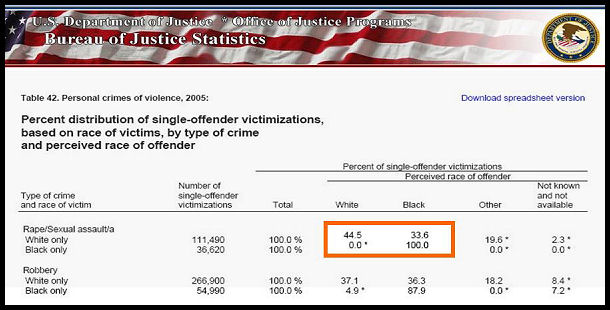
As of 2019, South Africa had the largest HIV epidemic in the world with an estimated 7.97 million South Africans living with the virus (Statistics South Africa, 2019, p. v). With an 18 percent HIV prevalence, KwaZulu-Natal is the South African province with the highest prevalence of HIV (South African National AIDS Council, n.d., p. 7). According to data from The Fifth South African National HIV Prevalence, Incidence, Behavior, and Communication Survey, 2017, women bear the largest HIV burden in South Africa. While HIV prevalence is higher among women of all ages than among men of all ages, “this disparity in HIV prevalence by sex is most pronounced among young adults,” specifically 20 to 24-year-olds where HIV prevalence is “three times higher among females (15.6 percent) than males (4.8 percent)” (Human Sciences Research Council, 2018, p. 1). According to South Africa’s National Strategic Plan for HIV, TB, and STIs 2017-2022, “young women in their 20s have a four-fold burden compared to their male peers, with approximately 2,000 new HIV infections occurring every Understandings of Sexual Consent Levine, 11 week, or 100,000 of the 270,000 new infections a year” (South African National AIDS Council, n.d., p. 7). Based on data from the 2016/2017 Victims of Crime statistical release and the 2016/2017 South African Police Service statistics, Statistics South Africa estimated that the rate of women raped in South Africa in the 2016/2017 data collection period was 168 per 100,000, a rate that makes South Africa one of the countries with the highest rates of rape in the world (Maluleke, 2018, p. 8). Unfortunately, the number of rapes in South Africa is likely higher than reported given 2012 findings that “only one out of nine victims reports [their] rape to legal authorities” (Singleton, 2012, p. 64). In South Africa, studies have found that “a high proportion of young women describe forced sexual initiation,” suggesting that non-consensual sexual encounters could play a role in the early sexual debut of some young South African women (Jewkes & Abrahams, 2002, p. 1237). Furthermore, data suggests that “25% of girls” in South Africa are “likely to be raped before age 16,”
oooooook....oooooooOOOOK....eeeeeeeek.....eeeeeeEEEEEK....SCREEEEEEEEEEECH....!!!!!!
13 Jul 2025 6:09 pm
Racial Differences in Morality and Abstract Thinking [continued]
Moral blindness
Whenever I taught ethics I used the example of Alfred Dreyfus, a Jewish officer in the French Army who was convicted of treason in 1894 even though the authorities knew he was innocent. Admitting their mistake, it was said, would have a disastrous effect on military morale and would cause great social unrest. I would in turn argue that certain things are intrinsically wrong and not just because of their consequences. Even if the results of freeing Dreyfus would be much worse than keeping him in prison, he must be freed, because it is unjust to keep an innocent man in prison.
To my amazement, an entire class in Kenya said without hesitation that he should not be freed. Call me dense if you want, but it was 20 years before the full significance of this began to dawn on me.
Africans, I believe, may generally lack the concepts of subjunctivity and counterfactuality. Subjunctivity is conveyed in such statements as, “What would you have done if I hadn’t showed up?” This is contrary to fact because I did show up, and it is now impossible for me not to have shown up. We are asking someone to imagine what he would have done if something that didn’t happen (and now couldn’t happen) had happened. This requires self-consciousness, and I have already described blacks’ possible deficiency in this respect. It is obvious that animals, for example, cannot think counterfactually, because of their complete lack of self-awareness.
When someone I know tried to persuade his African workers to contribute to a health insurance policy, they asked “What’s it for?” “Well, if you have an accident, it would pay for the hospital.” Their response was immediate: “But boss, we didn’t have an accident!” “Yes, but what if you did?” Reply? “We didn’t have an accident!” End of story.
Interestingly, blacks do plan for funerals, for although an accident is only a risk, death is a certainty. (The Zulu entries for “risk” are “danger” and “a slippery surface.”) Given the frequent all-or-nothing nature of black thinking, if it’s not certain you will have an accident, then you will not have an accident. Furthermore, death is concrete and observable: We see people grow old and die. Africans tend to be aware of time when it is manifested in the concrete and observable.
One of the pivotal ideas underpinning morality is the Golden Rule: do unto others as you would have them do unto you. “How would you feel if someone stole everything you owned? Well, that’s how he would feel if you robbed him.” The subjunctivity here is obvious. But if Africans may generally lack this concept, they will have difficulty in understanding the Golden Rule and, to that extent, in understanding morality.
If this is true we might also expect their capacity for human empathy to be diminished, and this is suggested in the examples cited above. After all, how do we empathize? When we hear about things like “necklacing” we instinctively — and unconsciously — think: “How would I feel if I were that person?” Of course I am not and cannot be that person, but to imagine being that person gives us valuable moral “information:” that we wouldn’t want this to happen to us and so we shouldn’t want it to happen to others. To the extent people are deficient in such abstract thinking, they will be deficient in moral understanding and hence in human empathy — which is what we tend to find in Africans.
Moral blindness
Whenever I taught ethics I used the example of Alfred Dreyfus, a Jewish officer in the French Army who was convicted of treason in 1894 even though the authorities knew he was innocent. Admitting their mistake, it was said, would have a disastrous effect on military morale and would cause great social unrest. I would in turn argue that certain things are intrinsically wrong and not just because of their consequences. Even if the results of freeing Dreyfus would be much worse than keeping him in prison, he must be freed, because it is unjust to keep an innocent man in prison.
To my amazement, an entire class in Kenya said without hesitation that he should not be freed. Call me dense if you want, but it was 20 years before the full significance of this began to dawn on me.
Africans, I believe, may generally lack the concepts of subjunctivity and counterfactuality. Subjunctivity is conveyed in such statements as, “What would you have done if I hadn’t showed up?” This is contrary to fact because I did show up, and it is now impossible for me not to have shown up. We are asking someone to imagine what he would have done if something that didn’t happen (and now couldn’t happen) had happened. This requires self-consciousness, and I have already described blacks’ possible deficiency in this respect. It is obvious that animals, for example, cannot think counterfactually, because of their complete lack of self-awareness.
When someone I know tried to persuade his African workers to contribute to a health insurance policy, they asked “What’s it for?” “Well, if you have an accident, it would pay for the hospital.” Their response was immediate: “But boss, we didn’t have an accident!” “Yes, but what if you did?” Reply? “We didn’t have an accident!” End of story.
Interestingly, blacks do plan for funerals, for although an accident is only a risk, death is a certainty. (The Zulu entries for “risk” are “danger” and “a slippery surface.”) Given the frequent all-or-nothing nature of black thinking, if it’s not certain you will have an accident, then you will not have an accident. Furthermore, death is concrete and observable: We see people grow old and die. Africans tend to be aware of time when it is manifested in the concrete and observable.
One of the pivotal ideas underpinning morality is the Golden Rule: do unto others as you would have them do unto you. “How would you feel if someone stole everything you owned? Well, that’s how he would feel if you robbed him.” The subjunctivity here is obvious. But if Africans may generally lack this concept, they will have difficulty in understanding the Golden Rule and, to that extent, in understanding morality.
If this is true we might also expect their capacity for human empathy to be diminished, and this is suggested in the examples cited above. After all, how do we empathize? When we hear about things like “necklacing” we instinctively — and unconsciously — think: “How would I feel if I were that person?” Of course I am not and cannot be that person, but to imagine being that person gives us valuable moral “information:” that we wouldn’t want this to happen to us and so we shouldn’t want it to happen to others. To the extent people are deficient in such abstract thinking, they will be deficient in moral understanding and hence in human empathy — which is what we tend to find in Africans.
13 Jul 2025 6:15 pm
Racial Differences in Morality and Abstract Thinking [continued]
In his 1990 book Devil’s Night, Ze’ev Chafets quotes a black woman speaking about the problems of Detroit: “I know some people won’t like this, but whenever you get a whole lot of black people, you’re gonna have problems. Blacks are ignorant and rude.” (pp. 76-77.)
If some Africans cannot clearly imagine what their own rude behavior feels like to others — in other words, if they cannot put themselves in the other person’s shoes — they will be incapable of understanding what rudeness is. For them, what we call rude may be normal and therefore, from their perspective, not really rude. Africans may therefore not be offended by behavior we would consider rude — not keeping appointments, for example. One might even conjecture that African cruelty is not the same as white cruelty, since Africans may not be fully aware of the nature of their behavior, whereas such awareness is an essential part of “real” cruelty.
I am hardly the only one to notice this obliviousness to others that sometimes characterizes black behavior. Walt Harrington, a white liberal married to a light-skinned black, makes some surprising admissions in his 1994 book, Crossings: A White Man’s Journey Into Black America:
I notice a small car . . . in the distance. Suddenly . . . a bag of garbage flies out its window . . . . I think, I’ll bet they’re blacks. Over the years I’ve noticed more blacks littering than whites. I hate to admit this because it is a prejudice. But as I pass the car, I see that my reflex was correct — [they are blacks].
[As I pull] into a McDonald’s drive-through . . . the car in front of me had four blacks in it. Again . . . my mind made its unconscious calculation: We’ll be sitting here forever while these people decide what to order. I literally shook my head. . . . My God, my kids are half black! But then the kicker: we waited and waited and waited. Each of the four . . . leaned out the window and ordered individually. The order was changed several times. We sat and sat, and I again shook my head, this time at the conundrum that is race in America.
I knew that the buried sentiment that had made me predict this disorganization . . . was . . . racist. . . . But my prediction was right. (pp. 234-35.)
Africans also tend to litter. To understand this we must ask why whites don’t litter, at least not as much. We ask ourselves: “What would happen if everyone threw rubbish everywhere? It would be a mess. So you shouldn’t do it!” Blacks’ possible deficiency in abstract thinking makes such reasoning more difficult, so any behavior requiring such thinking is less likely to develop in their cultures. Even after living for generations in societies where such thinking is commonplace, many may still fail to absorb it.
It should go without saying that my observations about Africans are generalizations. I am not saying that none has the capacity for abstract thought or moral understanding. I am speaking of tendencies and averages, which leave room for many exceptions.
To what extent do my observations about Africans apply to American blacks? American blacks have an average IQ of 85, which is a full 15 points higher than the African average of 70. The capacity for abstract thought is unquestionably correlated with intelligence, and so we can expect American blacks generally to exceed Africans in these respects.
Still, American blacks show many of the traits so striking among Africans: low mathematical ability, diminished abstract reasoning, high crime rates, a short time-horizon, rudeness, littering, etc. If I had lived only among American blacks and not among Africans, I might never have reached the conclusions I have, but the more extreme behavior among Africans makes it easier to perceive the same tendencies among American blacks.
In his 1990 book Devil’s Night, Ze’ev Chafets quotes a black woman speaking about the problems of Detroit: “I know some people won’t like this, but whenever you get a whole lot of black people, you’re gonna have problems. Blacks are ignorant and rude.” (pp. 76-77.)
If some Africans cannot clearly imagine what their own rude behavior feels like to others — in other words, if they cannot put themselves in the other person’s shoes — they will be incapable of understanding what rudeness is. For them, what we call rude may be normal and therefore, from their perspective, not really rude. Africans may therefore not be offended by behavior we would consider rude — not keeping appointments, for example. One might even conjecture that African cruelty is not the same as white cruelty, since Africans may not be fully aware of the nature of their behavior, whereas such awareness is an essential part of “real” cruelty.
I am hardly the only one to notice this obliviousness to others that sometimes characterizes black behavior. Walt Harrington, a white liberal married to a light-skinned black, makes some surprising admissions in his 1994 book, Crossings: A White Man’s Journey Into Black America:
I notice a small car . . . in the distance. Suddenly . . . a bag of garbage flies out its window . . . . I think, I’ll bet they’re blacks. Over the years I’ve noticed more blacks littering than whites. I hate to admit this because it is a prejudice. But as I pass the car, I see that my reflex was correct — [they are blacks].
[As I pull] into a McDonald’s drive-through . . . the car in front of me had four blacks in it. Again . . . my mind made its unconscious calculation: We’ll be sitting here forever while these people decide what to order. I literally shook my head. . . . My God, my kids are half black! But then the kicker: we waited and waited and waited. Each of the four . . . leaned out the window and ordered individually. The order was changed several times. We sat and sat, and I again shook my head, this time at the conundrum that is race in America.
I knew that the buried sentiment that had made me predict this disorganization . . . was . . . racist. . . . But my prediction was right. (pp. 234-35.)
Africans also tend to litter. To understand this we must ask why whites don’t litter, at least not as much. We ask ourselves: “What would happen if everyone threw rubbish everywhere? It would be a mess. So you shouldn’t do it!” Blacks’ possible deficiency in abstract thinking makes such reasoning more difficult, so any behavior requiring such thinking is less likely to develop in their cultures. Even after living for generations in societies where such thinking is commonplace, many may still fail to absorb it.
It should go without saying that my observations about Africans are generalizations. I am not saying that none has the capacity for abstract thought or moral understanding. I am speaking of tendencies and averages, which leave room for many exceptions.
To what extent do my observations about Africans apply to American blacks? American blacks have an average IQ of 85, which is a full 15 points higher than the African average of 70. The capacity for abstract thought is unquestionably correlated with intelligence, and so we can expect American blacks generally to exceed Africans in these respects.
Still, American blacks show many of the traits so striking among Africans: low mathematical ability, diminished abstract reasoning, high crime rates, a short time-horizon, rudeness, littering, etc. If I had lived only among American blacks and not among Africans, I might never have reached the conclusions I have, but the more extreme behavior among Africans makes it easier to perceive the same tendencies among American blacks.

13 Jul 2025 6:30 pm
13 Jul 2025 6:31 pm
*GHETTOBLASTER » 13 Jul 2025, 6:15 pm » wrote: ↑ Racial Differences in Morality and Abstract Thinking [continued]
In his 1990 book Devil’s Night, Ze’ev Chafets quotes a black woman speaking about the problems of Detroit: “I know some people won’t like this, but whenever you get a whole lot of black people, you’re gonna have problems. Blacks are ignorant and rude.” (pp. 76-77.)
If some Africans cannot clearly imagine what their own rude behavior feels like to others — in other words, if they cannot put themselves in the other person’s shoes — they will be incapable of understanding what rudeness is. For them, what we call rude may be normal and therefore, from their perspective, not really rude. Africans may therefore not be offended by behavior we would consider rude — not keeping appointments, for example. One might even conjecture that African cruelty is not the same as white cruelty, since Africans may not be fully aware of the nature of their behavior, whereas such awareness is an essential part of “real” cruelty.
I am hardly the only one to notice this obliviousness to others that sometimes characterizes black behavior. Walt Harrington, a white liberal married to a light-skinned black, makes some surprising admissions in his 1994 book, Crossings: A White Man’s Journey Into Black America:
I notice a small car . . . in the distance. Suddenly . . . a bag of garbage flies out its window . . . . I think, I’ll bet they’re blacks. Over the years I’ve noticed more blacks littering than whites. I hate to admit this because it is a prejudice. But as I pass the car, I see that my reflex was correct — [they are blacks].
[As I pull] into a McDonald’s drive-through . . . the car in front of me had four blacks in it. Again . . . my mind made its unconscious calculation: We’ll be sitting here forever while these people decide what to order. I literally shook my head. . . . My God, my kids are half black! But then the kicker: we waited and waited and waited. Each of the four . . . leaned out the window and ordered individually. The order was changed several times. We sat and sat, and I again shook my head, this time at the conundrum that is race in America.
I knew that the buried sentiment that had made me predict this disorganization . . . was . . . racist. . . . But my prediction was right. (pp. 234-35.)
Africans also tend to litter. To understand this we must ask why whites don’t litter, at least not as much. We ask ourselves: “What would happen if everyone threw rubbish everywhere? It would be a mess. So you shouldn’t do it!” Blacks’ possible deficiency in abstract thinking makes such reasoning more difficult, so any behavior requiring such thinking is less likely to develop in their cultures. Even after living for generations in societies where such thinking is commonplace, many may still fail to absorb it.
It should go without saying that my observations about Africans are generalizations. I am not saying that none has the capacity for abstract thought or moral understanding. I am speaking of tendencies and averages, which leave room for many exceptions.
^^^voted for a rapist felon.
Who is online
In total there are 2734 users online :: 14 registered, 17 bots, and 2703 guests
Registered users: Johnny You, *Roshambo, roadkill, Blackvegetable, Buck Naked, RebelGator, Beekeeper, LowIQTrash, PhiloBeddo, SouthernFried, Deezer Shoove, nefarious101, ….., Huey
Bots: okhttp, YandexBot, Bolt, DuckDuckGo, Baiduspider, DuckDuckBot, GPTBot, CriteoBot, proximic, NING, Googlebot, ADmantX, facebookexternalhit, Mediapartners-Google, curl/7, Applebot, bingbot