Liberal Forum
Archive
‹
Political Chat Rooms
‹
No Holds Barred Political Forum
‹
They must really enjoy wearing those Tiny Hats...
They must really enjoy wearing those Tiny Hats...

By LowIQTrash
28 Sep 2025 2:22 pm in No Holds Barred Political Forum

29 Sep 2025 8:21 am

socialerase.net will scrub it for you.
When you complain, ur friends roll their eyes and ur enemies rejoice
"Because I SAY I am" is a todler's tantrum, not "science"
You cannot betray me - only yourself, to me.
Who cuts off your dick is not a friend
An opinion you won't defend is not your own
Humanity's Law of the Jungle: Survival NOT of the fittest, but of the tribe
When peeing in the pool, stand on the edge
If gender is not sex, why should a gender claim change what sex you shower with?
"Because I SAY I am" is a todler's tantrum, not "science"
You cannot betray me - only yourself, to me.
Who cuts off your dick is not a friend
An opinion you won't defend is not your own
Humanity's Law of the Jungle: Survival NOT of the fittest, but of the tribe
When peeing in the pool, stand on the edge
If gender is not sex, why should a gender claim change what sex you shower with?

29 Sep 2025 9:24 am


"Erratic connect the dots" describes a situation where someone draws connections or conclusions in a disorganized, unpredictable, or nonsensical way. The phrase can also refer to certain neurodivergent traits or be used to mock illogical thinking.
Common interpretations Illogical thinking: When someone connects events or facts in a way that doesn't follow a logical path, the resulting conclusion makes little sense. An observer might describe this process as "erratic connect the dots," perhaps with a mocking or dismissive tone.
Conspiracy theories: A person who connects random, unrelated facts to create a fabricated, overarching narrative is connecting the dots erratically. This is often driven by a human tendency to find meaning and order in chaotic events.
Cognitive differences: For some neurodivergent people, the thinking process of forming associations may appear non-linear or erratic to others. These connections are logical to the individual, but the reasoning process may differ from neurotypical thinking.

29 Sep 2025 9:37 am

You nailed this thread.....Fuelman » 29 Sep 2025, 9:24 am » wrote: ↑
"Erratic connect the dots" describes a situation where someone draws connections or conclusions in a disorganized, unpredictable, or nonsensical way. The phrase can also refer to certain neurodivergent traits or be used to mock illogical thinking.
Common interpretations Illogical thinking: When someone connects events or facts in a way that doesn't follow a logical path, the resulting conclusion makes little sense. An observer might describe this process as "erratic connect the dots," perhaps with a mocking or dismissive tone.
Conspiracy theories: A person who connects random, unrelated facts to create a fabricated, overarching narrative is connecting the dots erratically. This is often driven by a human tendency to find meaning and order in chaotic events.
Cognitive differences: For some neurodivergent people, the thinking process of forming associations may appear non-linear or erratic to others. These connections are logical to the individual, but the reasoning process may differ from neurotypical thinking.

29 Sep 2025 10:04 am
 Inquiring minds need to know WTF?
29 Sep 2025 10:12 am
Then there is the issue of working from superior information.Fuelman » 29 Sep 2025, 9:24 am » wrote: ↑
"Erratic connect the dots" describes a situation where someone draws connections or conclusions in a disorganized, unpredictable, or nonsensical way. The phrase can also refer to certain neurodivergent traits or be used to mock illogical thinking.
Common interpretations Illogical thinking: When someone connects events or facts in a way that doesn't follow a logical path, the resulting conclusion makes little sense. An observer might describe this process as "erratic connect the dots," perhaps with a mocking or dismissive tone.
Conspiracy theories: A person who connects random, unrelated facts to create a fabricated, overarching narrative is connecting the dots erratically. This is often driven by a human tendency to find meaning and order in chaotic events.
Cognitive differences: For some neurodivergent people, the thinking process of forming associations may appear non-linear or erratic to others. These connections are logical to the individual, but the reasoning process may differ from neurotypical thinking.
To those who are slaves to convention and "in-the-box" thinkers, certain information is stubbornly rejected no matter the evidence for it. These are the type of people who will very illogically disbelieve five things from a particular source while entirely believing five other things from that same source. On this very board we have people who reject with every cell in their bodies certain narratives fed them by the MSM, yet who allow that same MSM to dictate what things are and are not to be considered.
Know what I mean, Vern?

When you complain, ur friends roll their eyes and ur enemies rejoice
"Because I SAY I am" is a todler's tantrum, not "science"
You cannot betray me - only yourself, to me.
Who cuts off your dick is not a friend
An opinion you won't defend is not your own
Humanity's Law of the Jungle: Survival NOT of the fittest, but of the tribe
When peeing in the pool, stand on the edge
If gender is not sex, why should a gender claim change what sex you shower with?
"Because I SAY I am" is a todler's tantrum, not "science"
You cannot betray me - only yourself, to me.
Who cuts off your dick is not a friend
An opinion you won't defend is not your own
Humanity's Law of the Jungle: Survival NOT of the fittest, but of the tribe
When peeing in the pool, stand on the edge
If gender is not sex, why should a gender claim change what sex you shower with?
29 Sep 2025 11:36 am
I'm sure some people are delusional enough to think the crap Candace Owens is spewing is superior.Cannonpointer » 29 Sep 2025, 10:12 am » wrote: ↑ Then there is the issue of working from superior information.
To those who are slaves to convention and "in-the-box" thinkers, certain information is stubbornly rejected no matter the evidence for it. These are the type of people who will very illogically disbelieve five things from a particular source while entirely believing five other things from that same source. On this very board we have people who reject with every cell in their bodies certain narratives fed them by the MSM, yet who allow that same MSM to dictate what things are and are not to be considered.
Know what I mean, Vern?
I'd still like to **** her face though.

29 Sep 2025 2:07 pm
*GASPS*....Fuelman » 29 Sep 2025, 11:36 am » wrote: ↑ I'm sure some people are delusional enough to think the crap Candace Owens is spewing is superior.
I'd still like to **** her face though.

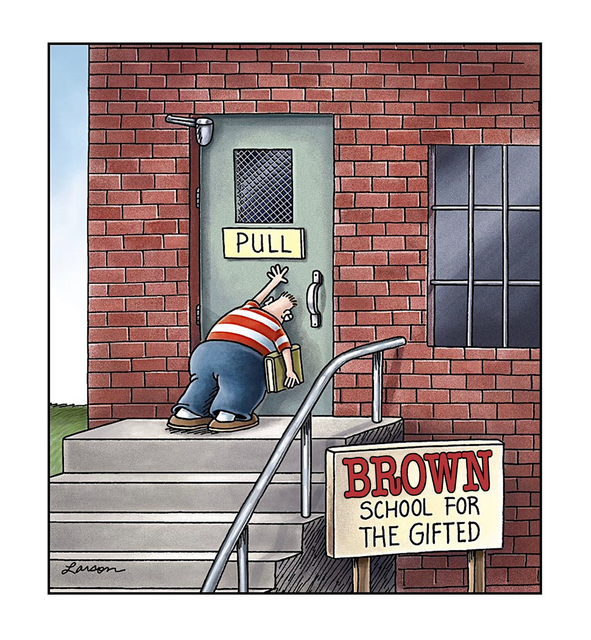 JuCo 5 percenter...72
“Show me the man and I’ll find you the crime” ~ LAVRENTIY BERIA
"Try to get past your passionate ignorance and learn to accept what actually happened." ~ brown's unheeded words of wisdom
If gender is not sex, why should a gender claim change what sex you shower with?
"Libruls are often fascists on vacation..."
JuCo 5 percenter...72
“Show me the man and I’ll find you the crime” ~ LAVRENTIY BERIA
"Try to get past your passionate ignorance and learn to accept what actually happened." ~ brown's unheeded words of wisdom
If gender is not sex, why should a gender claim change what sex you shower with?
"Libruls are often fascists on vacation..."
29 Sep 2025 2:18 pm
29 Sep 2025 2:36 pm
The funny part is you think someone like myself is getting his info from the likes of Candace Owens, as opposed to 150+ IQ mensch like Ron Unz and Bobby Fischer.Fuelman » 29 Sep 2025, 11:36 am » wrote: ↑ I'm sure some people are delusional enough to think the crap Candace Owens is spewing is superior.
I'd still like to **** her face though.
29 Sep 2025 4:59 pm
I wouldn't put too much emphasis on IQ, many of them are nut jobs also. Take BV for example.LowIQTrash » 29 Sep 2025, 2:36 pm » wrote: ↑ The funny part is you think someone like myself is getting his info from the likes of Candace Owens, as opposed to 150+ IQ mensch like Ron Unz and Bobby Fischer.
Here's some AI slop with zero IQ:
Yes, a high IQ does not prevent a person from experiencing delusions. Intelligence and mental health are not mutually exclusive, and a person's cognitive ability does not make them immune to conditions that involve delusional thinking. The case of Nobel Prize winner John Forbes Nash, who had paranoid schizophrenia, is a well-known example of this phenomenon.
Here is a closer look at the relationship between intelligence and delusions
 elusions are distinct from intelligenceDifferent brain functions: Delusions are often a symptom of mental illnesses like schizophrenia, bipolar disorder, or delusional disorder. These conditions stem from neurological processes in parts of the brain separate from where IQ is located.
Unshakeable beliefs: The defining feature of a delusion is the firm, unshakeable nature of the false belief, regardless of contradictory evidence. For the person experiencing the delusion, their perspective feels just as certain as an ordinary fact, like gravity.
The inability to "out-reason" a delusion: A person with a high IQ cannot simply use their superior intellect to "out-reason" their delusions away. The mental processes that create the delusion are not a matter of a logical argument to be won or lost. Highly intelligent people and delusionsIn some cases, a high IQ may even be co-opted to reinforce a delusional belief
:Sophisticated rationalizations: An intelligent person may use their advanced reasoning skills to create complex, sophisticated justifications for their false beliefs. The delusions they experience might be more intricate or "creative" but are still based on false premises.
Cognitive biases and ego: Intelligent people are not immune to cognitive biases, ego, and the need to protect their pet theories. This can sometimes make them more skilled at rationalizing and defending their self-delusions. As the novelist Saul Bellow observed, "a great deal of intelligence can be invested in ignorance when the need for illusion is deep".
Complex or grandiose delusions: Intelligent individuals with conditions like bipolar disorder may experience grandiose delusions that are extremely detailed. For example, a person may create a complicated back story and justification for their belief that they are a deity or a famous public figure.
29 Sep 2025 5:10 pm
She's a mensch. So they hate her.Fuelman » 29 Sep 2025, 11:36 am » wrote: ↑ I'm sure some people are delusional enough to think the crap Candace Owens is spewing is superior.
I'd still like to **** her face though.
She'd bite.
Not me - but you. She's bite you.
When you complain, ur friends roll their eyes and ur enemies rejoice
"Because I SAY I am" is a todler's tantrum, not "science"
You cannot betray me - only yourself, to me.
Who cuts off your dick is not a friend
An opinion you won't defend is not your own
Humanity's Law of the Jungle: Survival NOT of the fittest, but of the tribe
When peeing in the pool, stand on the edge
If gender is not sex, why should a gender claim change what sex you shower with?
"Because I SAY I am" is a todler's tantrum, not "science"
You cannot betray me - only yourself, to me.
Who cuts off your dick is not a friend
An opinion you won't defend is not your own
Humanity's Law of the Jungle: Survival NOT of the fittest, but of the tribe
When peeing in the pool, stand on the edge
If gender is not sex, why should a gender claim change what sex you shower with?

29 Sep 2025 5:24 pm

If you censor out the middle of Tiny Hats you have Tits.
I'm trying to find the silver lining in things.
I'm trying to find the silver lining in things.
Please seat yourself.

I like the very things you hate.
I like the very things you hate.
30 Sep 2025 8:19 am

yeah, if my wife saw what I post she'd either shake her head in disgust or file...methinks it could be the latter...
JuCo 5 percenter...72
“Show me the man and I’ll find you the crime” ~ LAVRENTIY BERIA
"Try to get past your passionate ignorance and learn to accept what actually happened." ~ brown's unheeded words of wisdom
If gender is not sex, why should a gender claim change what sex you shower with?
"Libruls are often fascists on vacation..." Who is online
In total there are 5112 users online :: 7 registered, 14 bots, and 5091 guests
Bots: DuckDuckBot, Bolt, YandexBot, ADmantX, CensysInspect, proximic, MicroMessenger, CriteoBot, Googlebot, facebookexternalhit, curl/7, Applebot, Mediapartners-Google, bingbot