Liberal Forum
Archive
‹
Political Chat Rooms
‹
No Holds Barred Political Forum
‹
Rosie may be truly Insane...this shouldn't be laughed at
Rosie may be truly Insane...this shouldn't be laughed at

By roadkill
29 Dec 2025 5:17 pm in No Holds Barred Political Forum

30 Dec 2025 11:16 am

ROG62 » 30 Dec 2025, 9:33 am » wrote: ↑ to protect I.C.E. when upholding our immigration LAWS...
do you have a verifiable credible quoteable link to verify that prattle?
https://youtu.be/0KALO6Gvq1s?si=H-p1OX_Xh4fzBKvL
30 Dec 2025 12:03 pm

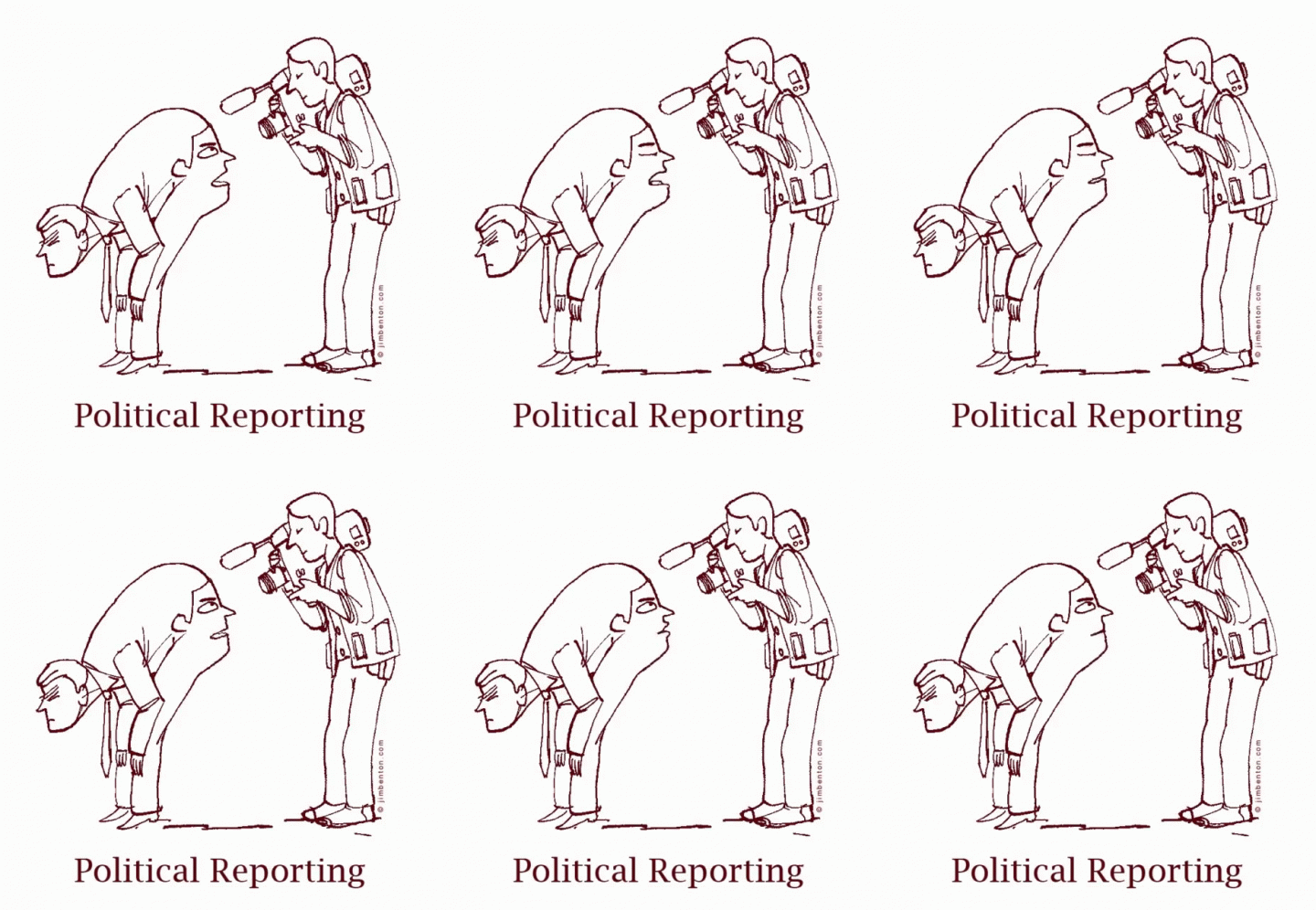
This is what @Blackvegetable says daily.

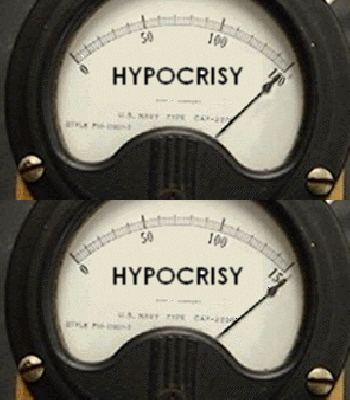
Blackvegatble's hypcorisy summed up in one post:
[/size]
Blackvegetable » 7 minutes ago » wrote: ↑7 minutes ago
Very simple questions...
From which you are running...
Blackvegetable » 7 minutes ago » wrote: ↑7 minutes ago
Very simple questions...
From which you are running...
30 Dec 2025 12:07 pm
consequences of the big beautiul bill---------------------
- Medicaid & ACA Cuts: Slashes federal funding, potentially increasing uninsured numbers by millions and making coverage harder to get.
- .
- Physician Workforce: Creates barriers to medical careers, worsening existing physician shortages.
30 Dec 2025 12:08 pm
jerrab » 30 Dec 2025, 1:07 pm » wrote: ↑ consequences of the big beautiul bill---------------------
- Medicaid & ACA Cuts: Slashes federal funding, potentially increasing uninsured numbers by millions and making coverage harder to get.
- .
- Physician Workforce: Creates barriers to medical careers, worsening existing physician shortages.
Yes, I know. I spoke up against this. I was just harassing BV, because it triggers him.
Blackvegatble's hypcorisy summed up in one post:
[/size]
Blackvegetable » 7 minutes ago » wrote: ↑7 minutes ago
Very simple questions...
From which you are running...
Blackvegetable » 7 minutes ago » wrote: ↑7 minutes ago
Very simple questions...
From which you are running...
30 Dec 2025 12:11 pm
------------------------------------------------------------------------------On July 4, 2025, President Trump signed a budget reconciliation bill into law that includes significant reductions in federal health care spending, large tax cuts, and other changes. The new law will reduce federal Medicaid spending alone by $911 billion over ten years and lead to 10 million more people becoming uninsured by 2034 based on Congressional Budget Office (CBO) estimates. While this legislation was being debated, Members of Congress from both parties raised concerns about the potential impact on rural hospitals, particularly given the ongoing trend of rural hospital closures. In response, and just prior to passage, the Senate added $50 billion in funding for a new “rural health transformation program,” referred to here as the “rural health fund.”
This brief describes the rural health fund, explains what the law says about the allocation of funds, and highlights outstanding questions about how the funds will be distributed across and within states to pay rural hospitals and for other purposes. Based on the statutory language, it is not yet clear what specific criteria the Centers for Medicare and Medicaid Services (CMS) will ultimately use to approve or deny state applications and distribute funds across states; what share of the $50 billion fund will go to rural areas; what share will go to the nearly 1,800 hospitals in rural areas or be used for other providers or purposes; whether funds will be targeted to certain types of rural hospitals, such as the 44% of rural hospitals with negative margins; and to what extent the CMS Administrator will be able to influence how states use their funds prior to approving an application. Further, the law does not require CMS to publish information about the distribution of funds so that the allocation decisions are transparent. Similar questions were raised during the COVID-19 pandemic about how well provider relief funds were targeted to hospitals with the greatest need.The rural health fund includes $50 billion, which is a little over one third (37%) of the estimated loss of federal Medicaid funding in rural areas

30 Dec 2025 12:14 pm
Great news.....these tax reductions.jerrab » 30 Dec 2025, 1:11 pm » wrote: ↑ ------------------------------------------------------------------------------On July 4, 2025, President Trump signed a budget reconciliation bill into law that includes significant reductions in federal health care spending, large tax cuts, and other changes. The new law will reduce federal Medicaid spending alone by $911 billion over ten years and lead to 10 million more people becoming uninsured by 2034 based on Congressional Budget Office (CBO) estimates. While this legislation was being debated, Members of Congress from both parties raised concerns about the potential impact on rural hospitals, particularly given the ongoing trend of rural hospital closures. In response, and just prior to passage, the Senate added $50 billion in funding for a new “rural health transformation program,” referred to here as the “rural health fund.”
This brief describes the rural health fund, explains what the law says about the allocation of funds, and highlights outstanding questions about how the funds will be distributed across and within states to pay rural hospitals and for other purposes. Based on the statutory language, it is not yet clear what specific criteria the Centers for Medicare and Medicaid Services (CMS) will ultimately use to approve or deny state applications and distribute funds across states; what share of the $50 billion fund will go to rural areas; what share will go to the nearly 1,800 hospitals in rural areas or be used for other providers or purposes; whether funds will be targeted to certain types of rural hospitals, such as the 44% of rural hospitals with negative margins; and to what extent the CMS Administrator will be able to influence how states use their funds prior to approving an application. Further, the law does not require CMS to publish information about the distribution of funds so that the allocation decisions are transparent. Similar questions were raised during the COVID-19 pandemic about how well provider relief funds were targeted to hospitals with the greatest need.The rural health fund includes $50 billion, which is a little over one third (37%) of the estimated loss of federal Medicaid funding in rural areas
Thanks for posting.....MAGA!
30 Dec 2025 12:14 pm
The rural health fund includes $50 billion, which is a little over one third (37%) of the estimated loss of federal Medicaid funding in rural areas
30 Dec 2025 12:15 pm
RebelGator » 30 Dec 2025, 1:14 pm » wrote: ↑ Great news.....these tax reductions.
Thanks for posting.....MAGA!
The rural health fund includes $50 billion, which is a little over one third (37%) of the estimated loss of federal Medicaid funding in rural areas

30 Dec 2025 12:16 pm
Of course...jerrab » 30 Dec 2025, 1:11 pm » wrote: ↑ ------------------------------------------------------------------------------On July 4, 2025, President Trump signed a budget reconciliation bill into law that includes significant reductions in federal health care spending, large tax cuts, and other changes. The new law will reduce federal Medicaid spending alone by $911 billion over ten years and lead to 10 million more people becoming uninsured by 2034 based on Congressional Budget Office (CBO) estimates. While this legislation was being debated, Members of Congress from both parties raised concerns about the potential impact on rural hospitals, particularly given the ongoing trend of rural hospital closures. In response, and just prior to passage, the Senate added $50 billion in funding for a new “rural health transformation program,” referred to here as the “rural health fund.”
This brief describes the rural health fund, explains what the law says about the allocation of funds, and highlights outstanding questions about how the funds will be distributed across and within states to pay rural hospitals and for other purposes. Based on the statutory language, it is not yet clear what specific criteria the Centers for Medicare and Medicaid Services (CMS) will ultimately use to approve or deny state applications and distribute funds across states; what share of the $50 billion fund will go to rural areas; what share will go to the nearly 1,800 hospitals in rural areas or be used for other providers or purposes; whether funds will be targeted to certain types of rural hospitals, such as the 44% of rural hospitals with negative margins; and to what extent the CMS Administrator will be able to influence how states use their funds prior to approving an application. Further, the law does not require CMS to publish information about the distribution of funds so that the allocation decisions are transparent. Similar questions were raised during the COVID-19 pandemic about how well provider relief funds were targeted to hospitals with the greatest need.The rural health fund includes $50 billion, which is a little over one third (37%) of the estimated loss of federal Medicaid funding in rural areas
You want full discretion without oversight...
30 Dec 2025 12:18 pm
Sure..jerrab » 30 Dec 2025, 1:14 pm » wrote: ↑ The rural health fund includes $50 billion, which is a little over one third (37%) of the estimated loss of federal Medicaid funding in rural areas
But now it will no longer be distributed on the basis of need, but on the basis of Grafty's favor...
30 Dec 2025 12:21 pm
Blackvegetable » 30 Dec 2025, 1:18 pm » wrote: ↑ Sure..
But now it will no longer be distributed on the basis of need, but on the basis of Grafty's favor...
All good news for tax-payers.
You ever file a return?
30 Dec 2025 12:32 pm
----------------------------------------Vegas » 30 Dec 2025, 1:08 pm » wrote: ↑ Yes, I know. I spoke up against this. I was just harassing BV, because it triggers him.
The "Big Beautiful Bill" (One Big Beautiful Bill Act) is a 2025 U.S. law, enacted under President Trump, that has led to the closure of rural health clinics, like those run by Augusta Medical Group in Virginia, due to significant cuts to Medicaid funding, impacting low-income patients and straining rural healthcare providers. The legislation, which aims to cut federal spending, reduces Medicaid eligibility and increases healthcare costs, causing providers to shutter facilities and forcing patients to travel farther for care, creating a rural healthcare crisis.
30 Dec 2025 12:34 pm
https://www.cnn.com/2025/09/22/politics ... tiful-billVegas » 30 Dec 2025, 1:08 pm » wrote: ↑ Yes, I know. I spoke up against this. I was just harassing BV, because it triggers him.
Rural health clinics are closing after Trump’s ‘One Big Beautiful Bill,’ raising the legislation’s political risks
30 Dec 2025 12:44 pm
How do we know that's not Bv? ewwww

30 Dec 2025 1:18 pm
affects both city and rural clinics across the countryVegas » 30 Dec 2025, 1:08 pm » wrote: ↑ Yes, I know. I spoke up against this. I was just harassing BV, because it triggers him.
---------------------------------------------
The "One Big Beautiful Bill Act" (OBBBA) is a 2025 U.S. law significantly changing Medicaid, impacting health clinics by reducing federal funding, adding work/income requirements for enrollees (like 80 hrs/month), increasing costs for clinics (especially rural ones), and potentially causing clinic closures and millions losing coverage by capping Medicaid payments and tightening eligibility, forcing providers to raise prices or cut services, creating major challenges for underserved communities.
30 Dec 2025 1:49 pm
It was Obama's expiration on Obama Scam.jerrab » 30 Dec 2025, 2:18 pm » wrote: ↑ affects both city and rural clinics across the country
---------------------------------------------
The "One Big Beautiful Bill Act" (OBBBA) is a 2025 U.S. law significantly changing Medicaid, impacting health clinics by reducing federal funding, adding work/income requirements for enrollees (like 80 hrs/month), increasing costs for clinics (especially rural ones), and potentially causing clinic closures and millions losing coverage by capping Medicaid payments and tightening eligibility, forcing providers to raise prices or cut services, creating major challenges for underserved communities.
Please stop projecting jer...yer pegging the "Stupid-Meter" again.

30 Dec 2025 1:50 pm
Trump injected 50 billion into rural medical care yesterday. Maryland gets 128 Million over 5 years.. Not that it's process, but it is a good thing. The bypassing of congress is not healthy.jerrab » 30 Dec 2025, 2:18 pm » wrote: ↑ affects both city and rural clinics across the country
---------------------------------------------
The "One Big Beautiful Bill Act" (OBBBA) is a 2025 U.S. law significantly changing Medicaid, impacting health clinics by reducing federal funding, adding work/income requirements for enrollees (like 80 hrs/month), increasing costs for clinics (especially rural ones), and potentially causing clinic closures and millions losing coverage by capping Medicaid payments and tightening eligibility, forcing providers to raise prices or cut services, creating major challenges for underserved communities.
ACA is a hoax. M4A is the only answer at this point. The burden should be removed from employers.
DUMP THE TRUMP SLUMP 2026!
Bump Caps Recommended..
Bump Caps Recommended..

30 Dec 2025 2:01 pm
 You clowns have been saying he's gonna start a war for 9 years now. When, *** boy? When?
Johnny You: "Flying the pride flag is honorable".
30 Dec 2025 2:22 pm
JohnnyYou » 30 Dec 2025, 2:50 pm » wrote: ↑ Trump injected 50 billion into rural medical care yesterday. Maryland gets 128 Million over 5 years.. Not that it's process, but it is a good thing. The bypassing of congress is not healthy.
ACA is a hoax. M4A is the only answer at this point. The burden should be removed from employers.
rural care does not cover cities.
30 Dec 2025 2:25 pm
SouthernFried » 30 Dec 2025, 3:01 pm » wrote: ↑
he was not president for 4 years.
boat jacking is a good start.
Who is online
In total there are 2385 users online :: 10 registered, 15 bots, and 2360 guests
Registered users: Johnny You, Blackvegetable, Zeets2, RebelGator, jerra b, LowIQTrash, Deezer Shoove, nefarious101, sole, Huey
Bots: okhttp, Pinterest, DuckDuckBot, YandexBot, proximic, CriteoBot, ADmantX, Mediapartners-Google, Applebot, Googlebot, Baiduspider, facebookexternalhit, bingbot, curl/7, GPTBot