
26 Aug 2023 8:42 am
Let’s state America’s present problem of the inability of Democrats and Republicans to agree on something so very simple as the Insurrection and Rebellion clause of the 14th Amendment.roadkill » 26 Aug 2023, 8:25 am » wrote: ↑ Looks like you and MaineStain are still enjoying those snipe hunts.

We do agree it was passed in 1868, after four years of a great rebellion.
And we do agree it says, if a United States government official had engaged in an insurrection or rebellion it takes 2/3 of Congress to approve them holding any federal office.
—-
Expulsion Case of John C. Breckinridge of Kentucky (1861)
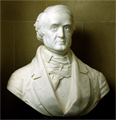 Issues
Disloyalty to UnionChronology
Resolution introduced: Dec. 4, 1861
Senate vote: Dec. 4, 1861Result: ExpelledBackgroundAmong Kentucky's political leaders none enjoyed a more illustrious national career than John C. Breckinridge, who held the offices of representative, senator, and vice president. In the multi-candidate 1860 presidential race, he ran as the candidate of the Southern Democratic party. Breckinridge was then elected to the U.S. Senate for a term beginning on March 4, 1861, as Abraham Lincoln began his administration and after seven southern states had already seceded.A defender of the South on the Senate floor, Breckinridge personally hoped that secession could be stopped. In August 1861, when it became apparent that the secession movement was a reality, Breckinridge devoted one of his final speeches in the Senate to urging an end to the war. "I would prefer to see these States all reunited upon true constitutional principles. . . . But I infinitely prefer to see a peaceful separation of these States, than to see endless, aimless, devastating war, at the end of which I see the grave of public liberty and of personal freedom," he declared. He then returned to Kentucky, a border state torn by divided loyalties. Although sympathizing with the Confederacy, Breckinridge struggled to preserve peace and keep the state neutral, but in September the Kentucky legislature voted to side with the Union. Learning that he was about to be arrested and imprisoned, the senator hastily departed for Tennessee and soon after appeared in Richmond, the Confederate capital. There, Jefferson Davis appointed him a brigadier general in the Confederate army. Breckinridge, the champion of neutrality between the Union and the Confederacy, had finally been forced to choose.—-
Now since everyone agrees the 14th Amendment applied to the Vice President who verified all the electoral votes that cost him the 1860 election and who declared Abraham Lincoln the winner, what are we arguing over what the framers of the 14th Amendment would say if a President who lost refused to concede and began an unsuccessful insurrection to stay in power?