
20 Apr 2022 11:24 am

COVID-19 and Blood Clotsfreeman » 19 Apr 2022, 12:25 pm » wrote: ↑ https://www.thelibertybeacon.com/embalm ... ery-clots/
"Embalmers Find Veins & Arteries Filled With Rubbery Clots"
https://rumble.com/embed/vqqmda/?pub=4
https://rumble.com/embed/vs4dze/?pub=4
"Long, Fibrous Blood Clots Found in Autopsies of the Vaxxed"
https://dailyexpose.uk/2022/01/28/embal ... ery-clots/

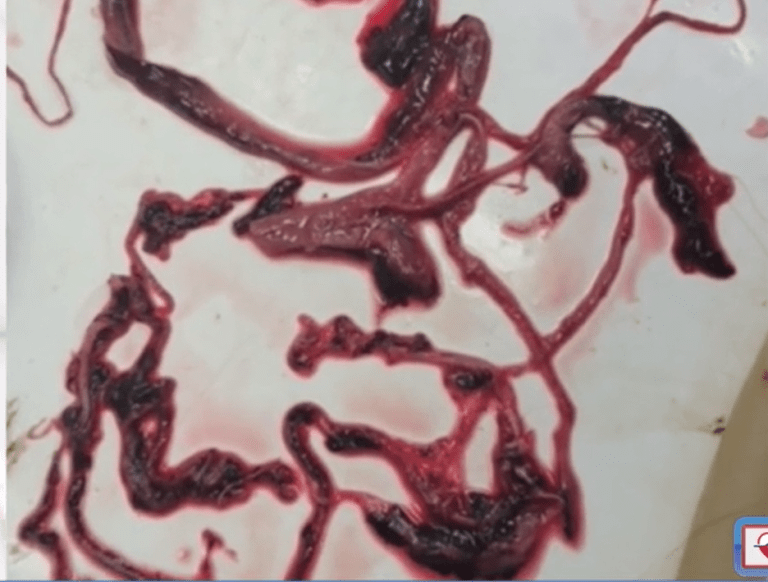
Elevated levels of a blood clotting factor linked to worse outcomes in severe COVID-19
https://hms.harvard.edu/news/covid-19-blood-clots
Patients hospitalized with severe COVID-19 infections who have high levels of the blood clotting protein factor V are at elevated risk for serious injury from blood clots such as deep vein thrombosis or pulmonary embolism, according to a new study by Harvard Medical School investigators at Massachusetts General Hospital.
On the other hand, critically ill patients with COVID-19 and low levels of factor V appear to be at increased risk for death from a form of coagulopathy that resembles disseminated intravascular coagulation (DIC)—a devastating, often fatal abnormality in which blood clots form in small vessels throughout the body, leading to exhaustion of clotting factors and proteins that control coagulation.
Their findings, based on studies of patients with COVID-19 in Mass General intensive care units, point to disturbances in factor V activity as both a potential cause of blood clotting disorders with COVID-19 and potential methods for identifying at-risk patients with the goal of selecting the proper anticoagulation therapy.
The study results are published online Aug. 24 in the American Journal of Hematology.“
Aside from COVID-19, I’ve never seen anything else cause markedly elevated factor V, and I’ve been doing this for 25 years,” said senior study author Elizabeth Van Cott, HMS professor of pathology at Mass General.
Patients with severe COVID-19 caused by the SARS-CoV-2 virus can develop blood clots in medical lines, such as intravenous lines and catheters, and in arteries, lungs and extremities, including the toes. Yet the mechanisms underlying coagulation disorders in patients with COVID-19 are still unknown