Liberal Forum
Archive
‹
Political Chat Rooms
‹
No Holds Barred Political Forum
‹
Is ‘presumption of innocence’ dead in America?
Is ‘presumption of innocence’ dead in America?

By Majik
27 Sep 2023 8:03 am in No Holds Barred Political Forum
8 posts • Page 1 of 1
27 Sep 2023 8:03 am

My world has been rocked! I have always thought the idea that one is innocent until proven guilty is somewhere set in stone in either the U.S. Constitution, one of its amendments or codified in legislation. To my horror I have discovered it is a mere Supreme Court decision from 1895 that backhandedly carves out a defendant’s presumption of innocence until proven guilty. Coffin v. U.S. says:“A charge that there cannot be a conviction unless the proof shows guilt beyond a reasonable doubt does not so entirely embody the statement of presumption of innocence as to justify the court in refusing, when requested, to instruct the jury concerning such presumption, which is a conclusion drawn by the law in favor of the citizen by virtue whereof, when brought to trial upon a criminal charge, he must be acquitted unless he is proven to be guilty.”The Fourth, Fifth and Sixth Amendments to the U.S. Constitution provide details about legal search and arrest, an individual’s rights in a criminal case and a right to a fair trial. The Fifth Amendment particularly states one cannot “be deprived of life, liberty, or property, without due process of law …” The Supreme Court’s decision in the Coffin case clarifies presumption of innocence as part of that due process. Even though it is only among federal case law, it is nevertheless still there and protecting the citizens of this great nation … or is it?
The recent impeachment of Texas Attorney General Ken Paxton was a mockery of our constitutional system of government and the required due process. The number of shameful shortcuts the Texas House took to bring articles of impeachment to the State Senate was beyond embarrassing! All hearsay and zero evidence. Tucker Carlson’s interview with Paxton was an eye-opener to the level of corruption even in Texas. There is significant movement from the Texas GOP to censure House Speaker Dade Phelan, especially since the Senate acquitted Paxton on all 16 convoluted and crazy counts.It is not just Ken Paxton’s recent drama played out on the public stage that touches presumption of innocence. There is also the rash of public attacks on internet personalities who dare to speak out against sacred cows, the most recent of which is libertarian-leaning Russell Brand, who purportedly has more than 6 million subscribers on YouTube. He has been accused of sexual assault by a number of women who have only just now come forth, alleging the crimes all took place more than a decade ago. Why now?
Brand admits freely he has led a sordid past involving a very promiscuous history but adamantly denies ever acting without consent. YouTube promptly demonetized him, arguing that “If a creator’s off-platform behavior harms our users, employees or ecosystem, we take action to protect the community.” Do you see the problem with that statement? Brand has not been convicted of anything yet. Of course, his case is a special one because he is a citizen of the United Kingdom, not the U.S. But British Common Law is purportedly where we got the idea of presumption of innocence in the first place.Now, even the U.K. government is getting in on the corruption of due process. Apparently, it is not enough that Brand has been demonetized on YouTube.
The recent impeachment of Texas Attorney General Ken Paxton was a mockery of our constitutional system of government and the required due process. The number of shameful shortcuts the Texas House took to bring articles of impeachment to the State Senate was beyond embarrassing! All hearsay and zero evidence. Tucker Carlson’s interview with Paxton was an eye-opener to the level of corruption even in Texas. There is significant movement from the Texas GOP to censure House Speaker Dade Phelan, especially since the Senate acquitted Paxton on all 16 convoluted and crazy counts.It is not just Ken Paxton’s recent drama played out on the public stage that touches presumption of innocence. There is also the rash of public attacks on internet personalities who dare to speak out against sacred cows, the most recent of which is libertarian-leaning Russell Brand, who purportedly has more than 6 million subscribers on YouTube. He has been accused of sexual assault by a number of women who have only just now come forth, alleging the crimes all took place more than a decade ago. Why now?
Brand admits freely he has led a sordid past involving a very promiscuous history but adamantly denies ever acting without consent. YouTube promptly demonetized him, arguing that “If a creator’s off-platform behavior harms our users, employees or ecosystem, we take action to protect the community.” Do you see the problem with that statement? Brand has not been convicted of anything yet. Of course, his case is a special one because he is a citizen of the United Kingdom, not the U.S. But British Common Law is purportedly where we got the idea of presumption of innocence in the first place.Now, even the U.K. government is getting in on the corruption of due process. Apparently, it is not enough that Brand has been demonetized on YouTube.
27 Sep 2023 8:04 am
Dame Caroline Dinenage, chair of Parliament’s Culture, Media and Sport Committee, has sent a letter to Rumble and X demanding they deplatform Brand stating, “We are concerned that he may be able to profit from his content.” Rumble gave an unequivocal “NO.” It appears Elon Musk, owner of X, formerly Twitter, is supportive of Brand as well. I think demonetization, and definitely deplatforming, would meet the qualifications of depriving one of property without due process of law as referenced in the Fifth Amendment.No place else is a better example of how being innocent until proven guilty has gone totally by the wayside than the never-ending babble about using the 14th Amendment to keep Donald Trump off the 2024 presidential ballot. Section 3 of the14th Amendment, according to my pocket Constitution, bars someone from ever holding office again who has previously taken an oath of office to defend the Constitution and has “engaged in insurrection or rebellion.” Sen. Chuck Schumer has repeatedly pressed that this should keep President Trump from being on the ballot. The problem, of course, is that Trump has not been convicted of any such crimes. Schumer insists that doesn’t matter. I guess he feels his opinion alone should be the deciding factor. What astonishes me as much as the very fact anyone would even argue such a thing is that every legal commentator I’ve read regarding the argument completely skips over the presumption of innocence as if it were not an integral part of due process and our rule of law.All these examples show that our government and/or many of the technocrats in charge of the new public square are not just willing to but are actively dismissing unalienable rights afforded to us by God. It is not their right to take such things away from anyone, for they were not the ones who afforded those rights in the first place. The question is, my fellow Americans, what remedies do we have to bring about a change? How do we put a stop to this (as well as numerous other) egregious dismissal(s) of our constitutional rights? How much longer will this go on before the perpetrators of criminal activity (and criminal it very much is) are stopped? It appears our system may lack a foolproof legal avenue to effectively punish constitutional criminals.I am glad to see that at least Rumble and X are holding their ground, for now, on the Russell Brand matter. But apart from them, it appears the ruling elites, whether government or technocrat, believe themselves to be untouchable. For they must know their pressures and precedents will ultimately steal everyone’s rights if this is allowed to continue to its ultimate end. To these elitist dreamers, I would warn that there is no honor among thieves, as well as the fact that one’s “untouchableness” can vanish quickly as evidenced by the French Revolution; things did not go well for those elites!Prayer and fasting is very much in order here, especially in light of the number of articles I have read in the last week alone openly arguing for or warning about an impending uprising of the people. Pray, Church! Like you’ve never prayed before! Let’s hope we never get to the place, here in the U.S., where the guillotines are being erected.
https://thelibertyloft.com/2023/09/26/i ... n-america/
Well, is it ????????
https://thelibertyloft.com/2023/09/26/i ... n-america/
Well, is it ????????

27 Sep 2023 8:07 am
Q: Is ‘presumption of innocence’ dead in America?
.
A: I don't know...go ask a satanic socialist race obsessed ultraliberal baby killing agenda driven head case.
'
''
.
A: I don't know...go ask a satanic socialist race obsessed ultraliberal baby killing agenda driven head case.
'
''
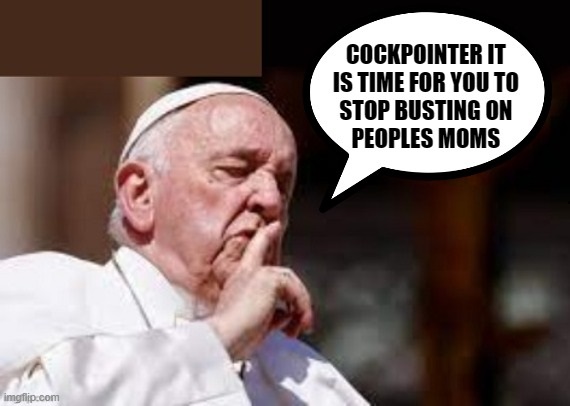
ultraliberals are not happy unless they are obsessing about something.
.
.
.
.
.
.
27 Sep 2023 8:13 am
They, don't count ....MackTheFinger » 27 Sep 2023, 8:07 am » wrote: ↑ Q: Is ‘presumption of innocence’ dead in America?
.
A: I don't know...go ask a satanic socialist race obsessed ultraliberal baby killing agenda driven head case.
They created the problem by creating cancel culture ....so, we already know where most of them stand .....
27 Sep 2023 8:25 am
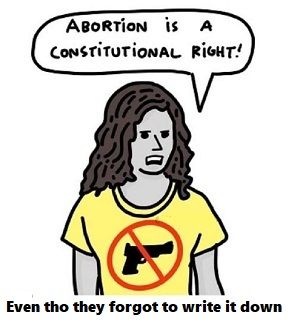
They talk about the GOP want to take your freedoms away and than say thier should be no limits to the USA's AB laws.Majik » 27 Sep 2023, 8:13 am » wrote: ↑ They, don't count ....
They created the problem by creating cancel culture ....so, we already know where most of them stand .....
A well regulated Militia, being necessary to the security of a free State, the right of the people to keep and bear Arms, shall not be infringed.
.
..
ultraliberals are not happy unless they are obsessing about something.
.
.
.
.
.
.
27 Sep 2023 8:33 am
"The presumption of innocence" is antthetical to their court of public opinion which drives cancel culture.......MackTheFinger » 27 Sep 2023, 8:25 am » wrote: ↑ They talk about the GOP want to take your freedoms away and than say thier should be no limits to the USA's AB laws.
A well regulated Militia, being necessary to the security of a free State, the right of the people to keep and bear Arms, shall not be infringed.
.
..

27 Sep 2023 8:37 am
You (or the author...whomever that is) fail to understand that impeachment is, always has been and always will be a political process. It is NOT a criminal process. Therefore the rules of evidence, probable cause, etc. are completely irrelevant. The US Supreme Court stated in a ruling that "high crimes and misdemeanors", as it relates to grounds for impeachment is basically whatever the House determines it to be. That is because impeachment is completely up to the House (either federal or state)...no other body has the authority to impeach and no body/court/authority can stop them from exercising the plenary authority. Hell, the Governor of Texas was once impeached during a special session...and in Texas, the governor controls the agenda of special sessions. When his legal team tried to use that as a defense, the Texas Supreme Court pointed out the the Constitution give the House the power to impeach and the executive branch cannot remove/limit the power of an equal branch of the government.Majik » 27 Sep 2023, 8:03 am » wrote: ↑
The recent impeachment of Texas Attorney General Ken Paxton was a mockery of our constitutional system of government and the required due process. The number of shameful shortcuts the Texas House took to bring articles of impeachment to the State Senate was beyond embarrassing! All hearsay and zero evidence.
27 Sep 2023 8:42 am
The accusations against him is in another country, therefore our Constitution (and the criminal presumptions/processes) are irrelevant. Besides, the criticism of him is on social media. That's part of the world we live in. Don't want to be demonized on social media...don't do stupid **** or be a sleaze ball.Majik » 27 Sep 2023, 8:03 am » wrote: ↑
Brand admits freely he has led a sordid past involving a very promiscuous history but adamantly denies ever acting without consent. YouTube promptly demonetized him, arguing that “If a creator’s off-platform behavior harms our users, employees or ecosystem, we take action to protect the community.” Do you see the problem with that statement? Brand has not been convicted of anything yet. Of course, his case is a special one because he is a citizen of the United Kingdom, not the U.S. But British Common Law is purportedly where we got the idea of presumption of innocence in the first place.Now, even the U.K. government is getting in on the corruption of due process. Apparently, it is not enough that Brand has been demonetized on YouTube.
8 posts • Page 1 of 1
Who is online
In total there are 5335 users online :: 4 registered, 14 bots, and 5317 guests
Bots: DuckDuckGo, aiohttp, Bolt, okhttp, proximic, CriteoBot, ADmantX, facebookexternalhit, YandexBot, Applebot, Mediapartners-Google, bingbot, curl/7, Googlebot