Flying Monkeys

By Nobody
11 Mar 2011 1:42 pm in No Holds Barred Political Forum
11 Oct 2017 3:55 pm
So IOW the laws no longer apply to this administration.Donald Trump Can Destroy Records Without Judicial Review, Justice Department Tells Court
Deleted tweets? Purges of phone records? The erasing of secretly recorded conversations?
The Trump Administration tells a D.C. judge that courts can't review compliance with preservation laws.
It's a question that pops up pretty much every time that Donald Trump deletes a tweet: Is he violating the Presidential Records Act?
In a court filing Friday, not only do attorneys at the Justice Department say that courts can't review this, but they also argue that when it comes to laws pertaining to government record-keeping, judicial review would be inappropriate even if Trump deleted secret recordings with administration officials or even if his staff purged phone records because they expected to be subpoenaed in connection with various investigations.

11 Oct 2017 4:00 pm

Why aren't you concerned about this, psycho?Misty » 10 Oct 2017 3:12 pm » wrote:A week has passed since the Las Vegas massacre.
The USA has done nothing about it
Because you can't easily dishonestly blame it on conservatives.
Not that you didn't try.

On average, there is mass killing bigger than Vegas in Chicago each month
By Jack Hellner
There were 762 murders in Chicago in 2016, the most in 19 years. On average, there was mass killing – by different perps – that adds up bigger than the Las Vegas massacre each month. Where is the wall-to-wall coverage?
Chicago has very strict gun laws, with no gun shops in Chicago.
http://www.americanthinker.com/blog/201 ... z4udNdcYM7
11 Oct 2017 4:23 pm
I was one of the 58% of women who used birth control pills for medical and non-contraceptive purposes.Birth Control Saved My Life
The reasons women use birth control are as diverse as the women who use it — and all are just as critically important.
While a lot of women use birth control as a safe, effective method of family planning, birth control has a variety of other medical purposes.
In fact, 14% of pill users — 1.5 million women — rely on birth control pills exclusively for non-contraceptive purposes, and more than half (58%) of all pill users rely on the method, at least in part, for purposes other than pregnancy prevention.
Although there are a variety of non-contraceptive uses of birth control, some of the most common include relief from symptoms of severe premenstrual syndrome, regulation of menstrual cycles, treatment of acne, relief of endometriosis symptoms, prevention of ovarian cysts, and reduction of bleeding due to uterine fibroid tumors.
I am one of the 58% of women who rely on birth control due to medical necessity.
And when I say that birth control saved my life, I’m not being dramatic — without birth control pills, I don’t know if I would be alive today.
Here’s my story.
I first started taking birth control pills at age 17, during the last months of my senior year in high school.
I was not sexually active: my need for contraception was prompted by a physiological abnormality and associated complications.
I hadn’t yet started menstruating (the average age of menarche among girls in the U.S. is 12-years-old; girls who have not started menstruating by age 15 are classified as having delayed menarche) and, with my history of medical problems including osteopenia (which can be worsened by low estrogen levels associated with delayed menarche), my doctor decided that the best option would be to take birth control pills to artificially induce menstruation.
I never had “regular” menstrual cycles, but many women struggle with irregular cycles so this was not necessarily abnormal or worrisome.
I’ve always been a very physically active person — I played sports from the time I could walk, started competing as a long-distance runner when I was just 12-years-old, and was running upwards of 60 miles a week by the time I hit my sophomore year of high school.
It’s actually quite common for runners to suffer from menstrual irregularities, so my doctors and I assumed nothing was out of the ordinary in my case.
We were wrong.
I worked as a graduate assistant during my first graduate degree, and part of my job was to teach health education courses to college students.
One of my colleagues, another graduate student in my program, taught the same classes at the same time that I did twice a week, so sometimes we brought our students into one large room and co-taught that day’s lecture.
That was what we did on the day I almost bled to death.
Class started out fine — my colleague and I took turns lecturing, answering questions, and preparing our students for an upcoming assignment.
Twenty minutes into class, I started feeling a little bit lightheaded and decided to sit in a chair behind a large desk at the front of the room.
Several minutes went by, and the dizziness became more severe.
My ears started ringing, and a few seconds later my eyesight went blurry.
One of the last things I remember clearly was looking down and seeing blood running off the chair and into a dark red puddle that was now expanding across the floor.
Confused and frightened — and starting to black out — I interrupted my colleague and mumbled something to get him to walk towards me.
“Get them out,” I said, motioning towards the roomful of students.
For a second, he thought I was joking. And then he looked down.
My memories from this point on are blurry.
I know I drifted in and out of consciousness for a few minutes before losing consciousness completely.
I know one of my students stayed behind to help.
I know my colleague was by my side; I’ll never forget the look on his face.
I know someone put me on the floor and elevated my feet. Someone called 9–1–1.
I remember looking around and seeing blood. Everywhere.
Blood clots — some the size of golf balls, others as large as grapefruits — collected in dark red puddles all over the floor. (I didn’t even know that was possible.)
And then my vision went black.
I remember feeling so tired, and fighting so hard — to keep my eyes open, to stay conscious, to stay alive.
I woke up in the hospital, having undergone surgery and a blood transfusion.
Miraculously, the doctor who saved my life that day happened to be somewhat familiar with the incredibly rare condition that almost killed me — and it was his expertise that allowed him to figure out what was going on before it was too late.
I found out that day that I have congenital uterine arteriovenous malformations (AVM), an extremely rare and often fatal condition that causes massive hemorrhaging due to abnormalities in the vascular system — specifically, in arteries and other blood vessels.
According to one extensive scientific review of congenital uterine AVM, there have only been 73 reported cases of the condition — ever.
Other studies report similar rarity.
Congenital AVM’s are defects of the circulatory system that are generally believed to arise during embryonic or fetal development or soon after birth.
They are comprised of snarled tangles of arteries and veins.
Arteries carry oxygen-rich blood away from the heart to the body’s cells; veins return oxygen-depleted blood to the lungs and heart.
The absence of capillaries — small blood vessels that connect arteries to veins — creates a short-cut for blood to pass directly from arteries to veins.
The presence of an AVM disrupts this vital cyclical process.
Essentially, while healthy blood vessels taper off to slow the flow of blood and reduce blood pressure, AVM’s cause a dangerous build-up of blood pressure at the point where arteries meet veins.
Instead of gradually slowing down as the blood vessels narrow, the fast-moving blood in arteries is suddenly forced into a much smaller vessel.
The connection of arteries and veins without a capillary bed creates areas of very high and low blood flow, which are fragile and may spontaneously rupture, as mine did, causing sudden and rapid hemorrhaging.
The brain is the most common site of AVM’s, but they can also form in the spinal column, lungs, colon, kidney, and other places throughout the body.
Once you are diagnosed with congenital AVM’s in one specific vascular connection, your risk of having another is dramatically higher (as I would soon find out).
Hysterectomy remains the treatment of choice for uterine AVM’s, but for young women who wish to preserve fertility, embolization therapy is variably successful and may allow the preservation of reproductive capacity.
Given that I was unconscious, I was unable to discuss these options with my doctor, but knowing that I was only 22-years-old, he made the conservative decision to perform an arterial embolization.
With AVM embolization, an interventional neuroradiologist guides a long tube called a catheter through a small incision in the femoral artery up to the location of the AVM.
Through the catheter, the radiologist injects various materials, called embolic agents, into the abnormal blood vessels to reduce blood flow or completely block them.
To put it plainly, they made an incision up high on in my inner thigh, stuck a tube in my femoral artery, and injected a substance that acts like super-glue to stop the flow of blood through the damaged vascular connection.
I returned home not long after my surgery, but unfortunately that wasn’t the end.
The embolization failed, and I suffered repeated episodes of massive hemorrhaging over the next several months and into the next year.
I underwent transfusions and embolization after each incident, and while the procedure successfully blocked the flow of blood through the embolized artery, our bodies are very good at forming new vascular connections when one is obstructed.
This is usually a good thing — for example, during pregnancy the vascular system undergoes incredible adaptations, including the formation of new vascular connections and increases in the size and number of blood vessels supplying the uterus.
These adaptations are necessary to support the significant increase in uterine blood flow that occurs during pregnancy.
However, in my case, the congenital abnormalities in my vascular system caused problems when my body tried to create new connections — instead of forming healthy ones, I ended up with new vascular connections that were just as abnormal as the ones they were replacing (and this is why, sadly, it is very rare for someone with my condition to be able to carry a healthy pregnancy).
It was these new vascular connections that caused the next incidents of hemorrhaging.
I underwent multiple bilateral uterine arterial embolizations, which reduced blood flow to my uterus and therefore dramatically reduced the flow of blood through the damaged vascular connections.
I had vascular surgery to remove the knotted tangles of blood vessels. And each time, it failed.
At that point, my doctors and I were discussing whether a hysterectomy would even solve the problem; they were concerned that after surgery, my body would attempt to “heal” itself by forming even more abnormal vascular structures.
As a shot in the dark, my doctor decided to put me on a special type of low-estrogen, monophasic birth control pill that delivers a consistent, very low dose of estrogen each day throughout the month.
I take my birth control pills continuously, without the usual 7-day inactive period.
The purpose is to control the hormone fluctuations that initiate menstruation in order to stop my menstrual cycle completely and reduce blood flow to the area.
Any vascular activity in my uterus — even the seemingly normal processes that accompany menstruation — puts me at risk of suffering from massive hemorrhaging and possibly death as a result.
I haven’t had another incident since then.
Birth control pills are the only thing standing in the way of this life-threatening condition.
Because I have to take a specific form of birth control that only comes in one, brand-name version, it can get pretty expensive.
Until a few years ago, I was paying $60-$70/month just for the copay.
The actual cost, if my insurance didn’t cover it, would be several hundred dollars each month — for the rest of my life.
Thanks to the Affordable Care Act’s birth control mandate, I now pay $0 for my monthly copay.
I wrote this article not because I think my case is any more urgent than anyone else’s, but because it exemplifies a crucial point: That every woman is an individual, and her use of birth control is a decision that should be made in a doctor’s office — not dictated by her employers’ personal beliefs.
The reasons women use birth control are as diverse as the 99% of us who rely on contraception at some point in our lives — and the implications of the Trump administration’s new regulations on birth control coverage could impact all of us.
Moreover, birth control isn’t the only type of medical care that some Americans object to on religious grounds.
There are some groups who are opposed to modern health services like vaccinations, blood transfusions, or mental health care.
What’s stopping employers from restricting their workers’ coverage for other those services, too?
It’s a slippery slope. And it even goes beyond health care.
Allowing corporations to limit insurance coverage based on religious beliefs opens the door for corporations to enforce other forms of discrimination, too.
In fact, the same “religious freedom” argument was used in the past to justify racial bigotry and anti-LGBT discrimination.
The Trump administration’s guidance has immediate implications for women’s health, but it’s also a harbinger of things to come for anyone who doesn’t want to be forced to conform to their employers’ religious or moral beliefs, regardless of what those beliefs may be.
If you don’t know where your boss stands on these issues, now might be a good time to find out.
11 Oct 2017 4:50 pm
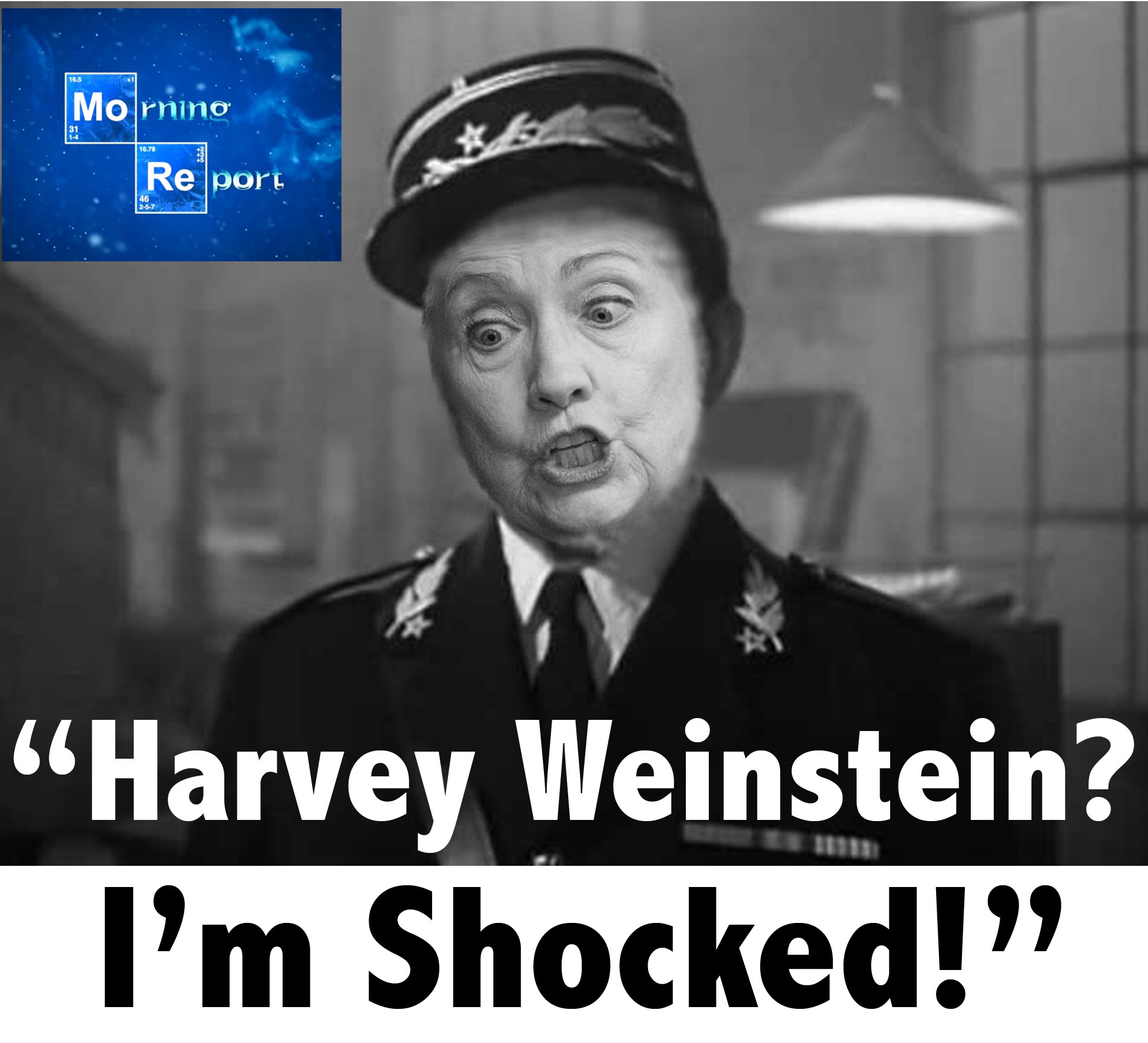
Here's the candidate you supported for president who covered up for a rapist and a groper who used his power to take advantage of women, and according to three women, was a rapist.
Not to mention, Weinstein's behavior was very widely known in and outside of Hollywood.
Why aren't you attacking him and all his defenders and enablers the way you viciously attacked Trump for months?
Because you don't care when your side does it, or far worse.
.
Not to mention, Weinstein's behavior was very widely known in and outside of Hollywood.
Why aren't you attacking him and all his defenders and enablers the way you viciously attacked Trump for months?
Because you don't care when your side does it, or far worse.
.
11 Oct 2017 4:51 pm
I would bet that conservatives absolutely would have accommodated this kind of use, if it wasn't allowed already.Misty » 11 Oct 2017 4:23 pm » wrote: I was one of the 58% of women who used birth control pills for medical and non-contraceptive purposes.
This has absolutely nothing to do with the religious exemption.
So what's your point?
****, as usual.

11 Oct 2017 4:57 pm

do you seriously think she won't run?......Misty » 11 Oct 2017 12:55 pm » wrote: The only place she is running is through your's and roadkill's crazy little minds.
****.
11 Oct 2017 5:01 pm
very good thanks.......haven't you been watching the economy?.....taxes will be going down.....shucks, even football players are behaving......Misty » 11 Oct 2017 1:01 pm » wrote: You just did that when you elected a reality show host as the POTUS.
How's that workin' out for ya?
11 Oct 2017 5:03 pm
Corker quit the Republicans......Misty » 11 Oct 2017 3:32 pm » wrote: WOW!
WTF happened to you?
Before you joined Cult45 you would never had said that about any Republican.
Have you forgotten that he was on the short list to be 45's running mate?
11 Oct 2017 5:04 pm
those would certainly be "other" words.....specifically idiot demmycrat words.....Misty » 11 Oct 2017 3:55 pm » wrote: So IOW the laws no longer apply to this administration.
11 Oct 2017 5:06 pm
so what.....the issue is insurance paying for birth control......not medication for medical, non-contraceptive purposes......Misty » 11 Oct 2017 4:23 pm » wrote: I was one of the 58% of women who used birth control pills for medical and non-contraceptive purposes.
11 Oct 2017 6:07 pm
He must have gotten James O'Keefe to deceptively edit that video.Trump’s Puerto Rico video tells positive story but leaves a lot on the cutting-room floor.
A few minutes into a video about Puerto Rico relief efforts that President Trump tweeted out this week is a short clip about U.S. Forest Service workers clearing fallen trees off a road in the rural interior.
Over the sound of chain saws, the Forest Service’s fire chief explains how this will allow for the easier distribution of food, medical supplies and other aid.
But his full comments are cut off by a shift to footage of a ship used as a hospital.
Had the road-clearing clip continued for 15 seconds, the president’s millions of Twitter followers would have heard the fire chief praise the people of Puerto Rico for successfully clearing many roads before the federal government arrived.
The sentiment seems contrary to the president’s repeated criticism of local efforts and his claim in the tweet accompanying the video: “Nobody could have done what I’ve done for #PuertoRico with so little appreciation. So much work!”
In the full clip, which the Federal Emergency Management Agency posted on its Twitter account Saturday, Jaime Gamboa says: “So the citizens of Puerto Rico were doing an outstanding job coming out and clearing roads to help get the aid that’s needed.
Because that’s occurring, we’re bringing our folks in and they’re just making the roads wider, more usable.”
And this is the guy who constantly whines about FAKE News.
11 Oct 2017 6:37 pm
Long but interesting read.
Maybe he's not Mr. Barrack.
"He’s better than this...."'He’s better than this,’ says Thomas Barrack, Trump’s loyal whisperer.
Thomas J. Barrack Jr., a billionaire who is one of President Trump’s oldest friends, had spent weeks trying to smooth the way for a May presidential meeting in Saudi Arabia with Arab leaders of the Persian Gulf.
All initially went well. Trump praised Qatar — where Barrack, who is Arab American, has deep business ties — as a “crucial strategic partner.”
Then Trump reversed course a few weeks later and attacked Qatar as “a funder of terrorism at a very high level.”
Barrack was taken aback that the president was intervening in a regional dispute.
So he did what few others in Trump’s orbit have done: He told the president, in effect, that he was wrong.
“You don’t need to get involved,” Barrack said he told Trump.
The president heeded his friend’s advice, met with the emir of Qatar and in September offered to mediate.
Few people are closer to Trump than Barrack, his friend for three decades.
Barrack helped rescue Trump’s real estate empire years ago.
He was the top fundraiser for Trump’s 2016 presidential campaign.
He turned down a Cabinet offer, preferring to be an outside adviser, although his name is still mentioned as a potential White House chief of staff should Trump decide to choose a new one.
Above all, Barrack has remained unfailingly loyal to Trump, whom he sees as a shrewd politician.
But even as he remained a close friend and frequent confidant, Barrack has also been disappointed by aspects of Trump’s performance.
Barrack, in interviews with The Washington Post, said he has been “shocked” and “stunned” by some of the president’s rhetoric and inflammatory tweets.
He disagrees with some of Trump’s proposals, including his efforts to ban immigrants from certain Muslim countries and his push for a border wall with Mexico.
He wonders why his longtime friend spends so much of his time appealing to the fringes of American politics.
“He thinks he has to be loyal to his base,” Barrack said.
“I keep on saying, ‘But who is your base? You don’t have a natural base.
Your base now is the world and America, so you have all these constituencies; show them who you really are.’
In my opinion, he’s better than this.”
“I tell him all the time: I don’t like the rhetoric,” Barrack, who runs a large real estate investment company, said at his Manhattan office.
Trump’s relationship with Barrack is one of the most important, if little understood, of the president’s life, offering a case study of what it takes to remain close to him in a time of such turmoil.
The men have struck a mutually beneficial deal.
Trump solicits Barrack’s advice regularly, asking how his actions are playing with the public.
Barrack listens deferentially, advises Trump to change course without fear of retribution, and retains a bond that has outlasted Trump’s many personal and financial crises.
Barrack said he has often thought about how he has remained a close friend for 30 years with a man whose “reputation is selfish and egotistical.
Here’s what I think the answer is: I’ve never needed anything from him. . . . I was always subservient to him.”
Barrack said that his life intersected with Trump “at soft moments,” such as discussions about their divorces and children.
He was at Trump’s side during the funeral of Trump’s father, Fred, and they talked for a half-hour about “the weight of a hard dad, and the baton passing.”
As a result, Barrack said, he has seen within Trump “a kind of compassion at a very lonely level.”
Out of that has developed a most unusual bond, which in turn has enabled Barrack to talk to Trump “straight up,” telling him when he disagrees.
That has been surprisingly often.
“It is not always fun, and no, he doesn’t come back and say, ‘By the way, your idea was right or brilliant,’ ” Barrack said.
But Barrack can’t be fired, even if his advice doesn’t pan out, as has happened.
It was Barrack who persuaded Trump to hire political operative Paul Manafort — whom Barrack first met in Beirut 40 years ago — for the presidential campaign.
Trump never publicly criticized Barrack for the advice, even as Manafort came under investigation by special counsel Robert S. Mueller III in a probe examining whether the campaign colluded with Russia.
The 70-year-old Barrack, who travels the world by private jet and yacht, speaks in a measured cadence with a diplomatic tone.
He says he always couches his advice to Trump in an understanding way.
Others said that Barrack has mastered the art of stroking Trump’s ego.
Either way, the two usually talk at least once a week.
Barrack believes that Trump suffers by having too many “yes men” around him.
The conclusion is surprising, given Trump’s penchant for attacking anyone who disagrees with him.
“No, he is very good at being told he is wrong,” Barrack insisted when pressed on this point.
“People don’t have the courage to do it.
He pushes back hard, but the people he respects the most are the people who have the most refined and not wimpy point of view.”
As Barrack’s bluntness and closeness to the president have become better known, he is sought as a conduit to Trump for sensitive conversations.
“I’ve talked to him about things that I’ve thought he would be a good person to talk to the president about,” said Sen. Roy Blunt (R-Mo.), who got to know Barrack through their work on the 2017 Presidential Inaugural Committee.
“Tom Barrack has a capacity to disagree that others might not have.”
For example, Blunt said he thought Barrack “was the best person to explain to the president that the challenges he is facing aren’t unique.”
Barrack said Trump listens to his and other views, “curates” them and sometimes tells him: “I love you, but if I listened to you, I’d still be on ‘The Apprentice.’ ”
***
Trump was born into wealth, but Barrack’s upbringing hardly presaged that he would become a fellow billionaire.
His paternal grandfather was a Christian émigré from a city called Zahleh that at the time was part of Syria and today is within the borders of Lebanon.
Barrack’s father ran a small grocery store in Culver City, Calif., and the family was raised in a modest home in the shadow of MGM Studios.
Barrack became a lawyer, and his ability to speak Arabic led to an assignment in 1972 to go to Saudi Arabia to work on a gas deal.
Barrack played squash with a local Saudi. Soon the Saudi brought his brothers.
It turned out they were all sons of the king of Saudi Arabia.
Barrack spent many hours listening to the Arabs discuss their world, which he said gave him “great respect for the society and community.”
The princes, in turn, hired him, and he became, as he put it, the American representative of “the boys.”
A roommate at Barrack’s Beirut apartment introduced him to Manafort, who represented a firm doing business with a Saudi construction company.
They became close friends and, four decades later, Barrack persuaded Trump to hire Manafort for his presidential campaign.
Barrack’s success representing the Saudi princes enabled him to buy a California ranch in 1979, just down a hill from Ronald Reagan’s Rancho del Cielo estate in California.
The Secret Service later boarded horses at Barrack’s ranch, and he occasionally went on trail rides and sat around campfires with Reagan. “I loved him,” Barrack said of Reagan.
Barrack first came to national attention in 1982 as a deputy undersecretary to Interior Secretary James Watt, a controversial Cabinet member in the Reagan administration who later announced his resignation while at Barrack’s ranch.
Later, Barrack became entangled in controversy after he gave $70,000 to a person who bought the house of Reagan counselor Edwin Meese and then forgave the loan.
Barrack was called before Congress to answer questions about whether his Interior appointment was a quid pro quo.
An independent counsel found that there was “no evidence” Meese was aware of Barrack’s help.
The experience convinced Barrack that he never wanted to serve in public office.
“They kill their own in Washington,” Barrack said.
Hired by the wealthy Bass family of Texas in 1987, Barrack received a phone call to come to Trump Tower to meet a rising star in New York real estate.
Donald Trump wanted to buy a 20 percent share of the Alexander’s department store chain owned by the Bass brothers and take over some of the company’s real estate.
He quickly reached a deal with Barrack to buy the shares.
A year later, Trump set his sights on the Bass family-owned Plaza Hotel, which Trump could see from his office window.
“You have the Plaza,” Trump said, according to Barrack. “I want it.”
Barrack told Trump that the family wanted $410 million for the property, and Trump surprised him by agreeing to the price in cash.
Trump later acknowledged that he could “never justify” the price but said he wanted the trophy property, which he later had to give up as a result of a bankruptcy agreement.
The sale sealed Barrack’s reputation as a dealmaker.
“We then created a great personal friendship,” Barrack said.
“Our lives went along the same cadence.
We both got divorced, we both had kids the same age, we both got remarried, and we did different deals together.”
William Rogers, a Barrack business partner, said Barrack could tell Trump that he was wrong in a way few others could accomplish.
“Donald can be a hard man in his opinions,” Rogers said.
“Tom had the ability to tell Donald things that he didn’t want to hear from other people, in a way that Donald would say, ‘Thank you; you’re my friend and can say it to me and not offend me.’ ”
In 1991, Barrack created his own company, Colony Capital, which became Colony NorthStar, of which he is executive chairman.
Barrack realized 50 percent profits for the next two years by investing in distressed properties including some bought from the Resolution Trust, the quasi-governmental entity that sold off property held by failing financial institutions.
Trump was struggling with financial problems in 1994 when Barrack was brought in to help.
A banker with Chase Manhattan Bank called Barrack and told him that Trump’s portfolio, including a $100 million loan with Chase for a Manhattan development, was in trouble.
“Chase called us in Los Angeles and says to Tom, ‘You’re the only person who has ever been able to deal with Donald 100 percent, and deal with him reasonably,’ ” Rogers said.
“ ‘Would you help us with this? Because if he doesn’t work with us, it is going to be really, really bad for him.’ ”
Barrack wanted to help his friend and thought he might invest in the deal.
He went on a worldwide search for a backer and got a commitment from “several members” of the Saudi royal family.
Trump ultimately decided to go with investors from Hong Kong.
Still, Barrack’s intervention had been crucial, persuading Chase not to foreclose and giving Trump time to line up financing.
The two remained close. Barrack hired Trump to oversee renovation of a Park Avenue property.
While there are many stories of Trump stiffing or underpaying partners, Barrack said he never had such problems.
By 2005, Fortune magazine profiled Barrack as “arguably the best real estate investor on the planet today.”
Barrack told Fortune “I’m getting out” of real estate deals because the market was ready for a crash.
Trump was quoted saying, “Tom has an amazing vision of the future, an ability to see what’s going to happen that no one else can match.”
Barrack’s prediction proved true.
As the 2007 financial crisis pummeled many real estate investors, Barrack bought up discounted property or debt.
He wound up holding part of the debt on a project controlled by Trump’s son-in-law, Jared Kushner, who had purchased a 41-story Fifth Avenue office tower at the height of the market and was having trouble making the loan payments.
When Kushner tried to restructure his debt — meaning some investors would receive less than expected — he flew to California to get Barrack’s support.
After Barrack talked with Trump about the matter, he went along with Kushner’s request.
Around the same time, Barrack helped Manafort, loaning Trump’s future campaign manager $1.5 million to refinance a home in the Hamptons.
Barrack said the loan was repaid in 14 months and was the only financial transaction between the two.
***
Trump and Barrack began talking about the presidency as early as 1987, and the talk grew more serious in 1999.
“I used to tell him . . . people don’t understand issues and themes; they understand candidates, and they look to see what is in the heart and character of the candidate, and you are great at that,” Barrack said.
When Trump announced his candidacy on June 16, 2015, Barrack was shocked by what he said.
Trump said Mexico was sending “rapists” and other criminals to the United States, and said he would build “a great wall” that Mexico would pay for.
Barrack thought to himself, “ ‘Oh my God, where are we going with this?
What did he just say?’ Which I continue to say, by the way.
It is shocking to me that he would talk that way because he is not that way.” Barrack said Mexico and the rest of Latin America needs “kisses and hugs” from the president, not divisive attacks.
He suggests that Trump change his motto from “Make America Great Again” to a more continental theme of “Make the Americas Great Again.”
Another stunning moment for Barrack came when Trump called in December 2015 for a “total and complete shutdown of Muslims entering the United States” until authorities “can figure out what the hell is going on.”
Barrack said Trump was trying to pressure Muslim-dominant countries to root out terrorists within their midst.
Still, he said that Trump’s ban “is one of the things that hit me the hardest because it is the most complex.”
Barrack’s ancestry fueled his concern.
He had often visited Zahleh, the mountain city that his grandfather emigrated from in 1900.
The area now houses strings of settlements of Syrian refugees, many of whom barely subsist.
More than 1 million Syrians have taken shelter in the country of 6 million people.
Barrack visited Zahleh in May 2016, as Trump’s proposed Muslim ban continued to dominate campaign coverage.
Luciano Calestini, who at the time was deputy representative of UNICEF-Lebanon, took Barrack on a tour of several refugee settlements.
“He had a chance to walk around, talk to refugees and think what it would have been like to grow up there,” Calestini said in a telephone interview.
“He reflected on how easily that could have been him if his grandfather hadn’t moved . . . with no job and destined for a life of just scraping by.”
Barrack, speaking about the visit, said he thought about how his grandparents had fled the same area amid sectarian and political strife, and how little had changed for those unlucky enough to be refugees.
Barrack said he frequently talked to Trump about the proposed Muslim ban, seeking to explain why the Muslim ban could go over badly in the region.
“The president always viewed me as one of the few Arab American friends that he has,” Barrack said.
“I’m telling him, ‘Look, Islam is the fastest-growing religion in the world.
You got 2 billion Muslims.” If young Muslims can’t find jobs, they may turn to terrorism, he told Trump.
***
Barrack supported Trump’s campaign, and shortly after Trump lost the Iowa caucuses, he reconnected with his old friend Manafort, a longtime Republican consultant.
“I really need to get to” Trump, Manafort said, according to Barrack.
He told Barrack he wanted to work as Trump’s convention manager, helping him navigate what they expected would be a contentious affair.
Barrack, who had long been friendly with Kushner, as well as Trump’s daughter Ivanka, said he wrote them an email urging Trump to hire Manafort.
Manafort soon became part of the campaign’s inner circle, rising to become chairman.
He joined Kushner and Donald Trump Jr., in a meeting with a Russian lawyer who was said to have damaging information about Hillary Clinton.
The meeting is now a focus of Mueller’s investigation into whether Russia colluded with the Trump campaign, which all involved in the meeting have denied.
Manafort resigned in August after reports of his ties to Ukraine’s former president.
He belatedly filed a report under the Foreign Agents Registration Act saying his company had been paid $17 million.
Manafort’s complicated financial affairs brought him under intense scrutiny, including an early-morning FBI raid of his home in Virginia.
Mueller’s office and Manafort declined to comment.
Barrack said he has not been contacted by the Office of Special Counsel or congressional investigators.
Barrack, meanwhile, stood by Manafort.
He invited Manafort to accompany him off the coast of Greece on his yacht.
“He got fired, and I felt terrible,” Barrack said.
“When Manafort called, he was depressed.
I said, ‘I have got five guys on a boat’ and ‘join us.’
He came over, and he spent four or five days figuring out what he would do next.”
That loyalty has continued.
Barrack hired Manafort’s business partner, Rick Gates, as deputy chairman of the Presidential Inaugural Committee, and then as director of the Washington office of Colony NorthStar. Gates declined to comment.
***
Days after Barrack returned from visiting the refugee settlements in Lebanon, he turned his attention to giving Trump’s campaign financial help.
Trump had first promised to finance his own campaign.
But that vow was dropped, and Barrack brought in $7 million at a fundraising dinner at his palatial home in Santa Monica.
Then, in June 2016, Barrack helped found a political action committee, Rebuilding America Now, which raised $23 million.
After the election, Barrack served as chairman of Trump’s inaugural committee, raising more than $100 million, nearly twice as much as President Barack Obama’s record 2009 haul of $53 million.
Barrack sees it as logical that raising a lot of money could translate into a job offer, and that is what happened.
“Yeah, I raised the most money for him,” Barrack said.
“The inauguration in itself was over $100 million that we had to raise from scratch.
So of course he said, ‘Would you like Treasury? What would you like to do?’ ”
Barrack said he told the president he would prefer to be an outsider.
Privately, he would be the low-profile Trump whisperer, and publicly, the Trump explainer.
“In my communities, the financial community, the media community, the entertainment community, they really don’t like him, in a visceral way,” Barrack said.
“So to the extent that I can try to bridge a tolerance, I think I can help him the most.”
Barrack insisted that Americans are starting to witness Trump change.
“He is learning to govern, deal with the Democrats, building constituencies.”
As Trump began his presidency, Barrack saw an opportunity to help reshape Middle East policy, which was one of Kushner’s many assignments.
Barrack reached out to his friends in the Persian Gulf, some of whom had been put off by Trump’s campaign rhetoric about Muslims, and tried to assure them that they could work with the president.
“I tell them I know him personally at a very intimate level and the truth is, his passion and his compassion and his empathy for them is true and is deep,” Barrack said, even as he acknowledged that “drawing these hard lines from 6,000 miles away may seem harsh.”
***
Barrack’s Arab dealmaking has for years fueled his business, focused on three countries: Saudi Arabia, the United Arab Emirates and Qatar.
He’s done significant business with all of them, raising the question of whether that could influence his advice to Trump on Persian Gulf issues.
He worked with Saudi Prince Al-Waleed bin Talal, the chief executive of a Saudi investment company, to buy the Fairmont Hotel chain.
Royal family members in the United Arab Emirates partnered with him in the Kerzner International hotel company, which operates a luxurious hotel called Atlantis, The Palm, in Dubai.
Some of Barrack’s most recent and significant investments have been with funds connected to Qatar’s royal family.
In 2010, he worked with partners including the Qatar Investment Authority to buy the Miramax film studio for $660 million, and was named chairman.
The purchase brought Barrack full circle from his modest upbringing in the shadow of MGM Studios.
He became one of the first studio heads to license content to Netflix, a strategy that he said enabled him to sell Miramax to Qatari investors for four times what he paid for it.
In 2012, a company affiliated with Barrack’s firm sold property on Italy’s Sardinian coast to Qatar’s sovereign wealth fund, which is controlled by the emir and the royal family.
Italian officials later launched an investigation into whether the transaction had been arranged to avoid paying $190 million in taxes, according to the Guardian.
Barrack, who has not been charged with wrongdoing, has denied avoiding taxes.
A Luxembourg entity that handled the transaction for Barrack’s company has paid a settlement of 22 million euros.
Barrack tried to use his Qatar connection to help Kushner, who was searching for financing for the redevelopment of 666 Fifth Avenue, the troubled 41-story office tower Barrack had once invested in.
Barrack said he told the former prime minister of Qatar to consider investing in the Kushner Companies property, but the deal never happened.
At the same time, the Arab nations have poured their sovereign wealth into the investment funds run by Barrack’s company.
Barrack declined to provide specifics.
Barrack’s relationships have been complicated by tensions among the Persian Gulf nations.
Saudi Arabia and the United Arab Emirates have led the effort to break relations with Qatar and impose an embargo for its alleged terrorism ties.
Qatar, which hosts a U.S. military base with 10,000 American military personnel, says it is a staunch U.S. ally.
Barrack stressed he is not picking one friend over the other.
“It should be clear that I am friends and have been partners with all three of these Middle East countries at issue,” Barrack said.
Barrack’s most public effort to influence policy came in a pre-election Fortune column in which he called for the United States to back a “Marshall Plan” that would aid the poor and said there must be a “radical shift in . . . [U.S.] outreach toward the Arab world.”
Barrack introduced Kushner to Yousef al-Otaiba, the influential UAE ambassador to the United States, and the two have spoken regularly. Otaiba declined to comment.
Barrack said he sees no conflict raised by his business dealings and his advice to Trump, saying he is just “trying to be an honest individual that has a lot of experience in the region” and that he would not risk his reputation by trying to use his ties to Trump for financial gain.
“My objective is to just try and create a tapestry in which all three of them weave a solution,” Barrack said.
Dana Shell Smith, the U.S. ambassador to Qatar from 2014 to June of this year, said, “Tom Barrack is perhaps one of the only people in the world who understands the parties well enough and knows all of them well enough, including our administration, to help bring an end to the crisis.”
Notwithstanding the success of Barrack and his administration allies in modulating Trump’s view, Saudi Arabia and the United Arab Emirates continue to impose their blockade of Qatar, and the crisis continues.
Maybe he's not Mr. Barrack.
12 Oct 2017 9:18 am
Isn't it just amazing how this psychopath smears every single conservative who gets issues right?Misty » 11 Oct 2017 6:07 pm » wrote:He must have gotten James O'Keefe to deceptively edit that video.
John Fund molested his girlfriend's daughter!
Rush Limbaugh is a child molester!
I'm a "Nazi appeaser!"
You're severely mentally ill.

12 Oct 2017 9:19 am
You mean Fake News like this?Misty » 11 Oct 2017 6:07 pm » wrote: And this is the guy who constantly whines about FAKE News.
Defense Secretary James Mattis Disputes NBC Report Claiming Trump Wanted More Nukes
http://www.breitbart.com/big-government ... ore-nukes/
12 Oct 2017 11:30 am
The moron doesn't seem to know that networks don't have broadcast licenses, individual stations do.


President Trump asked Wednesday morning when it would be "appropriate to challenge [NBC's] License."
But NBC's main network doesn't have a government license, and Trump doesn't have the power to directly take away the licenses that do exist — for the local stations that run its content.
https://www.axios.com/trump-cant-take-n ... 49614.html

12 Oct 2017 11:38 am
Of course he has to say that because 45 was throwing a tantrum.Termin8tor » 12 Oct 2017 9:19 am » wrote:You mean Fake News like this?
Just like Tillerson had to come out and make a hostage video after it came out that he called the president a moron ( which BTW he didn't really deny).
This administration started with FAKE News on day one when Spicer came out and lied about the size of the crowd at the inauguration.
And don't forget that for over five years 45 said that President Obama was not born in this country.
So he is the last person who should be whining about FAKE News.
He's the King of FAKE News.
12 Oct 2017 11:57 am
That **** again?Termin8tor » 12 Oct 2017 9:18 am » wrote:John Fund molested his girlfriend's daughter!
You know damn well I was asking a question, and not making a statement.
But you have been repeating that lie for years.
You're the biggest **** liar on this forum.
And I don't give a **** about John Fund.
He secretly slept with his ex-girlfriend's daughter who saw him as a father figure, got her pregnant and forced her to have an abortion.
And you defend him as a man of high integrity while you smear her.
You're as big a piece of **** as he is.
This is where you admit that I was asking a question and not making a statement of fact.
I asked the question because I did not know the facts jackass.Termin8tor » 20 Mar 2017 4:42 pm » wrote:So when you asked,"Didn't John Fund molest his girlfriend's daughter," that was just an innocent question, not a dishonest smear?
And what kind of psychopath would even ask a question like that without knowing the facts, as you admitted you didn't?
That's why people ask questions...to learn the facts.
All I knew when I asked that question was that there was some kind of a scandal involving John Fund and his girlfriend's daughter.
I knew none of the details.
**** filthy liar.
12 Oct 2017 12:14 pm
I'm sure he said the same thing about Texas, Louisiana, and Florida, right?


Looks like FEMA is separating itself from his remarks.

Looks like FEMA is separating itself from his remarks.
12 Oct 2017 12:26 pm
**** you, psycho. You have a years long record of spreading ugly smears about conservative public figures, then you dishonestly deny that gosh, you were only asking a question.Misty » 12 Oct 2017 11:57 am » wrote: That **** again?
You know damn well I was asking a question, and not making a statement.
But you have been repeating that lie for years.
**** filthy liar.
**** you and and your smears and lies.
Go see a mental health professional.
You can't even tell believable lies, psycho.You're the biggest **** liar on this forum....

12 Oct 2017 12:29 pm
**** you, liar. NBC made a false claim.Misty » 12 Oct 2017 11:38 am » wrote: Of course he has to say that because 45 was throwing a tantrum.
You know, the network that covered up for Harvey Weinstein's sexual harassment, abuse of power and perhaps rape? That corrupt network.
The one you stupidly trust.
Who is online
In total there are 3638 users online :: 3 registered, 15 bots, and 3620 guests
Bots: CriteoBot, MicroMessenger, FDM, Firefox/7.0, okhttp, ADmantX, YandexBot, facebookexternalhit, proximic, Baiduspider, Mediapartners-Google, bingbot, Applebot, curl/7, Googlebot