Flying Monkeys

By Nobody
11 Mar 2011 1:42 pm in No Holds Barred Political Forum
4 Jan 2020 2:54 pm

4 Jan 2020 3:00 pm
Unless it's a Dem/Lib.Termin8tor » 23 Dec 2019 1:41 pm » wrote:Why, because I demand actual evidence before accusing someone of a crime, psycho?Misty » 23 Dec 2019 12:41 pm » wrote:Sycophantic lickspittle.Termin8tor » 23 Dec 2019 11:29 am » wrote:It's called a campaign contribution, unless you have actual evidence otherwise.
Do you have any? No?
As usual, just lies and smears.
Then no evidence is needed.
4 Jan 2020 6:21 pm


4 Jan 2020 8:15 pm

You are a LIAR a PROVEN LIAR you cite NOTHING but Russian Military Intelligence propaganda since you are a TRAITOR and opinion pieces from MORONSITES with ZERO credibility which we show every time you are STUPID enough to cite your sources You pathetic TRAITORTermin8tor » 04 Jan 2020 6:28 pm » wrote:
I cite extensive evidence for every accusation I make, psycho.
Go back to selling out America you are far too STUPID and too BRAINWASHED to make sense you GUTLESS COWARD
6 Jan 2020 10:05 am
I wonder if there will be indictments related to the Mueller probe.
You are a PROVEN LIAR and a GUTLESS COWARD by now EVERYONE has seen you running away from the FACTS you are a TRAITOR who keeps spewing Russian Military Intelligence propaganda even after it has been SHOWN to you that your nonsense ORIGINATED from Russian Military Intelligence and this is more of you trying to weaken America like the TRAITOR you are. Mueller is WELL respected and that is a FACT
When HALF as many Democrats get indicted as Trump people who have already BEEN INDICTED pleaded guilty are awaiting sentencing or have already GONE to prison get back to me till then you are a LIAR and a brainwashed MORON I figure the NEXT to be indicted is RUDY


7 Jan 2020 10:01 am
****.The US military mistakenly sent a draft letter to the Iraqi government, specifically the Ministry of Defense, on Monday that appeared to announce a troop withdrawal.
The unsigned letter, dated Jan. 6, 2020, from Marine Brig. Gen. William Seely III states that the US military would be "repositioning forces over the course of the coming days and weeks to prepare for onward movement," specifically "movement out of Iraq."
Secretary of Defense Mark Esper told reporters Monday afternoon that "there's been no decision made to leave Iraq."
Chairman of the Joint Chiefs of Staff Gen. Mark Milley clarified to reporters that the letter was a "mistake" and should not have been released.
The Department of Defense says it is not pulling US troops out of Iraq after a draft letter was mistakenly sent Monday to the Iraqi military suggesting otherwise
"There has been no change in US policy with regard to our force presence in Iraq," the Pentagon said in a statement.
An unsigned draft letter from Marine Brig. Gen. William Seely III that began circulating Monday afternoon, states that the US military will be "repositioning forces over the course of the coming days and weeks to prepare for onward movement," specifically "movement out of Iraq."
The letter, a copy of which was posted on Twitter, said that the US was taking these steps "in due deference to the sovereignty of Iraq."
Dated January 6, 2020, the letter appears to have been drafted following a vote by Iraqi lawmakers the day before to kick US troops out Iraq, a response to a US drone strike days earlier that killed Qassem Soleimani, a top Iranian general who commanded the Islamic Revolutionary Guard Corps (IRGC) Quds Force.
"We respect your sovereign decision to order our departure," the letter says.
The Pentagon initially expressed confusion about the letter's origins.
"I don't know what that letter is," Secretary of Defense Mark Esper told reporters Monday afternoon after the letter surfaced on social media.
"We're trying to find out where that's coming from, what that is.
But there's been no decision made to leave Iraq. Period."
Following Esper's comments, Chairman of the Joint Chiefs of Staff Gen. Mark Milley clarified to reporters that the letter "was a mistake — an honest mistake."
"It was sent over to some Iraqi military guys in order get things coordinated for air movement, etc.
And it went from that guy's hands into another guy's hands and then it went into your hands and now it's a kerfuffle.
It's all over the news," he explained, according to a transcript from Task & Purpose.
Telling reporters that the letter was "poorly worded" in that it "implies withdrawal, the general said "that letter is a draft.
It was a mistake. It was unsigned. It should not have been released."
While the US is repositioning forces, it is not pulling troops out of the country.
US officials responding to concerned Iraqi officials, according to The Daily Beast, told them "not to worry about it."
https://www.businessinsider.com/leaked- ... raq-2020-1


No CEO could keep their job amid such chronic turmoil & dysfunction. Will he?
Good question.
7 Jan 2020 10:49 am
The Department of Defense seems to be in turmoil.
I guess all of them just want to spend more time with their families.

Right.Defense secretary's chief of staff, Eric Chewning, resigns.
Chewning's departure comes after a series of senior Pentagon officials have announced their resignations in recent weeks.
Defense Secretary Mark Esper's chief of staff, Eric Chewning, will leave the Defense Department at the end of the month, the Pentagon announced Monday.
Chewning will be replaced by Jen Stewart, minority staff director for the House Armed Services Committee.
Previously, Stewart worked for Marine Gen. Joe Dunford when he was chairman of the Joint Chiefs of Staff.
The departure of Chewning, who has worked at the Pentagon since October 2017 and has been chief of staff since January 2019, comes as other senior defense officials have resigned in recent weeks, among them Randy Schriver, the assistant secretary for Asian and Pacific affairs; Kari Bingen, the principal deputy undersecretary for intelligence; Jimmy Stewart, the acting undersecretary for personnel and readiness; and Steven Walker, director of the Defense Advanced Research Projects Agency.
A spokesperson for the Pentagon said Chewning's resignation was "a personal decision and is not related to current events," adding, "He's served for 2½ years and is taking time to be with his family and return to the private sector."
https://www.nbcnews.com/news/military/d ... s-n1111196
I guess all of them just want to spend more time with their families.
7 Jan 2020 11:06 am
How Iran's Hackers Might Strike Back After Soleimani's Assassination
From data-destroying wipers to industrial control system hacking, Iran has a potent arsenal of cyberattacks at its disposal.
For years, US tensions with Iran have held to a kind of brinksmanship.
But the drone assassination of Iranian general Qasem Soleimani, widely understood to be the second most powerful figure in Iran, has dangerously escalated tensions.
The world now awaits Iran's response, which seems likely to make new use of a tool that the country has already been deploying for years: its brigades of military hackers.
In the wake of Thursday's strike, military and cybersecurity analysts caution Iran's response could include, among other possibilities, a wave of disruptive cyberattacks.
The country has spent years building the capability to execute not only the mass-destruction of computers but potentially more advanced—albeit far less likely—attacks on Western critical infrastructure like power grids and water systems.
"Cyber is certainly an option, and it’s a viable and likely one for Iran," says Ariane Tabatabai, a political scientist at the RAND think tank who focuses on Iran.
Tabatabai points to the asymmetric nature of a conflict between Iran and the US: Iran's military resources are depleted, she argues, and it has no nuclear weapons or powerful state allies.
That means it will most likely resort to the weapons that weak actors typically use to fight strong ones, like non-state terrorists and militias—and hacking.
"If it’s going to be able to match the US, and compete with and deter it, it has to do it in a realm that’s more equal, and that's cyber."
Iran has ramped up its cyberwar capabilities ever since a joint US-Israeli intelligence operation deployed the malware known as Stuxnet in the Natanz uranium enrichment facility in 2007, destroying centrifuges and crippling the country's nuclear efforts. Iran has since put serious resources into advancing its own hacking, though it deploys them more for espionage and mass disruption than Stuxnet-like surgical strikes.
"After Stuxnet, they built up multiple units across government and proxies, including the Quds that Soleimani led," says Peter Singer, a cybersecurity-focused strategist at the New America Foundation. Singer argues that while Iran's hackers had previously been restrained by the need for stealth or deniability, they may now instead seek to send a very public message.
"Those forces aren't equal to those of the US, certainly, but they have the capability to cause serious damage, especially if they're not worried about attribution, which they may indeed now want."
The most likely form of cyberattack to expect from Iran will be the one it has launched repeatedly against its neighbors in recent years: so-called wiper malware designed to destroy as many computers as possible inside target networks.
Iran has used wipers like Shamoon and Stone Drill to inflict waves of disruption across neighboring countries in the Middle East, starting with an attack in 2012 that destroyed 30,000 Saudi Aramco computers.
In 2014, Iranian hackers hit the Las Vegas Sands corporation with a wiper after owner Sheldon Adelson suggested a nuclear strike against the country.
More recently, Iran's hackers have hit private-sector targets in neighboring Gulf states like the UAE, Qatar, and Kuwait, as well as Saipem, an Italian oil firm for whom Saudi Aramco is a major customer.
"From what we know to date of their capabilities, they're still really focused on IT-targeted wipers." says Joe Slowik, an analyst at industrial cybersecurity firm Dragos who formerly led the Computer Security and Incident Response Team at the US Department of Energy.
Aside from the Sands incident, Iran has largely restrained itself from launching those wiper attacks on the US itself.
But the Soleimani assassination may change that calculus.
"Iran has been reluctant to go after Americans and US allied forces such as Australia or NATO," says RAND's Tabatabai.
"Given the scale of last night's attack, I wouldn't be surprised if that's changed."
While arguably the most likely form of attack, wipers aren't the only potential threat. Dragos and other cybersecurity firms like FireEye and CrowdStrike have recently observed Iranian hacking groups like APT33, known also as Magnallium or Refined Kitten, looking for points of ingress into potential targets in the US, including the Department of Energy and US National Labs.
Those attempted intrusions may well have been intended for espionage, but could also be used for disruption.
"We're not sure if it's intelligence collection, gathering information on the conflict, or if it's the most dire concern we’ve always had, which is preparation for an attack," FireEye's director of threat intelligence John Hultquist told WIRED in June.
Some security researchers have also warned that Iran appears to be developing hacking abilities that could directly target industrial control systems—rather than merely attacking computers, reaching out to disrupt physical systems as Stuxnet did in Natanz.
Microsoft noted in November that APT33 had attempted to gain access to the networks of industrial control system suppliers, a possible first step in a supply chain attack that could be used for acts of sabotage.
"They’ve been trying to get their foot in the door in a lot of places," says Dragos' Joe Slowik.
Slowik also points to a leak of Iranian documents carried out by mysterious hackers that seemed to reveal an attempt to create malware for the kind of industrial control systems used in power grids and water systems, though the project appears to have been shelved.
Despite the signals Iran has ambitions of targeting industrial control systems, Slowik argues they're likely still not ready to carry out attacks of that sophistication.
"It would be a significant escalation in terms of patience, capability, and long-term targeting," Slowik says. That makes simpler but nonetheless highly disruptive wiper attacks far more likely.
Regardless, Iran-watchers warn that any cyberattack designed as payback for Soleimani's assassination likely won't be the end of the story.
While cyberattacks may offer a quick, low-stakes option for a response, Iran will likely see the killing of an official as powerful as Soleimani as requiring a more dramatic, physical counterattack.
"Taking out a leader like Soleimani is such a grave act, it’s going to warrant a very public response," says Chris Meserole, a fellow at the Brookings Institution's Foreign Policy Program.
"Cyberattacks will allow them to immediately show they won't sit idly by.
But I can't imagine it's the sole way they'll respond."
Rather than turning to cyberwar as a substitute for bombs and bullets, as Iran sometimes has in the past, it may now use all of the above.
https://www.wired.com/story/iran-soleim ... k-hackers/
7 Jan 2020 1:00 pm
Why are you censoring my information about the Durham investigation into the biggest abuse of power in US history?Termin8tor » 07 Jan 2020 12:12 pm » wrote:
You are a LIAR a PROVEN LIAR a GUTLESS COWARD who has run away from the FACTS about this DOZENS OF TIMES and a TRAITOR pushing more Russian Military Intelligence propaganda
It is not ANY KIND of abuse of power since the Investigation was JUSTIFIED just like Horowitz report SAID it was also all of these FACTS show the investigation was justified these FACTS you keep running from like the GUTLESS COWARD you are
https://www.factcheck.org/2017/06/timel ...
July 2016, the FBI began investigating the Russian government’s attempt to influence the 2016 presidential election, including whether President Donald Trump’s campaign associates were involved in those efforts.The START of the whole thing was a bunch of intelligence agencies like Estonia and Germany and Britain was telling OUR intelligence agencies that whenever they were spying on KNOWN and suspected Russian intelligence assets they kept hearing Trump campaign people
https://www.theguardian.com/uk-news/201 ... nks-russia
GCHQ first became aware in late 2015 of suspicious “interactions” between figures connected to Trump and known or suspected Russian agents, a source close to UK intelligence said. This intelligence was passed to the US as part of a routine exchange of information, they added.Over the next six months, until summer 2016, a number of western agencies shared further information on contacts between Trump’s inner circle and Russians, sources said.The European countries that passed on electronic intelligence – known as sigint – included Germany, Estonia and Poland.
Australia, a member of the “Five Eyes” spying alliance that also includes the US, UK, Canada and New Zealand, also relayed material, one source said.Another source suggested the Dutch and the French spy agency, the General Directorate for External Security or DGSE, were contributors.It is understood that GCHQ was at no point carrying out a targeted operation against Trump or his team or proactively seeking information. The alleged conversations were picked up by chance as part of routine surveillance of Russian intelligence assets. Over several months, different agencies targeting the same people began to see a pattern of connections that were flagged to intelligence officials in the US.
Trump was getting advance notice from wikileaks about their dumps wikileaks was called by Trumps own pick for head of the CIA a hostile intelligence agency but Trump touted them at LEAST 100 times
https://www.vox.com/2019/4/19/18507743/ ...
Trumps campaign manager repeatedly gave a man he KNEW was connected to Russian Military Intelligence INTERNAL polling data and Manafort discussed their strategy for the midwest with him
https://www.newsweek.com/paul-manafort- .
The report noted that Manafort instructed his longtime colleague Rick Gates to provide Kilimnik with internal Trump campaign polling data and briefings on the campaign's strategies. For years, Manafort and Kilimnik worked together closely on political campaigns in Ukraine. Manafort even nicknamed Kilimnik his "Russian brain." The FBI has determined that Kilimnik, who was once a Russian military translator, has links to Russian intelligence services.
Sessions, Page, Manafort, Papadopolous, Jared, Don jr, Gates, Mcfarland ALL had contacts with Russians then LIED about them. Either you can cough up an innocent explanation for all that LYING or that alone justifies the investigation
The Trump campaign had more than 140 contacts with Russians the normal presidential campaign has ZERO
https://www.nytimes.com/interactive/201 ... e=REGIWALLJan 26, 2019 -
Donald J. Trump and 18 of his associates had at least 140 contacts with Russian nationals and WikiLeaks, or their intermediaries
ADDRESS the FACTS or STFU you GUTLESS COWARD and TRAITOR
7 Jan 2020 1:45 pm
Like this.
Another post where TRAITOR and PROVEN GUTLESS COWARD runs away from the FACTS the facts which PROVE his previos claims are LIES he tells to weaken America and serve Russia since he is after all a TRAITOR who NEVER ONCE has even TRIED to address the FACTS he runs from
ADDRESS the FACTS or STFU you GUTLESS COWARD and TRAITOR
8 Jan 2020 10:40 am


8 Jan 2020 12:32 pm
You are a LIAR and you know it you GUTLESS COWARD and you never ONCE address the facts that PROVE it TRAITOR. Gatewasy Pundit is a JOKE. That is a FACT. only MORONS as stupid and brainwashed as YOU take it seriously. You because you are a braiwashed MORON and TRAITOR who loves to be lied toTermin8tor » 08 Jan 2020 11:24 am » wrote:
It wasn't your corrupt media sources that got this right. It was mine, including Gateway Pundit.
https://mediabiasfactcheck.com/the-gateway-pundit/

 QUESTIONABLE SOURCE
A questionable source exhibits one or more of the following: extreme bias, consistent promotion of propaganda/conspiracies, poor or no sourcing to credible information, a complete lack of transparency and/or is fake news. Fake News is the deliberate attempt to publish hoaxes and/or disinformation for the purpose of profit or influence (Learn More). Sources listed in the Questionable Category may be very untrustworthy and should be fact checked on a per article basis. Please note sources on this list are not considered fake news unless specifically written in the reasoning section for that source. See all Questionable sources.
Overall, we rate The Gateway Pundit Questionable based on extreme right wing bias, promotion of conspiracies and numerous instances of publishing false (fake) news.Detailed Report
Reasoning: Extreme Right, Propaganda, Conspiracy, Nationalism, Some Fake News
You keep using this source because it HAS NO CREDIBILITY but tells the LIES you like notice FAKE NEWS that is why you like it you WANT to push FAKE NEWS for Russia you are a TRAITOR
8 Jan 2020 7:58 pm


8 Jan 2020 8:15 pm

The bottom line is we just won. We took out a bad guy, Iran shot off some fireworks and called it over.
8 Jan 2020 8:17 pm

The Trump administration is seeking to delay a Democratic effort to require the Secret Service to disclose how much it spends protecting President Trump and his family when they travel — until after the 2020 election, according to people familiar with the discussions.
The issue has emerged as a sticking point in recent weeks as Treasury Secretary Steven Mnuchin and key senators have been negotiating draft legislation to move the Secret Service back to his department, its historic home.
Mnuchin has balked at Democratic demands that the bill require the Secret Service to disclose the costs related to the travel of the president and his adult children within 120 days after it is passed, according to people with knowledge of the talks.
Mnuchin has agreed to Democrats’ push for a requirement that the Secret Service report its travel expenses but wants such disclosures to begin after the election.
In a statement, the Treasury Department confirmed that Mnuchin has been working with Secret Service Director James Murray and congressional committees on a bill to transfer the Secret Service from the Department of Homeland Security to Treasury, but did not address the dispute about the reporting requirement.
“Conversations about the return of the Secret Service to the Treasury Department are ongoing, and we decline to comment on individual aspects of those conversations,” said a Treasury official, who like others spoke on the condition of anonymity because of the ongoing negotiations.
The administration’s resistance to disclosing how much taxpayer money has been spent on presidential travel has drawn criticism from Democrats, who say the public has a right to know the price of his frequent visits to his resorts in Florida and New Jersey.
During the 2016 campaign, Trump promised to “rarely leave the White House” and cut back on what he called wasteful travel by his predecessor, Barack Obama.
Since taking office, however, Trump has made more than 50 visits to his properties outside the Washington area, according to a tally kept by The Washington Post.
The government spent about $96 million on travel by Obama over eight years, according to documents obtained by the conservative group Judicial Watch.
A report by the Government Accountability Office, which serves as the congressional watchdog on federal spending, estimated that Trump’s travel cost $13.6 million in just one month in early 2017.
That total included the costs of travel for Secret Service and Defense Department personnel, and the costs of renting space and operating equipment such as boats and planes.
If spending continued at that pace, Trump would have exceeded Obama’s total expenses before the end of his first year in office.
https://www.washingtonpost.com/politics ... NCMpDk0Xtc
8 Jan 2020 8:22 pm
What did we win?crimsongulf » 08 Jan 2020 8:15 pm » wrote:The bottom line is we just won. We took out a bad guy, Iran shot off some fireworks and called it over.
Iran has restarted it's nuclear program and our troops are so busy defending themselves, that they are no longer fighting ISIS.
P.S. Ballistic missiles are NOT fireworks.
8 Jan 2020 8:36 pm
Salami is dead, with barely any repercussions.Misty » 08 Jan 2020 8:22 pm » wrote: What did we win?
Iran has restarted it's nuclear program and our troops are so busy defending themselves, that they are no longer fighting ISIS.
P.S. Ballistic missiles are NOT fireworks.
No, they aren't fireworks, but through back channels, everyone knew it was coming. Out of all of the missiles, about 30% were duds and only four found the target, the rest missed.
They can shut the internet down and claim victory to their people with 80 Americans killed.
8 Jan 2020 8:51 pm
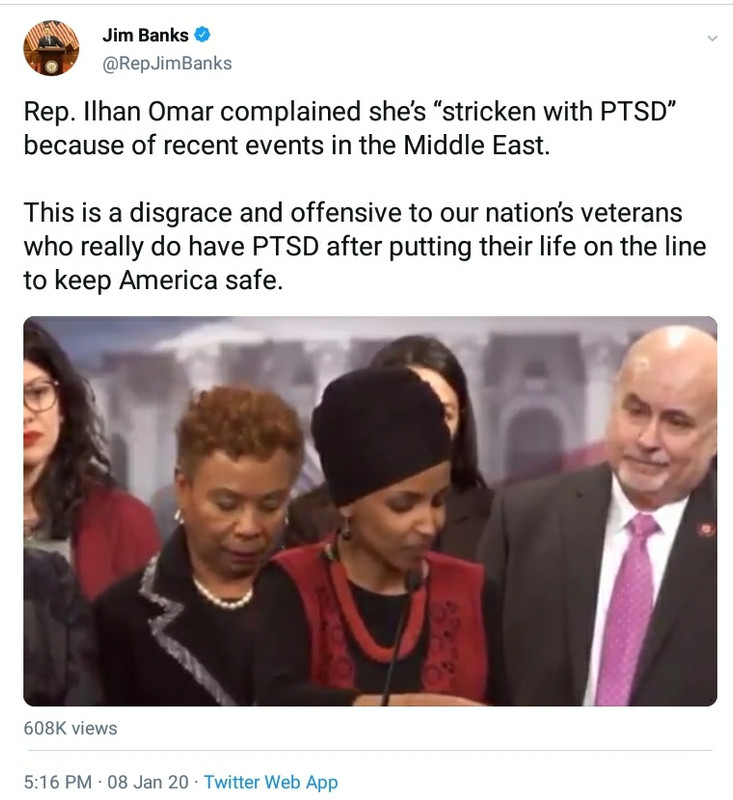

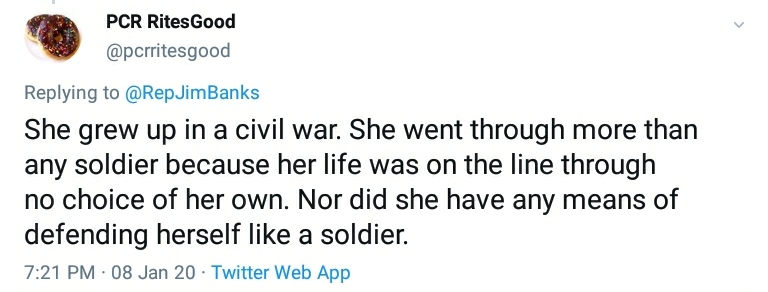
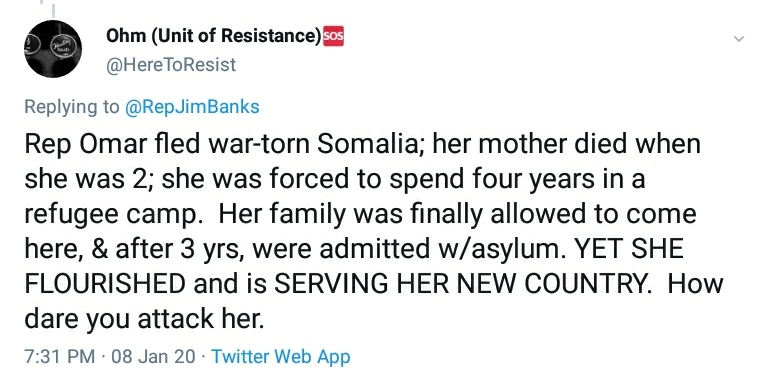
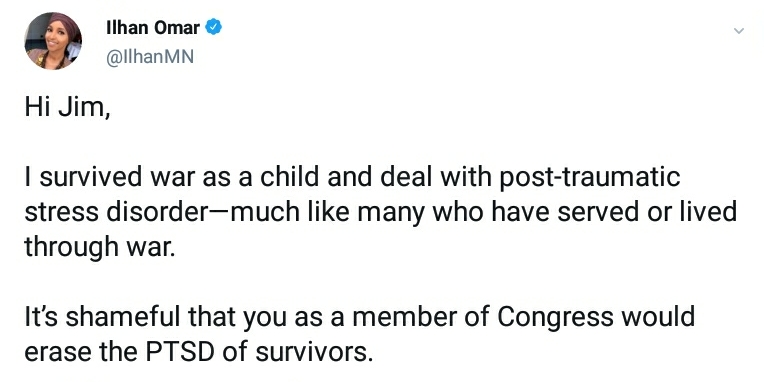
8 Jan 2020 8:53 pm
You can't know that yet.crimsongulf » 08 Jan 2020 8:36 pm » wrote:Salami is dead, with barely any repercussions.Misty » 08 Jan 2020 8:22 pm » wrote:What did we win?
Iran has restarted it's nuclear program and our troops are so busy defending themselves, that they are no longer fighting ISIS.
P.S. Ballistic missiles are NOT fireworks.
Iran has proxy groups all over the Middle East.
I just read that two rockets hit the green zone in Iraq today.
Who is online
In total there are 2198 users online :: 11 registered, 12 bots, and 2175 guests
Registered users: Johnny You, *Roshambo, Blackvegetable, Buck Naked, jerra b, LowIQTrash, SouthernFried, Cannonpointer, Deezer Shoove, nefarious101, …..
Bots: NING, MicroMessenger, proximic, LCC, ADmantX, facebookexternalhit, Googlebot, Applebot, Mediapartners-Google, curl/7, CriteoBot, bingbot