Flying Monkeys

By Nobody
11 Mar 2011 1:42 pm in No Holds Barred Political Forum
21 Jan 2020 1:20 pm
Once again you ignore the fact that Sniffles has NEVER invoked Executive Privilege.Termin8tor » 21 Jan 2020 7:25 am » wrote:He is correct, wackjob. As legal experts have pointed out, most or all of Trump's claims would have been upheld by SCOTUS for Executive Privilege.Misty » 20 Jan 2020 7:49 pm » wrote:Look at this lying piece of ****.
He **** blocked Bolton and everyone else from testifying in the House hearings and now he says that Democrats didn't want them?
The lying and gaslighting never **** stops.
And even if he had, EP cannot be used to cover up a crime.
Read the United States v. Nixon, 418 U.S. 683 (1974) decision you moron.
After claiming EP, Nixon was ordered to turn over tape recordings and other subpoenaed materials to a federal district court.
21 Jan 2020 1:23 pm
Termin8tor » 21 Jan 2020 12:05 pm » wrote:I think George Conway is unhinged and mentally deranged........
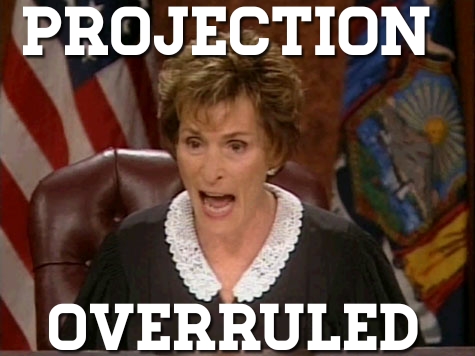

21 Jan 2020 1:29 pm

Once again GUTLESS COWARD and TRAITOR H8er refuses to ADDRESS the FACTS shoved in his face instead repeating STUPID LIES already DEBUNKED over and over and over and OVER in the vain desperate HOPE that by repeating LIES they will magically become true. H8er is a relentless LIAR who cares NOTHING about whether or not what he says is true as long as it is a narrative that helps his GOD Trump and weakens America since he is a TRAITOR
21 Jan 2020 1:32 pm
**** is NOT evidence.Termin8tor » 21 Jan 2020 1:22 pm » wrote:I back up my claims, psycho. You refuse to read the evidence.Misty » 21 Jan 2020 12:46 pm » wrote:I get literally sick to my stomach whenever you make false accusations like that against honest people and smear anyone who has refused to join the cult headed by Sniffles the Adderall Snorting Clown.
I never said that.Termin8tor » 21 Jan 2020 1:22 pm » wrote:And it's just **** hilarious that you're claiming half of voting Americans are part of a "cult."
First of all Trump got the votes of less than half of voting Americans.
And secondly, he has now lost a lot of those people.
Only 35% of the country are part of his cult.
I guess we'll see, won't we?Termin8tor » 21 Jan 2020 1:22 pm » wrote:The electorate will express their opinions in November, and they'll have to tighten your restraints again.
Trump has not expanded his base at all, and has lost some of the voters that he had in 2016.
You might be the one in the padded room on November 4th.
Proof?Termin8tor » 21 Jan 2020 1:22 pm » wrote:Say, did you know that almost half of people who attend Trump rallies are independents or Democrats?
No?
I thought so.
21 Jan 2020 1:35 pm
Says the dotard who spends half of his life in my FAKE REALITY thread.Termin8tor » 21 Jan 2020 1:26 pm » wrote:The leftist brownshirt is trying to protect her Fake Reality thread by censoring my posts.
21 Jan 2020 1:37 pm
Telling ridiculous LIES based on his FAKE REALITYMisty » 21 Jan 2020 1:35 pm » wrote: Says the dotard who spends half of his life in my FAKE REALITY thread.
21 Jan 2020 2:02 pm
I love when deplorables cite sources like the NYTimes, that they dismiss out of hand whenever a Lib uses them.Termin8tor » 21 Jan 2020 12:08 pm » wrote:Yeah, the NYTimes, Politico, Financial Times and many other sources that have reported it are all Russian bots, wackjob.Misty » 20 Jan 2020 4:47 pm » wrote:You must be Putin's favorite bot.
Weren't they part of that 3 and 1/2 year Russia Collusion hoax you're constantly whining about?
21 Jan 2020 2:08 pm
Not to mention how PITIFUL is it to claim the NYTimes reported the Russian Propaganda about the Ukraine since they DEBUNKED it as Russian Propaganda and a conspiracy theory over and over I guess to H8er DEBUNKING it as Russian propaganda is reporting itMisty » 21 Jan 2020 2:02 pm » wrote: I love when deplorables cite sources like the NYTimes, that they dismiss out of hand whenever a Lib uses them.
Weren't they part of that 3 and 1/2 year Russia Collusion hoax you're constantly whining about?
https://www.nytimes.com/aponline/2020/01/12/us/ap-us-election-2020-ukraine-conspiracy-theory-misinformation-1st.htmlhttps://www.nytimes.com/2019/12/03/opinion/ukraine-2016-election.htmlhttps://www.nytimes.com/aponline/2020/01/12/us/ap-us-election-2020-ukraine-conspiracy-theory-misinformation-1st.htmlhttps://www.nytimes.com/2019/12/03/us/politics/republicans-ukraine-conspiracy-theory.htmlhttps://www.nytimes.com/aponline/2020/01/12/us/ap-us-election-2020-ukraine-conspiracy-theory-misinformation-1st.htmlhttps://www.nytimes.com/2019/11/22/us/politics/ukraine-russia-interference.htmlhttps://www.nytimes.com/aponline/2020/01/12/us/ap-us-election-2020-ukraine-conspiracy-theory-misinformation-1st.htmlhttps://www.nytimes.com/aponline/2020/01/12/us/ap-us-election-2020-ukraine-conspiracy-theory-misinformation-abr.htmlhttps://www.nytimes.com/aponline/2020/01/12/us/ap-us-election-2020-ukraine-conspiracy-theory-misinformation-1st.htmlI could go on and on.
21 Jan 2020 2:40 pm
Clem graduated from the Joseph Goebbels School of Propaganda.solon » 21 Jan 2020 2:08 pm » wrote:Not to mention how PITIFUL is it to claim the NYTimes reported the Russian Propaganda about the Ukraine since they DEBUNKED it as Russian Propaganda and a conspiracy theory over and over I guess to H8er DEBUNKING it as Russian propaganda is reporting it.Misty » 21 Jan 2020 2:02 pm » wrote:I love when deplorables cite sources like the NYTimes, that they dismiss out of hand whenever a Lib uses them.
Weren't they part of that 3 and 1/2 year Russia Collusion hoax you're constantly whining about?
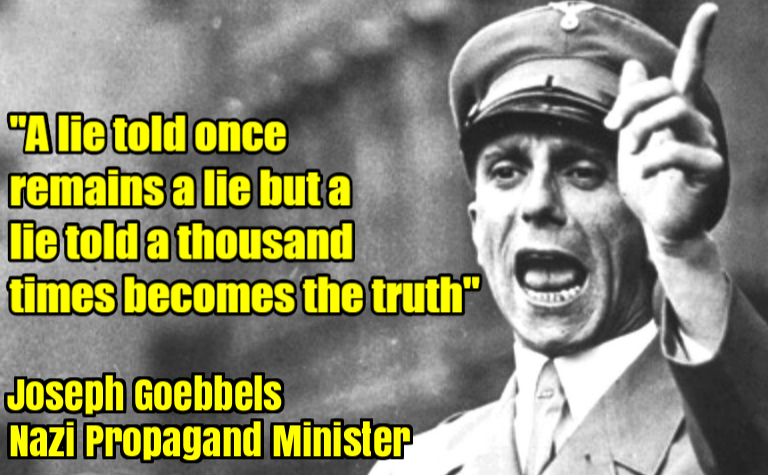
Thank you for that link.
I will use it against him.

21 Jan 2020 2:55 pm
Since GUTLESS COWARD and TRAITOR TerminalH8er makes ANOTHER POST where he AVOIDS and runs away SOBBING from the FACTS I have shoved in his FACE proving he is a LIAR several times he just repeats WORD FOR WORD another ridiculous and IGNORANT talking point from another thread so I will just cut and paste my answer to that RIDICULOUS claimTermin8tor » 21 Jan 2020 2:49 pm » wrote:
Only a MORON as STUPID and BRAINWASHED as H8er would claim Trump is keeping his promises. Where is that CHECK from Mexico to pay for that wall that he said in EVERY SINGLE rally he had? NEVER going to happen. When is that wall going to go across the ENTIRE southern border like the RNC promised? When will we get that cheaper better healthcare that will cover everybody? Not anywhere I can see. I could go on but anyone NOT a totally BRAINWASHED CULT member like H8er knows that Trump is a pathological LIAR and had NO intention of keeping all the ridiculous promises he made
You LIED and I PROVED it TRAITOR so ADDRESS THE FACTS or STFU you GUTLESS COWARD and TRAITOR
21 Jan 2020 3:09 pm
You mean the article that SAID AND I QUOTETermin8tor » 21 Jan 2020 2:59 pm » wrote:
I love how the liberal-left censors the truth, by cutting out the most important part of my post.
Why no comment on that, psycho?
Was Politico spreading Russian disinformation?

But they were far less concerted or centrally directed than Russia’s alleged hacking and dissemination of Democratic emails.
Russia’s effort was personally directed by Russian President Vladimir Putin, involved the country’s military and foreign intelligence services, according to U.S. intelligence officials. They reportedly briefed Trump last week on the possibility that Russian operatives might have compromising information on the president-elect. And at a Senate hearing last week on the hacking, Director of National Intelligence James Clapper said “I don't think we've ever encountered a more aggressive or direct campaign to interfere in our election process than we've seen in this case.”
There’s little evidence of such a top-down effort by Ukraine. Longtime observers suggest that the rampant corruption, factionalism and economic struggles plaguing the country — not to mention its ongoing strife with Russia — would render it unable to pull off an ambitious covert interference campaign in another country’s election. And President Petro Poroshenko’s administration, along with the Ukrainian Embassy in Washington, insists that Ukraine stayed neutral in the race.
You are PATHETIC STUPID and a TRAITOR and this is ONE MORE POST where you IGNORE the previous FACTS I SHOVED in your FACE that PROVE you are a LIAR so
ADDRESS the FACTS or STFU you pathetic GUTLESS COWARD and TRAITOR
21 Jan 2020 3:15 pm
Since you like the NYTimes as a source now, this is what they said on January 12, 2020.Termin8tor » 21 Jan 2020 12:08 pm » wrote:Yeah, the NYTimes, Politico, Financial Times and many other sources that have reported it are all Russian bots, wackjob.Misty » 20 Jan 2020 4:47 pm » wrote:You must be Putin's favorite bot.THE GAPING ASSHOLE SAID: Hey psycho, it wasn't my party that colluded with Ukraine to interfere in the 2016 election.
Those are the 'fictions' that you promote on this forum every **** day.As Trial Nears, Trump Keeps Discredited Ukraine Theory Alive
The theory took root in vague form well before Donald Trump laid claim to the White House in 2016.
The candidate’s close confidant tweeted about it.
His campaign chairman apparently spoke about it with people close to him.
What if, the idea went, it was actually Ukraine — and not Russia — that was interfering in the 2016 election?
Never mind that the notion has since been amplified by the president of Russia, the country that U.S. intelligence agencies unequivocally blame for interfering in that year's presidential race.
Or that Trump’s hand-picked FBI director and other American officials have said there’s no information pointing to Ukraine interference.
Or that 25 Russians stand charged in U.S. courts with hacking into Democratic emails and waging a covert social media campaign to sway American public opinion.
The Ukraine theory lives on.
Now, Trump’s request for Ukraine to investigate the matter and a political rival, former Vice President Joe Biden, is at the heart of a congressional inquiry that produced Trump’s impeachment by the House of Representatives.
A Senate trial is next.
The discredited theory, spread online by GOP allies in interviews and tweets, has been embraced by a president reluctant to acknowledge the reality of Russian election interference, and anxious to show he had reason to be suspicious of Ukraine as the U.S. withheld crucial military aid last year.
The effect: blurring the facts of the impeachment case for many Americans even before it reaches a trial that could begin with days.
Experts fear the strategy leaves the U.S. vulnerable to more misinformation campaigns in the 2020 election and signals to the Kremlin and other foreign actors that Americans are willing to cling to falsehoods.
A review by The Associated Press shows that the Ukraine conspiracy theory traces back to Trump’s 2016 campaign, was spread online and later advanced by Russian President Vladimir Putin weeks after his own country was blamed for election interference. Finally, some of America’s own elected leaders made it their truth.
“The ultimate victim is democracy, is the stability of our nation,” said Nina Jankowicz, a disinformation expert at the nonpartisan Wilson Center, a Washington, D.C. think tank.
THE SEEDS OF A CONSPIRACY THEORY
As U.S. authorities collected evidence in 2016 that Russia had hacked and stolen years of internal emails from the Democratic National Committee, Trump campaign chairman Paul Manafort, who had cultivated extensive business contacts in Ukraine and worked for pro-Russia politicians there, was privately pointing to another culprit.
Manafort, now serving more than seven years in prison for tax fraud and other crimes, suggested then that the attack was probably executed by Ukrainians, according to FBI notes from an April 2018 interview with Rick Gates, Manafort's former deputy.
The idea parroted that of Konstantin Kilimnik, a Manafort business associate who U.S. authorities have assessed has ties to Russian intelligence — an accusation Kilimnik has denied.
Trump aide Michael Flynn, who later became Trump's first national security adviser, was also adamant within the campaign that Russia couldn't have carried out the attack and that U.S. intelligence wouldn't be able to figure out who had done it, Gates recalled.
That skepticism was adopted by Trump himself, who memorably said during a presidential debate that “it could also be China.
It could also be lots of other people.
It also could be somebody sitting on their bed that weighs 400 pounds, OK?"
All the while, U.S. officials were agreeing with a private cybersecurity firm's findings that Russia was responsible, collecting evidence over the next several months that tied individual Russian military intelligence officers to the hack.
Adding to the FBI's concern was the revelation that a Trump campaign official had been told Russia had damaging information about Democratic opponent Hillary Clinton.
That July, the bureau opened an investigation into whether Russia and the Trump campaign were working together to sway the election in Trump's favor, a probe eventually taken over by special counsel Robert Mueller.
TWEETS, ARTICLES FUEL THEORY
As the Democrats' stolen emails were published online and the U.S. prepared to publicly blame the Kremlin for the hack, assertions surfaced online that Ukraine had meddled — directly or indirectly — in America's presidential campaign.
In September 2016 Roger Stone, a Trump confidant later convicted of lying about his efforts to get inside information about the emails, tweeted: “The only interference in the U.S. election is from Hillary’s friends in Ukraine."
His tweet highlighted a Financial Times article that said some Kyiv leaders were determined “to intervene, however indirectly" in the U.S. election.
The story detailed efforts by Serhiy Leshchenko, a former Ukrainian parliament member who opposed Trump's bid, to expose off-the-books payments Ukraine’s pro-Russia political party made to Manafort.
Leshchenko maintains his efforts don't amount to interference or compare to Russia's attack on the U.S. elections.
Still, some Republican legislators, including a few contacted by AP, pointed to the article as proof Ukraine interfered.
“I think both Russia and Ukraine meddled in the 2016 election,” Republican Sen. John Kennedy of Louisiana said last month on NBC's “Meet the Press.
He cited the Financial Times as evidence.
(Misty: Just like you did, huh Precious?)
As Trump prepared to take office, news reports fueled doubts online over the conclusion that Russia had hacked the DNC and Clinton campaign.
“So how and why are they so sure about hacking if they never even requested an examination of the computer servers?
What is going on?” Trump tweeted on Jan. 5, 2017, the day after a BuzzFeed News article reported that the FBI did not physically examine the Democrats’ servers to determine Russia infiltrated the system.
A Politico report days later documented a Democratic consultant’s opposition research in 2016 on Manafort's work in Ukraine — which included consulting on behalf of former leader Viktor Yanukovych, who fled to Russia after his 2014 ouster — and described efforts by some Ukraine leaders to support Clinton over Trump.
The article said there was not a top-down effort by Ukraine to push voters toward Clinton, but some Republicans now point to the reporting to support their allegations of meddling.
(Misty: Again, just like you cited Politico, right Precious?)
Citing the reports, anti-establishment conservative and liberal bloggers made misleading connections between Ukraine and CrowdStrike, the cybersecurity firm that traced the hack back to Russia.
This online speculation helped shape the Ukraine conspiracy theory, explained Thomas Rid, a Johns Hopkins University professor who has tracked disinformation campaigns and election interference.
“The landscape has made it so easy to find rabbit holes, and go down these rabbit holes, stay there, and find a community of like-minded amateur sleuths,” Rid said.
It is the nebulous nature of the Ukrainian theory, which leaves room for both direct and indirect interference, that has given the idea a shape-shifting, evolving form that has contributed to its staying power.
One online commentator misleadingly claimed CrowdStrike's co-founder Dmitri Alperovitch works for a think tank funded by a Ukrainian oligarch.
Alperovitch is a fellow at the Atlantic Council, which is based in the U.S. and receives funding from a variety of sources.
Donations from Ukrainian oligarch Victor Pinchuk’s foundation made up less than less than 1.6 percent of the group's funding in 2018.
“A great deal of misinformation relies upon serendipity or mere contacts,” said John Herbst, a former U.S. ambassador to Ukraine and director of the Atlantic Council’s Eurasia Center.
“Then they draw egregious or conspiratorial conclusions based on those contacts.”
Putin himself weighed in days after Trump moved into the White House, publicly claiming that Ukraine’s entire government had favored Clinton during the election and now needed to “improve relations” with the new Trump administration.
“As we all know, during the presidential campaign in the United States, the Ukrainian government adopted a unilateral position in favor of one candidate,” Putin said in at a news conference that February with Hungary’s prime minister.
Russian media used the comments to suggest it was Ukraine that had actually interfered.
It was convenient for the Kremlin to point the finger at another offender: Just weeks earlier, U.S. intelligence agencies had released a detailed report accusing Russia of interfering in the election on Trump's behalf.
And Ukraine was the perfect scapegoat, experts said.
The Kremlin has been locked in a 5-year war with Ukraine that has killed more than 14,000 people.
“It’s in Russia’s interest to amplify this issue because it wants Ukraine to be undermined,” said Jankowicz, the disinformation expert.
By April 2017, the Ukraine conspiracy theory was being promoted by Trump himself.
TRUMP TESTS NEW UKRAINE CONSPIRACY THEORY
Trump sat at the desk of the Oval Office, just shy of his first 100 days on the job, when he falsely suggested in an Associated Press interview that CrowdStrike had even stronger ties to Ukraine.
“I heard it’s owned by a very rich Ukrainian, that’s what I heard,” Trump said.
(Misty: You've said that too, haven't you Precious?)
“Why didn’t they allow the FBI in to investigate the server?
I mean, there is so many things that nobody writes about. It’s incredible.”
In fact, CrowdStrike is a publicly held California company founded by two U.S. citizens — George Kurtz and Alperovitch, who was born in Russia but spent his adult life in America.
The company has identified cyberattacks for major U.S. clients, including the U.S. government and the National Republican Congressional Committee.
And the FBI didn't need to physically take the DNC servers to confirm CrowdStrike's findings that Russia was behind the attack, said Eugene H. Spafford, a computer science professor at the Center for Education and Research in Information Assurance and Security at Purdue University who has assisted the bureau in cases.
Instead, CrowdStrike took digital images of the DNC system, capturing files, photos, emails, and browsing history to determine who had breached the system.
Copies of those images were then handed over to the FBI, the company says.
The process is similar to how investigators at a crime scene take photos that are later analyzed for clues.
A physical review of the DNC's data, a cloud system comprised of at least 140 servers, would have disabled the Democrats’ computer systems for days or weeks amid a presidential election, Spafford noted.
But Trump took his suspicions about the servers directly to Volodymyr Zelenskiy, the newly elected Ukraine president in the now-infamous July 25 phone call that resulted in articles of impeachment against Trump.
“I would like you to find out what happened with this whole situation with Ukraine, they say CrowdStrike ... I guess you have one of your wealthy people...” Trump asked of Zelenskiy on the call, according to notes released by the White House in September. “The server, they say Ukraine has it.”
Dozens of news outlets debunked Trump’s comments and continue to do so.
Finding itself at the center of the phone call, CrowdStrike then released a blog post rebuffing the president’s claims.
The president's own national security advisers rebutted the theory to no avail, former White House aide Fiona Hill told impeachment investigators in November.
“We spent a lot of time ... trying to refute this one in the first year of the administration,” Hill said.
THE THEORY ENDURES
Still, Trump keeps the notion alive.
He insisted to Fox News viewers in November that he only withheld aid from Ukraine to investigate corruption in the country, hinting once again that the DNC’s servers are hidden there.
“You know, the FBI has never gotten that server,” Trump said “That’s a big part of this whole thing. Why did they give it to a Ukrainian company?”
Parts of the Ukraine election interference theory have since been echoed by a growing number of the president’s Republican allies — some of whom concede that Russia interfered but posit that Ukraine did too.
Days before the president was impeached, Sen. Ted Cruz told NBC’s “Meet the Press” that there’s “considerable evidence" that Ukraine had interfered.
His office later said in a statement: “Russia’s campaign to interfere in our election was real and systematic. It is also true that Ukrainian officials did not want...then-candidate Trump to win.
The two are not mutually exclusive."
And as his Senate impeachment trial looms, Trump is pressing GOP senators to rally behind the discredited theory — asking his personal attorney Rudy Giuliani to brief them on his trip to eastern Europe, where he searched for witnesses and documents to back up the claims.
Videos documenting his trip have aired on the pro-Trump television network, One America News, and have been viewed thousands of times online.
Hill, a Russia expert, told Congress in November that political leaders who spread such falsehoods about Ukraine are only polarizing the U.S. further and turning it into an easy target for misinformation campaigns by such foreign powers as Russia.
She warned: “These fictions are harmful even if they are deployed for purely domestic political purposes.”
The three sources you cited have all been debunked.
Termin8tor » 21 Jan 2020 12:08 pm » wrote:Without your pre-written Talking Point Lies, you suck at lying.
21 Jan 2020 3:20 pm
Because you posted it.Termin8tor » 21 Jan 2020 3:03 pm » wrote:If you refuse to read it, how do you know it's ****?Misty » 21 Jan 2020 1:32 pm » wrote:**** is NOT evidence.THE GAPING ASSHOLE SAID: I back up my claims, psycho. You refuse to read the evidence.
21 Jan 2020 3:33 pm
The Politico article that you keep squealing about said there was NOT a top-down effort by Ukraine to push voters toward Clinton.Termin8tor » 21 Jan 2020 2:59 pm » wrote:Was Politico spreading Russian disinformation?
But dishonest idiots like you keep pointing to that article to support their allegations of meddling.
Since you suddenly like Politico so much, read this:
Two top officials who served on President Donald Trump’s National Security Council staff testified that they had seen no evidence that the Ukraine government interfered in the 2016 election, contradicting a claim the president has made in public and private.
The former officials, Fiona Hill and Lt. Col. Alexander Vindman, were responding to questions from House impeachment investigators, who released transcripts of their depositions on Friday.
The testimony undercuts a conspiracy theory that has been pushed by Rudy Giuliani, the president’s personal lawyer, as he sought to upend the intelligence community’s conclusion that Russia sought to help Trump defeat Hillary Clinton in 2016.
According to Giuliani, Ukrainian officials conspired with the Clinton campaign and the Democratic National Committee to help boost the Democratic nominee’s campaign and damage Trump’s candidacy.
No evidence has emerged to support that idea.
In his testimony, Vindman said there was no “factual basis” for such claims.
“I am, frankly, unaware of any authoritative basis for Ukranian interference in 2016 elections, based on my knowledge,” he said.
Hill went further, telling lawmakers she had no reason to believe that the intelligence community’s assessment was wrong or that Ukraine interfered in the 2016 election, though she clarified that she was referring only to the government in Kyiv.
Hill appeared frustrated by repeated questions from the Republicans’ lead counsel about a POLITICO article from January 2017 , which said a Ukrainian-American working for the DNC had met up with top officials at the Ukrainian embassy to discuss Trump campaign chairman Paul Manafort’s ties to Russia.
“It is a fiction that the Ukrainian government was launching an effort to upend our election, to mess with our Democratic systems,” Hill testified.
https://www.politico.com/news/2019/11/0 ... ony-068095
21 Jan 2020 3:39 pm
You're the one who just used them as a source you **** idiot.Termin8tor » 21 Jan 2020 3:23 pm » wrote:Hey psycho, the NYTimes played a huge role in the Russian Collusion Hoax.
They are actively covering up the biggest abuse of power in US history.
Yet you expect me to accept their ****?
Imbecile.
I don't think that you are handling this impeachment trial very well.
You seem especially hysterical today.
I guess that's because Adam Schiff is eviscerating the Republicans.
Go take your meds, put a damp cloth on your forehead and take a little nap.
21 Jan 2020 6:18 pm
Schiff is laying out a great case, and the Republicans have no defense.
Schiff mauls Cipollone on impeachment trial’s first day.
White House counsel Pat Cipollone and a crew of several other lawyers for the president arrived for their first day of the trial, apparently expecting things to start off slowly with sleepy arguments over the rules for the trial. Opening arguments were not expected until Wednesday.
Cipollone was granted an hour to speak a few minutes after Chief Justice John Roberts entered the Senate chamber and the trial began in earnest.
He used only three of those minutes.
He spoke in a halting voice, and he said little of substance, simply asserting that Trump “has done absolutely nothing wrong.”
And then he sat down, yielding the floor to the lead House impeachment manager, Rep. Adam Schiff, D-Calif.
Schiff ambushed Cipollone and Trump’s team of lawyers, launching immediately into a passionate, comprehensive, and piercing set of arguments about why the House impeached the president in December for withholding $400 million in military aid to Ukraine to pressure its government to announce an investigation into a political rival, former vice president Joe Biden.
Early in what ended up being a 50-minute presentation by Schiff, the mood in the Senate chamber was sedate.
Sen. Tom Cotton, R-Ark., held up his watch in front of his face, winding it to the correct time.
But it quickly became apparent that Schiff was not there merely to argue about the rules, but that he intended to take the Senate, and the nation, on a 360-degree tour of the case for impeachment at a moment when public attention was at one of its highest points.
Schiff warned the chamber that the assertion by Trump’s lawyers that he could not be impeached even if the House were able to prove its case “makes him a monarch,” the very thing America’s founders wrote the Constitution to prevent against.
“Our system of checks and balances will be broken.
Our presidents will be accountable to no one,” if the Senate does not conduct a fair trial which hears from witnesses and includes White House documents, Schiff said.
And Schiff appealed to the 53 Republican senators to go against Senate Majority Leader Mitch McConnell, R-Ky., who is aiming to prevent the trial from hearing from witnesses and demanding White House documents until the trial is effectively over.
“It’s completely backwards. Trial first, then evidence,” Schiff said.
Later he referred to this process as “***-backwards.”
He told the Republican senators that their votes Tuesday — on whether to grant a request by Democrats to hear from witnesses and to subpoena White House documents at the beginning of the trial rather than toward the end — were just as important as their votes on whether Trump is guilty or innocent of the charges brought against him by the House: one for abuse of power, and a second for obstructing Congress.
“They say Leader McConnell is a very good vote-counter. Nonetheless, I hope he is wrong,” Schiff said, referring to reports that McConnell had 51 Republican votes to approve rules that put off witnesses and documents until after opening arguments. Schiff asserted that “the opening statements are the trial.”
“You have all now sworn an oath,” Schiff told the senators. “That oath binds you.”
As Schiff spoke, Republican senators began to fidget.
Sen. James Risch, R-Idaho, chewed on a pen.
Sen. Lindsey Graham, R-S.C., picked at his right pinkie cuticle.
A Senate Republican aide seated next to Sen. John Thune, R-S.D., was visibly flushed, his face a brilliant shade of red.
He and Laura Dove, a top aide to McConnell, began furiously scribbling notes on their legal pads.
Cipollone, who was seated at a table to Schiff’s left, facing the Republican senators, flipped through a black binder, while another Trump attorney seated to his left, Jay Sekulow, wrote down notes.
By this point, Schiff was making his way through the precedents of impeachment trials through American history, drawing on the record of the 1868 Senate trial of President Andrew Johnson, and on the records of impeachment trials of federal judges, to drive home his point that the “standard” for impeachment trials is to hear from witnesses and to require relevant documentation.
“The president must not be allowed to mislead you,” Schiff told the Senate.
“The truth will come out. The question is will it come out now?”
When Schiff relented, Justice Roberts noted to Cipollone that he had 57 minutes available.
The president’s lawyer sent Sekulow, an outside lawyer for Trump who heads the American Center for Law and Justice, up to respond.
Sekulow spoke with a big, booming voice, and immediately began ripping into Schiff, attacking him and the House impeachment inquiry process that Schiff presided over as Chairman of the House Intelligence Committee.
But Sekulow’s arguments were jumbled, disconnected from one another, and sometimes completely inaccurate, such as his statement that Schiff was arguing that the president cannot claim executive privilege.
Sekulow did not actually address most of Schiff’s arguments, choosing rather to complain about Democratic animus for Trump and about actions taken by the FBI in investigating the Trump campaign after the 2016 presidential campaign.
As for the actual arguments over impeachment, Sekulow said merely that he and Trump’s legal team would make their case “in the days ahead.”
Cipollone then got up and spoke for several minutes, and in contrast to his earlier presentation, he was louder and more bombastic this time, referring to Schiff’s arguments repeatedly as “ridiculous” and slamming the lectern with his right index finger.
“It’s very difficult to sit there and listen to Mr. Schiff,” Cipollone said. “It’s too much to listen to almost.”
But Cipollone, too, relied more on attacking Schiff and his leadership of the inquiry — also with false statements — than he did on responding to substantive arguments.
Cippolone said “not even Mr. Schiff’s Republican colleagues were allowed” into the impeachment inquiry depositions.
This was untrue, since over 100 Republican members of the House were allowed into the depositions.
“So what are we doing here?” Cipollone said.
He was referring to the trial, but could have just as well been referring to himself and his legal team.
Schiff responded with a point-by-point rebuttal of Cipollone’s grab bag of arguments.
To the argument that the House should have gone through the courts to obtain documents and witnesses blocked by the White House, Schiff pointed out that Trump’s lawyers were arguing in a case involving the former White House counsel, Don McGahn, that the House is not entitled to those items through the courts.
To the argument that a former White House adviser, Charles Kupperman, has said he cannot speak to Congress because of national security concerns, Schiff pointed out that John Bolton, Trump’s former national security adviser and Kupperman’s former boss, has said there is no need to go to court and that he will testify if called by the Senate.
Schiff also suggested to the senators that when Cipollone and Sekulow attacked him, they should ask themselves what Trump’s lawyers were trying to distract from, and “why don’t they have a better argument to make on the merits?”
“I’ll tell you why we’re here,” Schiff said, rattling off once again the basic facts of the case against the president.
Senate Minority Leader Chuck Schumer, D-N.Y., proposed an amendment to the rules to subpoena documents from the White House. Rep. Zoe Lofgren, D-Calif., who was a congressional staffer during the 1974 congressional impeachment proceedings against President Nixon, argued for 40 minutes in favor of the amendment.
Patrick F. Philbin, a Cipollone deputy in the White House counsel’s office, spoke for 15 minutes against the amendment.
Schiff closed out the first round of skirmishes with under 10 minutes of what were essentially closing arguments. “We are ready to call our witnesses. The question is will you let us?” he told the Senate.
“Don’t blind yourself to the evidence,” Schiff said.
There was a sign, at that moment, that Schiff’s forcefulness and litigator’s skill might not have been enough to offset the partisan view that some Republican senators have of him, due to his prominence on cable TV and in some of the more political skirmishes over the past few years on the House Intelligence Committee.
Schiff said, “I yield back.”
Sen. Pat Roberts, R-Kan., said loud enough to be heard in the press gallery, “thank you,” and flashed an irritated look.
Graham, the South Carolina Republican and a close ally of Trump’s, looked over at Roberts and laughed.
Moments later, McConnell moved to “table,” or squash, the Schumer amendment.
There was some suspense in the chamber, but there were no surprises.
Every Republican senator voted against Schumer’s proposal, and every Democrat voted for it.
A handful of additional votes on subsequent Schumer amendments were expected to play out in a similar fashion into the evening.
It was likely that McConnell had proposed the hardline package that he revealed Monday night as a way of negotiating with the Republican senators who have said they are open to calling witnesses and subpoenaing documents.
These Republicans might have been persuaded by Schiff’s arguments, but likely had already promised the Republican leader their support after he softened the rules.
But Sen. Susan Collins, R-Maine, who is one of those moderate Republicans and who is also up for reelection this fall, immediately sent a statement to the press after her vote for McConnell’s rules package.
“While I need to hear the case argued and the questions answered, I anticipate that I would conclude that having additional information would be helpful.
It is likely that I would support a motion to subpoena witnesses at that point in the trial just as I did in 1999,” Collins said.
Schiff’s rhetoric could not counter McConnell’s behind the scenes maneuvering on the first day of the trial, but the Democratic impeachment manager did his best to lay a foundation for the vote to come, likely next week, on whether to allow witnesses and to subpoena documents in the trial.
https://news.yahoo.com/amphtml/schiff-m ... ssion=true
21 Jan 2020 7:57 pm


21 Jan 2020 8:06 pm

21 Jan 2020 8:19 pm
They lied.Trump’s lawyers began the impeachment trial with a blizzard of lies.
The opening statements from Trump’s lawyers indicated that gaslighting will be a key part of their strategy.
The opening debate of the Senate impeachment trial on Tuesday afternoon was supposed to be merely about the trial rules.
But in quintessential Trump fashion, members of President Donald Trump’s legal team wasted no time telling a number of lies before things really got going.
Though getting facts wrong might be somewhat understandable in the context of extemporaneous statements, these falsehoods came in the context of prepared remarks read by White House counsel Pat Cipollone and personal Trump attorney Jay Sekulow.
And if that approach is indicative of how the rest of the trial will go, casual watchers may end up with an understanding of the timeline of Trump’s Ukraine dealings and ensuing impeachment that’s at odds with reality.
Falsehood No. 1: Trump’s lawyers claimed Republicans didn’t have access to key information during House impeachment inquiry.
As part of an effort to portray the process that resulted in Trump’s impeachment and trial as a partisan witch hunt, Cipollone at one point complained that “not even [House Intelligence Committee chair and impeachment manager Adam] Schiff’s Republican colleagues were allowed into the SCIF,” or Sensitive Compartmented Information Facility, which is basically the secure facility that members of Congress used to review classified information pertinent to the impeachment inquiry.
This assertion is not true. As a number of reporters pointed out, not only did Republicans involved in the impeachment have access to the SCIF, but many of them also used it.
As part of a made-for-TV stunt, House Republicans did storm a SCIF in October to protest Democrats not providing Republicans who were otherwise uninvolved in the impeachment inquiry with access to closed-door depositions.
However, Republicans who are members of one of the three committees involved in the process had the same access as Democrats.
When the trial resumed after a brief pause following Sekulow and Cipollone’s statements, Schiff noted that Cipollone made “a false statement” about access to the SCIF, saying, “I will tell you this: He’s mistaken. He’s mistaken ... [Republicans] got the same time we did.”
Falsehood No. 2: Schiff “manufactured” Trump’s comments during the July Zelensky call.
That wasn’t the only easily refutable lie pushed by Cipollone during his opening remarks on Tuesday.
At another point, he alluded to Schiff’s paraphrasing of Trump’s now-infamous July phone call with Ukrainian President Volodymyr Zelensky: “When Mr. Schiff saw that his allegations [about Trump abusing his power] were false, and he knew it anyway, what did he do?
He went to the House and he manufactured a fraudulent version of that phone call.
He read it to the American people, and he didn’t tell them it was a complete fake,” Cipollone said, echoing a talking point that Trump has incessantly used to discredit the impeachment inquiry.
But those comments are a gross mischaracterization of what Schiff did.
Schiff paraphrased the phone call for dramatic effect and made clear he was doing so.
Though his decision may have been ill-advised — I criticized it at the time because it provided Trump with grist to diminish the proceedings — in no way did Schiff try and bamboozle people into believing Trump said things he didn’t say.
And there was more.
Cipollone wasn’t alone in getting basic stuff wrong.
Sekulow’s opening statement, which served as an extended complaint about process, also managed to mangle the facts (he claimed House Democrats delayed transmitting the articles of impeachment to the Senate for a longer period of time than was actually the case) and mischaracterize the impeachment process (he said Trump “was denied the right to cross-examine witnesses” during the House inquiry when, in fact, the White House declined to do so).
Although most of the impeachment trial is still to come, the way Cipollone and Sekulow handled their opening statements suggests the White House is confident they have little to worry about from Senate Republicans, some of whom have indicated they would like to hear from witnesses as part of the process.
Facts, not to mention a sense of shame, will not get in the way of the narrative that Trump’s legal team intends to push about Democrats having it out for the president — and Cipollone and Sekulow are betting that the American people will either agree with them or won’t be able to see through it.
Schiff made clear that he also views Cipollone and Sekulow’s false claims as part of a strategy.
After the aforementioned break, he mentioned a number of the lies and said, “Why don’t they have a better argument to make on the merits?”
When Schiff wrapped up, the next speaker — Rep. Zoe Lofgren (D-CA) — also devoted some time to debunking the false claims Cipollone made about both Trump and executive privilege.
What else is new?
That's what they do.
21 Jan 2020 10:16 pm

If he is impeached for obstruction of congress, he could appeal on the grounds that he had executive privilege, and there was no obstruction. Obama flicked buggers at the house and told them to lick his ball sweat.Misty » 21 Jan 2020 11:37 am » wrote: Well here's one.
One of the crimes that Roger Stone was convicted of.
Obstruction of Congress.
18 U.S. Code § 1505.
Obstruction of proceedings before departments, agencies, and committees.
https://www.law.cornell.edu/uscode/text/18/1505
In 1998, both Lindsey Graham and Dershowitz said that you don't actually have to commit a crime to be impeached.
Both have now done a complete 180.
The precedent for presidents telling congress to go **** itself is both well established and well deserved. Congress is a bunch of lazy, buck-passing, duty-ducking **** whose last energetic act was the murder of my father.
When you complain, ur friends roll their eyes and ur enemies rejoice
"Because I SAY I am" is a todler's tantrum, not "science"
You cannot betray me - only yourself, to me.
Who cuts off your dick is not a friend
An opinion you won't defend is not your own
Humanity's Law of the Jungle: Survival NOT of the fittest, but of the tribe
When peeing in the pool, stand on the edge
If gender is not sex, why should a gender claim change what sex you shower with?
"Because I SAY I am" is a todler's tantrum, not "science"
You cannot betray me - only yourself, to me.
Who cuts off your dick is not a friend
An opinion you won't defend is not your own
Humanity's Law of the Jungle: Survival NOT of the fittest, but of the tribe
When peeing in the pool, stand on the edge
If gender is not sex, why should a gender claim change what sex you shower with?
Who is online
In total there are 3945 users online :: 16 registered, 17 bots, and 3912 guests
Registered users: *Roshambo, Blackvegetable, Zeets2, Buffalo, ROG62, RebelGator, ConservativeWave, FJB, Beekeeper, LowIQTrash, SouthernFried, Cannonpointer, Deezer Shoove, nefarious101, sole, Huey
Bots: LCC, okhttp, NING, SiteLockSpider, DuckDuckBot, YandexBot, DuckDuckGo, proximic, CriteoBot, facebookexternalhit, Bolt, ADmantX, Googlebot, Mediapartners-Google, Applebot, curl/7, bingbot