Liberal Forum
Archive
‹
Political Chat Rooms
‹
No Holds Barred Political Forum
‹
Here’s why the ICJ ruling on genocide is a crushing defeat for Israel
Here’s why the ICJ ruling on genocide is a crushing defeat for Israel

By Majik
28 Jan 2024 10:55 am in No Holds Barred Political Forum
4 posts • Page 1 of 1
28 Jan 2024 10:55 am

Here’s why the ICJ ruling on genocide is a crushing defeat for Israel
The Hague-based court has not called for a ceasefire and has no enforcement power, but its decision is resounding nonetheless
 By Tarik Cyril Amar, a historian from Germany working at Koç University, Istanbul, on Russia, Ukraine, and Eastern Europe, the history of World War II, the cultural Cold War, and the politics of memory
@tarikcyrilamartarikcyrilamar.substack.comtarikcyrilamar.com
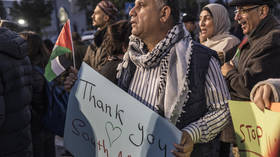
People celebrate a landmark 'genocide' case filed by South Africa against Israel at the International Court of Justice, in the occupied West Bank city of Ramallah on January 10, 2024The United Nations’ International Court of Justice (ICJ) has ruled on the case that South Africa had brought against Israel. Those who mistake realism for simplistic materialism – the ‘it’s only there if I can touch it’ variety – may underestimate the significance of that ruling. In reality, it is historic. Here’s why.First, and most importantly, the court has ruled against Israel. South Africa’s well-prepared brief was over 80 pages long, closely argued, and very detailed. But its gist was simple: It had applied to the ICJ – which only handles cases between countries, not individuals – to find that Israel is committing genocide in its attack on Gaza, thereby infringing on fundamental Palestinian rights as brutally as possible.Such a finding always takes years. For now, at this preliminary stage, South Africa’s immediate request was for the judges to decide that there is, in essence, a high enough probability of this genocide taking place to do two things: First, continue the case (instead of dismissing it) and, secondly, issue an injunction (in this context called “preliminary measures”) ordering Israel to abstain from its genocidal actions so that the rights of its Palestinian victims receive due protection.The court has done both, with a majority of 15 to 2. One of the two judges dissenting is from Israel. Those voting, in effect, against Tel Aviv included even the president of the court, from the US, and the judge from Germany, a country that has taken a self-damagingly pro-Israel line. As to the Israeli pseudo-argument claiming ‘self-defense,’ the court rightly ignored it. (Occupying powers simply do not have that right regarding occupied entities under international law. Period.)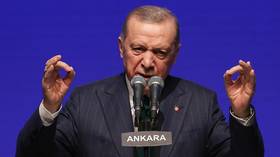
Read more
Türkiye applauds Israel genocide ruling
The Hague-based court has not called for a ceasefire and has no enforcement power, but its decision is resounding nonetheless
By Tarik Cyril Amar, a historian from Germany working at Koç University, Istanbul, on Russia, Ukraine, and Eastern Europe, the history of World War II, the cultural Cold War, and the politics of memory@tarikcyrilamartarikcyrilamar.substack.comtarikcyrilamar.com
People celebrate a landmark 'genocide' case filed by South Africa against Israel at the International Court of Justice, in the occupied West Bank city of Ramallah on January 10, 2024The United Nations’ International Court of Justice (ICJ) has ruled on the case that South Africa had brought against Israel. Those who mistake realism for simplistic materialism – the ‘it’s only there if I can touch it’ variety – may underestimate the significance of that ruling. In reality, it is historic. Here’s why.First, and most importantly, the court has ruled against Israel. South Africa’s well-prepared brief was over 80 pages long, closely argued, and very detailed. But its gist was simple: It had applied to the ICJ – which only handles cases between countries, not individuals – to find that Israel is committing genocide in its attack on Gaza, thereby infringing on fundamental Palestinian rights as brutally as possible.Such a finding always takes years. For now, at this preliminary stage, South Africa’s immediate request was for the judges to decide that there is, in essence, a high enough probability of this genocide taking place to do two things: First, continue the case (instead of dismissing it) and, secondly, issue an injunction (in this context called “preliminary measures”) ordering Israel to abstain from its genocidal actions so that the rights of its Palestinian victims receive due protection.The court has done both, with a majority of 15 to 2. One of the two judges dissenting is from Israel. Those voting, in effect, against Tel Aviv included even the president of the court, from the US, and the judge from Germany, a country that has taken a self-damagingly pro-Israel line. As to the Israeli pseudo-argument claiming ‘self-defense,’ the court rightly ignored it. (Occupying powers simply do not have that right regarding occupied entities under international law. Period.)
Read more
Türkiye applauds Israel genocide ruling
28 Jan 2024 10:56 am
This is a clear victory for South Africa – and for Palestine and Palestinians – and a crushing defeat for Israel, as even Kenneth Roth, head of thoroughly pro-Western Human Rights Watch recognizes with commendable clarity.It is true that the ICJ has no power to enforce its rulings. That would have to come through the UN Security Council, where the US is protecting Israel, whatever it does, including genocide. Yet there are good reasons why representatives of Israel have reacted with statements so arrogant and aggressive that they only further damage Tel Aviv’s badly damaged international standingrime Minister Benjamin Netanyahu, for instance, has displayed his legal nihilism by dismissing as “outrageous” the closely reasoned finding of the court, at which Israel had every opportunity to argue its case. Israel’s far-right Minister of National Security, convicted racist and terrorist supporter Itamar Ben-Gvir, has derided the ruling with an X post simply saying: “Hague schmague.”And, of course, as always, everyone not toeing Israel’s line is smeared as an “antisemite”: The ICJ is now joining the UN, the World Health Organization and, by now, almost everyone and everything outside the ideological bubble of Zionism on the list of those slandered in this manner. (One side effect of this rampant abuse of the accusation of antisemitism is, of course, that soon it won’t be taken seriously anymore, even when it should. And we will have Israel to thank for that.)Notwithstanding the ICJ’s lack of an army to compel Tel Aviv to obey the law, these outbursts of rage betray great fear. You may ask why. After all, the one thing the ICJ did not do was order a ceasefire. Some commenters have focused on that fact, to argue – gleefully on the side of Israel and its allies, with great disappointment on the side of Israel’s victims, opponents, and critics – that this vitiates the ruling.
Read more
Israel rejects ‘outrageous’ ICJ genocide rulingThey are wrong. As, for instance, the Palestinian legal expert Nimer Sultany (based at the London School of Oriental and Asian Studies) has explained, a direct ceasefire order was always unlikely. There are several reasons for that: The ICJ cannot issue such an order to Hamas, so issuing one to Israel alone would have been difficult in principle and, by the way, would also have provided ammunition for Israeli propaganda. Since only the UN Security Council could give teeth to the ICJ’s ruling, trying to decree such a one-sided ceasefire would have made it easier for the US to sabotage the Council by discrediting the court’s ruling as biased. Although it was consistent for South Africa to ask for a ceasefire at the ICJ, the best institution to order one is still the Security Council. And it is plausible to interpret the specific demands that the ICJ has made of Israel as practicable only under an official or de-facto ceasefire. Indeed, Arab countries are now, it seems, gearing up to take that position and use the court’s ruling to demand a ceasefire at the Security Council. This may very well fail again, but even that failure will serve to weaken the position of the US, Israel’s vital sponsor.Beyond the issue of the ceasefire, there are other – and, from an Israeli perspective, probably more frightening – factors.
Read more
Israel rejects ‘outrageous’ ICJ genocide rulingThey are wrong. As, for instance, the Palestinian legal expert Nimer Sultany (based at the London School of Oriental and Asian Studies) has explained, a direct ceasefire order was always unlikely. There are several reasons for that: The ICJ cannot issue such an order to Hamas, so issuing one to Israel alone would have been difficult in principle and, by the way, would also have provided ammunition for Israeli propaganda. Since only the UN Security Council could give teeth to the ICJ’s ruling, trying to decree such a one-sided ceasefire would have made it easier for the US to sabotage the Council by discrediting the court’s ruling as biased. Although it was consistent for South Africa to ask for a ceasefire at the ICJ, the best institution to order one is still the Security Council. And it is plausible to interpret the specific demands that the ICJ has made of Israel as practicable only under an official or de-facto ceasefire. Indeed, Arab countries are now, it seems, gearing up to take that position and use the court’s ruling to demand a ceasefire at the Security Council. This may very well fail again, but even that failure will serve to weaken the position of the US, Israel’s vital sponsor.Beyond the issue of the ceasefire, there are other – and, from an Israeli perspective, probably more frightening – factors.
28 Jan 2024 10:57 am
For even if the US keeps shielding Israel, this is a bigger world. Western governments and politicians that have supported Tel Aviv unconditionally – with arms, diplomatic and public-relations cover, and by repressing Israel’s critics – will feel a chill: The UN Genocide Convention and the Rome Statute don’t just condemn perpetrating a genocide but also not preventing or being complicit in one.With the ICJ now having confirmed at the very least that genocide is probable enough to merit a case and require immediate action, Joe Biden, Antony Blinken, Ursula von der Leyen, Olaf Scholz, Rishi Sunak, Keir Starmer, Emmanuel Macron, Annalena Baerbock, to name only a few, should start worrying: While the ICJ does not go after individuals, the International Criminal Court (ICC) does. Despite dragging its feet as much as it could, it is now especially likely to be compelled to open a full-fledged investigation.In addition, cases can also be brought under national jurisdictions. All of this will take years. But it could end very badly for hubris-addled Western politicians who never imagined that such charges could escape their control (where they serve as politicized tools to go after African leaders and geopolitical opponents) and become their very own, potentially life-changing problem. In sum, the cost of siding with Israel has gone up. Not all but most politicians are solid opportunists. Tel Aviv will find it harder to mobilize its friends.It is true that some Western governments and leaders, for instance, Canada or Rishi Sunak, have hurried to show their disdain for international law by attacking the ICJ’s ruling. But there’s an element of desperate bravado, of whistling in a darkening forest. And there’s a Catch-22 as well: Because, the more representatives of the West display their arrogance, the more they alienate the world. They may think that they are relieving Israel’s isolation. In reality, they are joining it on its downward trajectory: They are showing, once again, that their touted “rules-based order” is the opposite of the equal rule of international law for all.
Read more
Read more
28 Jan 2024 10:57 am
Our aim was to highlight the plight of Palestine – South African FMNon-Western powers like China and Russia that have long resisted the hypocrisy of that ‘rules-based order’ and are not complicit in Israel’s atrocities, are earning global good will and geopolitical advantage. Hence, their positions and strategy will be confirmed by the ICJ ruling. This, as well, will weaken Israel further in the international arena.If the world is bigger than the US or the West, it also contains much more than politics in the narrow sense of the term. In the realm of narratives, this is also a harsh setback for Israel and its supporters: Those who arrogantly dismissed the South African case as baseless or “a mockery,” for instance in The Economist, are now paying with their credibility. Their value as weapons in Israel’s struggle for global public opinion is reduced.Last but not least, the domains of politics and narratives intersect, of course, with that of war: It is inevitable that those fighting Israel with arms will feel encouraged, and rightly so. For forces such as the Palestinian Resistance, the Ansar Allah (Houthi) movement de facto ruling Yemen, Hezbollah, and Iran, this ICJ ruling coincides with Israel’s military failure in Gaza: For while its troops have massacred civilians (and obsessively recorded proud evidence of their crimes that is now coming to haunt them), they are far from either “eradicating Hamas” (the putative war aim) or freeing the hostages by force. Seeing that Israel’s international isolation is getting worse, its opponents will have ever less reason to give up.This, in short, was a great setback for Israel. Its political model, combining apartheid, militarism, and a might-makes-right outlook, is not ‘working’ any longer, not even on its own terms. The future is not predictable. That Israel will be in worsening trouble is.
https://www.rt.com/news/591389-israel-i ... de-defeat/
https://www.rt.com/news/591389-israel-i ... de-defeat/
4 posts • Page 1 of 1
Who is online
In total there are 3627 users online :: 18 registered, 14 bots, and 3595 guests
Registered users: Johnny You, *Roshambo, Blackvegetable, Buck Naked, Buffalo, ROG62, RebelGator, ConservativeWave, Beekeeper, jerra b, LowIQTrash, SouthernFried, Deezer Shoove, nefarious101, sole, Huey, Fuelman, im2
Bots: ADmantX, DuckDuckBot, proximic, TTD-Content, SiteLockSpider, MicroMessenger, CriteoBot, YandexBot, curl/7, Googlebot, Mediapartners-Google, bingbot, Applebot, facebookexternalhit