Liberal Forum
Archive
‹
Political Chat Rooms
‹
No Holds Barred Political Forum
‹
The LGBTQ+ club scene is in crisis - can anything be done to save it?
The LGBTQ+ club scene is in crisis - can anything be done to save it?
By Punch
9 Feb 2024 8:36 pm in No Holds Barred Political Forum
11 posts • Page 1 of 1
9 Feb 2024 8:36 pm


Are the days of Glory Holes in the restroom gone forever?
The LGBTQ+ club scene is in crisis - can anything be done to save it? (msn.com)
From their height of popularity in the 80s, there has been a dramatic drop of 40% in the number of LGBTQ+ nightclubs.
Not only is this disastrous for a community that relies on them for support and safety, but it’s also sad for a community with such a rich history.
In America, the New Orleans Cafe Lafitte in Exile gay bar, situated in the city’s French Quarter is said to date back to 1933 and claims to be the oldest operating LGBTQ+ venue in the country.
In fact, all across the globe, from Australia to Argentina, there are cities boasting their own gay villages and nightlife – so why is the LGBTQ+ scene under threat?
Yet, in the face of such a decline in historic LGBTQ+ venues over recent years, it’s becoming more apparent that these spaces are vital. With anti-LGBTQ+ hate crimes on the rise, the importance of safe spaces for queer people cannot be underestimated.
Many LGBTQ+ people need and want to express themselves in ways in which they can only do in venues surrounded by like-minded people,’ he says.
He adds that LGBTQ+ venues are key because they also make significant social and financial contributions to society, with people from all over the world relying on them as familiar territory when travelling.
‘Without us, many people would have very limited social expression and much poorer mental health as a result of quashing parts of their identities. LGBTQ+ venues offer so much more than just somewhere to drink and dance.’
‘It can be exhausting to be in non-queer spaces and try to moderate your behaviour and your body language so as not to draw negative attention to yourself – am I standing in an effeminate way? Are my wrists too flappy? Can anyone hear my voice? Having access to queer spaces gave me the chance to just be myself.’
‘These venues are a safe space for everyone and a space we must protect.’

9 Feb 2024 10:27 pm
“It can be exhausting to be in non-queer spaces and try to moderate your behaviour and your body language so as not to draw negative attention to yourself – am I standing in an effeminate way? Are my wrists too flappy? Can anyone hear my voice? Having access to queer spaces gave me the chance to just be myself.’
‘These venues are a safe space for everyone and a space we must protect.’
——__________________________________
TOO **** BAD.
Here’s advice: Get your hormone levels checked, idiot. Your testosterone is way too low and your estradiol level is way too high.
‘These venues are a safe space for everyone and a space we must protect.’
——__________________________________
TOO **** BAD.
Here’s advice: Get your hormone levels checked, idiot. Your testosterone is way too low and your estradiol level is way too high.
9 Feb 2024 10:55 pm

How many Gay Clubs were put out of business by Liberal Governors during the pandemic...?
Does your article mention that...?
The Queer Nation could always join forces and homestead the North East corner of Alaska....!!!
Establish a new, discrimination free and very safe megopolis from the ground up...!!
They could call it...... Sodom & Gonorrhea...!!!
10 Feb 2024 4:47 am
Liberace | Whatever Turns You On | Rowan & Martin's Laugh-In - YouTubeTempest62 » 09 Feb 2024, 11:27 pm » wrote: ↑ “It can be exhausting to be in non-queer spaces and try to moderate your behaviour and your body language so as not to draw negative attention to yourself – am I standing in an effeminate way? Are my wrists too flappy? Can anyone hear my voice? Having access to queer spaces gave me the chance to just be myself.’
‘These venues are a safe space for everyone and a space we must protect.’
——__________________________________
TOO **** BAD.
Here’s advice: Get your hormone levels checked, idiot. Your testosterone is way too low and your estradiol level is way too high.
10 Feb 2024 5:48 am

So, basically they place themselves as "society" because they have venues with like-minded people.Punch » 09 Feb 2024, 9:36 pm » wrote: ↑
Many LGBTQ+ people need and want to express themselves in ways in which they can only do in venues surrounded by like-minded people,’ he says.
He adds that LGBTQ+ venues are key because they also make significant social and financial contributions to society, with people from all over the world relying on them as familiar territory when travelling.
Then say that they, themselves, are a benefit to society.
Meaning themselves, while pretending they mean society as a whole.
All I see is a needy outlook. Always seeking. That's what kind of creeps people out IMO.
Please seat yourself.

I like the very things you hate.
I like the very things you hate.

10 Feb 2024 5:55 am
POM is sorely disappointed in this news.
Where is he going to spend his "vacation" this year?
Back on stage in Tijuana with his donkey again?
Where is he going to spend his "vacation" this year?
Back on stage in Tijuana with his donkey again?
10 Feb 2024 12:19 pm
DeezerShoove » 10 Feb 2024, 6:48 am » wrote: ↑ So, basically they place themselves as "society" because they have venues with like-minded people.
Then say that they, themselves, are a benefit to society.
Meaning themselves, while pretending they mean society as a whole.
All I see is a needy outlook. Always seeking. That's what kind of creeps people out IMO.
When you live in a gay bubble, you think everyone is gay.

10 Feb 2024 12:30 pm
10 Feb 2024 8:13 pm
Everyone is susceptible to the effect.
Many old phrases and sayings are directly about that.
"Walk a mile in the others guy's shoe."
"Association breeds assimilation."
"Read the room."
etc...
The clever among us realize it and try to see more than one side.
Doesn't mean we necessarily change our views but at least acknowledging there is more than just your own is a step in the right direction.
For instance, I try. But I'm usually already right.

Please seat yourself.
I like the very things you hate.
I like the very things you hate.

10 Feb 2024 8:18 pm
Like I said in my OP today...trannies are now a protected class.
in NEW MURICA.
A tranny admitted and pled guilty to molesting an infant.
$5,000 bond and no jailtime. 6 mos probation. About like stealing a candy bar.
Murica is SICK and BROKEN.
in NEW MURICA.
A tranny admitted and pled guilty to molesting an infant.
$5,000 bond and no jailtime. 6 mos probation. About like stealing a candy bar.
Murica is SICK and BROKEN.
11 Feb 2024 3:52 am
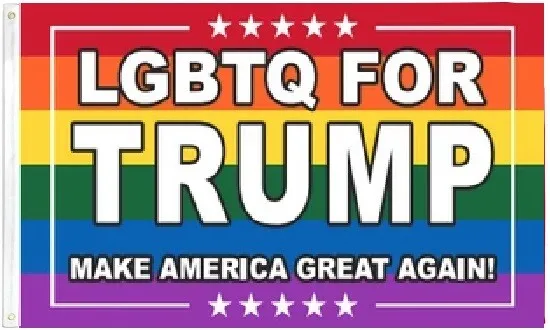
Not if trump has a say. He has fond memories of working at glory holes.Punch » 09 Feb 2024, 9:36 pm » wrote: ↑
Are the days of Glory Holes in the restroom gone forever?
The LGBTQ+ club scene is in crisis - can anything be done to save it? (msn.com)
‘These venues are a safe space for everyone and a space we must protect.’
11 posts • Page 1 of 1
Who is online
In total there are 3926 users online :: 7 registered, 14 bots, and 3905 guests
Registered users: Blackvegetable, Buck Naked, ROG62, RebelGator, SouthernFried, Cannonpointer, Deezer Shoove
Bots: CensysInspect, proximic, Mojeek, MicroMessenger, DuckDuckBot, ADmantX, CriteoBot, facebookexternalhit, YandexBot, Googlebot, curl/7, Mediapartners-Google, Applebot, bingbot