Liberal Forum
Archive
‹
Political Chat Rooms
‹
No Holds Barred Political Forum
‹
Republican Populism..
Republican Populism..

By Blackvegetable
1 Oct 2024 8:10 am in No Holds Barred Political Forum
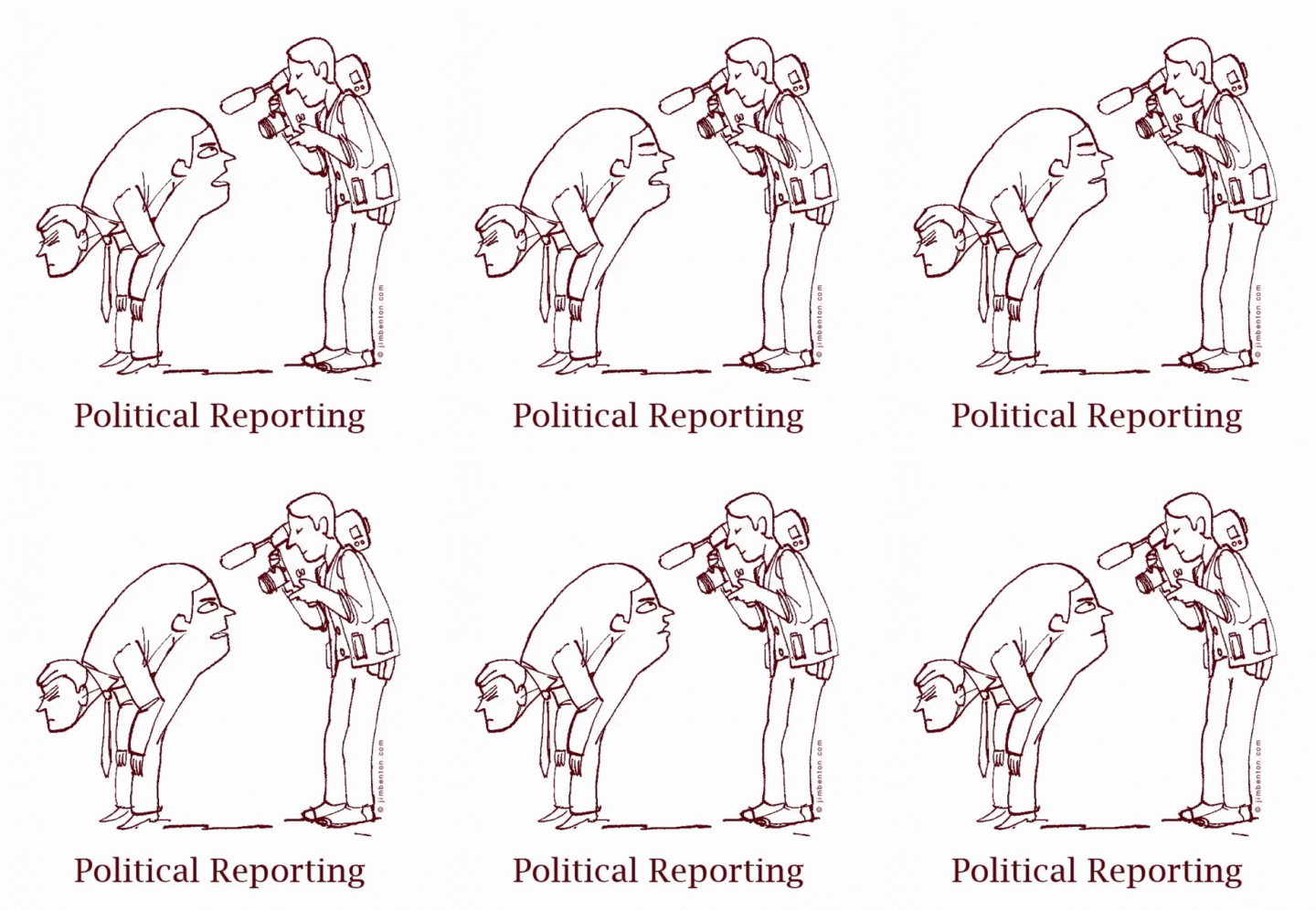
3 Oct 2024 11:48 am

And there it is. Pretending that you don't know. More repetitiveness.Blackvegetable » 03 Oct 2024, 11:42 am » wrote: ↑ I think you should just post your rule on questions, and gaze covetously at these calves.
You are proving your narcissism every day. Here is more evidence of why you said this ^^^
Pretending that you don't know something...like the rule.
1. Maintaining ControlPretending ignorance allows narcissists to control the flow of conversation and interactions. By acting as if they don’t know or understand something, they can derail conversations, frustrate others, or change the subject. This tactic keeps others off-balance and prevents them from confronting the narcissist directly or holding them accountable.
2. Avoiding AccountabilityNarcissists often pretend not to know something to evade responsibility or avoid taking action. If they admit knowledge of a situation or problem, they might be expected to address it or take responsibility for their actions. By feigning ignorance, they sidestep these obligations and maintain the illusion that they are not at fault.
3. Minimizing Effort or ResponsibilityFeigning ignorance can be a way for narcissists to avoid putting in effort or dealing with tasks they don’t want to do. If they pretend not to know how to handle something, others are more likely to take over, relieving the narcissist of the burden. This tactic is often used to shift work or responsibility onto others while the narcissist benefits from their effort.
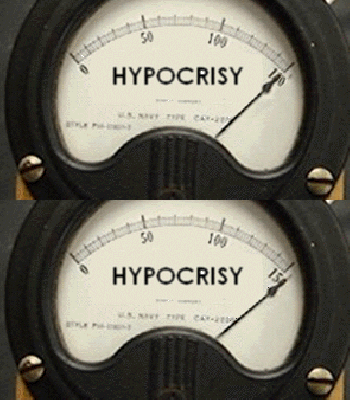
Blackvegatble's hypcorisy summed up in one post:
[/size]
Blackvegetable » 7 minutes ago » wrote: ↑7 minutes ago
Very simple questions...
From which you are running...
Blackvegetable » 7 minutes ago » wrote: ↑7 minutes ago
Very simple questions...
From which you are running...

3 Oct 2024 12:33 pm

Reread the post you quoted. It's an Op-Ed.Blackvegetable » 03 Oct 2024, 7:22 am » wrote: ↑ QED, kitten....
I recall being obliged to take on your **** math and to reverse engineer your poor reading skills...
With which of the facts do you take issue?
3 Oct 2024 12:36 pm
Address the question.
3 Oct 2024 12:40 pm
**** You!!! It's an Op-Ed. Unless video is provided of Trump saying the things you assert is in the Op-Ed (I don't pay to read web sites) you just need to refer to my post related to Op-Ed pieces.
3 Oct 2024 12:44 pm
Demanding others to answer again. He refuses to answer questions himself. Pure narcissism.
Here is the evidence:
In Summary:Sources:
- Control and power: Demanding answers keeps them in control of the conversation, while refusing to answer ensures they remain dominant.
- Avoiding accountability: They evade responsibility and scrutiny by deflecting questions directed at them.
- Projection of superiority: They believe they are above the need to explain or justify themselves.
- Manipulation and gaslighting: They use questions to manipulate and destabilize others, while avoiding answers to stay unchallenged.
- Fear of vulnerability: Answering questions would expose them to criticism or rejection, so they avoid it.
- Dodging responsibility: Refusing to answer helps them avoid acknowledging mistakes or wrongdoing.
- “The Narcissist You Know” by Joseph Burgo discusses the manipulative behaviors of narcissists, including how they demand answers while avoiding accountability themselves.
- Dr. Ramani Durvasula, a clinical psychologist, explains how narcissists use deflection and control tactics in conversations, demanding answers while refusing to provide any, in her books and videos.
- “Why Is It Always About You?” by Sandy Hotchkiss outlines how narcissists create double standards by expecting others to justify themselves while avoiding any personal accountability.
@Cannonpointer as you both can see, Veghead is no fan of all of these mirrors I am throwing in front of him. Introspection is a fatal enemy to the narcissist. Think of it like sunlight to a vampire.
He may very well kill himself. But who cares?
Blackvegatble's hypcorisy summed up in one post:
[/size]
Blackvegetable » 7 minutes ago » wrote: ↑7 minutes ago
Very simple questions...
From which you are running...
Blackvegetable » 7 minutes ago » wrote: ↑7 minutes ago
Very simple questions...
From which you are running...

3 Oct 2024 12:47 pm

NO QUESTIONS, DICK SUCKER!
https://i.pinimg.com/originals/be/10/d3 ... fb8c8a.gif

When you complain, ur friends roll their eyes and ur enemies rejoice
"Because I SAY I am" is a todler's tantrum, not "science"
You cannot betray me - only yourself, to me.
Who cuts off your dick is not a friend
An opinion you won't defend is not your own
Humanity's Law of the Jungle: Survival NOT of the fittest, but of the tribe
When peeing in the pool, stand on the edge
If gender is not sex, why should a gender claim change what sex you shower with?
"Because I SAY I am" is a todler's tantrum, not "science"
You cannot betray me - only yourself, to me.
Who cuts off your dick is not a friend
An opinion you won't defend is not your own
Humanity's Law of the Jungle: Survival NOT of the fittest, but of the tribe
When peeing in the pool, stand on the edge
If gender is not sex, why should a gender claim change what sex you shower with?
3 Oct 2024 12:48 pm
NO QUESTIONS, DICK SUCKER!
https://i.pinimg.com/originals/be/10/d3 ... fb8c8a.gif
When you complain, ur friends roll their eyes and ur enemies rejoice
"Because I SAY I am" is a todler's tantrum, not "science"
You cannot betray me - only yourself, to me.
Who cuts off your dick is not a friend
An opinion you won't defend is not your own
Humanity's Law of the Jungle: Survival NOT of the fittest, but of the tribe
When peeing in the pool, stand on the edge
If gender is not sex, why should a gender claim change what sex you shower with?
"Because I SAY I am" is a todler's tantrum, not "science"
You cannot betray me - only yourself, to me.
Who cuts off your dick is not a friend
An opinion you won't defend is not your own
Humanity's Law of the Jungle: Survival NOT of the fittest, but of the tribe
When peeing in the pool, stand on the edge
If gender is not sex, why should a gender claim change what sex you shower with?
3 Oct 2024 12:48 pm
NO QUESTIONS, DICK SUCKER!
https://i.pinimg.com/originals/be/10/d3 ... fb8c8a.gif
When you complain, ur friends roll their eyes and ur enemies rejoice
"Because I SAY I am" is a todler's tantrum, not "science"
You cannot betray me - only yourself, to me.
Who cuts off your dick is not a friend
An opinion you won't defend is not your own
Humanity's Law of the Jungle: Survival NOT of the fittest, but of the tribe
When peeing in the pool, stand on the edge
If gender is not sex, why should a gender claim change what sex you shower with?
"Because I SAY I am" is a todler's tantrum, not "science"
You cannot betray me - only yourself, to me.
Who cuts off your dick is not a friend
An opinion you won't defend is not your own
Humanity's Law of the Jungle: Survival NOT of the fittest, but of the tribe
When peeing in the pool, stand on the edge
If gender is not sex, why should a gender claim change what sex you shower with?
3 Oct 2024 12:49 pm
NO QUESTIONS, DICK SUCKER!
https://i.pinimg.com/originals/be/10/d3 ... fb8c8a.gif
When you complain, ur friends roll their eyes and ur enemies rejoice
"Because I SAY I am" is a todler's tantrum, not "science"
You cannot betray me - only yourself, to me.
Who cuts off your dick is not a friend
An opinion you won't defend is not your own
Humanity's Law of the Jungle: Survival NOT of the fittest, but of the tribe
When peeing in the pool, stand on the edge
If gender is not sex, why should a gender claim change what sex you shower with?
"Because I SAY I am" is a todler's tantrum, not "science"
You cannot betray me - only yourself, to me.
Who cuts off your dick is not a friend
An opinion you won't defend is not your own
Humanity's Law of the Jungle: Survival NOT of the fittest, but of the tribe
When peeing in the pool, stand on the edge
If gender is not sex, why should a gender claim change what sex you shower with?
3 Oct 2024 12:49 pm
NO QUESTIONS, DICK SUCKER!
https://i.pinimg.com/originals/be/10/d3 ... fb8c8a.gif
When you complain, ur friends roll their eyes and ur enemies rejoice
"Because I SAY I am" is a todler's tantrum, not "science"
You cannot betray me - only yourself, to me.
Who cuts off your dick is not a friend
An opinion you won't defend is not your own
Humanity's Law of the Jungle: Survival NOT of the fittest, but of the tribe
When peeing in the pool, stand on the edge
If gender is not sex, why should a gender claim change what sex you shower with?
"Because I SAY I am" is a todler's tantrum, not "science"
You cannot betray me - only yourself, to me.
Who cuts off your dick is not a friend
An opinion you won't defend is not your own
Humanity's Law of the Jungle: Survival NOT of the fittest, but of the tribe
When peeing in the pool, stand on the edge
If gender is not sex, why should a gender claim change what sex you shower with?
3 Oct 2024 12:49 pm
NO QUESTIONS, DICK SUCKER!Blackvegetable » 03 Oct 2024, 11:32 am » wrote: ↑
Take another look....have you ever seen calves like these on a mortal?
https://i.pinimg.com/originals/be/10/d3 ... fb8c8a.gif
When you complain, ur friends roll their eyes and ur enemies rejoice
"Because I SAY I am" is a todler's tantrum, not "science"
You cannot betray me - only yourself, to me.
Who cuts off your dick is not a friend
An opinion you won't defend is not your own
Humanity's Law of the Jungle: Survival NOT of the fittest, but of the tribe
When peeing in the pool, stand on the edge
If gender is not sex, why should a gender claim change what sex you shower with?
"Because I SAY I am" is a todler's tantrum, not "science"
You cannot betray me - only yourself, to me.
Who cuts off your dick is not a friend
An opinion you won't defend is not your own
Humanity's Law of the Jungle: Survival NOT of the fittest, but of the tribe
When peeing in the pool, stand on the edge
If gender is not sex, why should a gender claim change what sex you shower with?
3 Oct 2024 12:50 pm
NO QUESTIONS, DICK SUCKER!
https://i.pinimg.com/originals/be/10/d3 ... fb8c8a.gif
When you complain, ur friends roll their eyes and ur enemies rejoice
"Because I SAY I am" is a todler's tantrum, not "science"
You cannot betray me - only yourself, to me.
Who cuts off your dick is not a friend
An opinion you won't defend is not your own
Humanity's Law of the Jungle: Survival NOT of the fittest, but of the tribe
When peeing in the pool, stand on the edge
If gender is not sex, why should a gender claim change what sex you shower with?
"Because I SAY I am" is a todler's tantrum, not "science"
You cannot betray me - only yourself, to me.
Who cuts off your dick is not a friend
An opinion you won't defend is not your own
Humanity's Law of the Jungle: Survival NOT of the fittest, but of the tribe
When peeing in the pool, stand on the edge
If gender is not sex, why should a gender claim change what sex you shower with?
3 Oct 2024 12:50 pm
NO QUESTIONS, DICK SUCKER!
https://i.pinimg.com/originals/be/10/d3 ... fb8c8a.gif
When you complain, ur friends roll their eyes and ur enemies rejoice
"Because I SAY I am" is a todler's tantrum, not "science"
You cannot betray me - only yourself, to me.
Who cuts off your dick is not a friend
An opinion you won't defend is not your own
Humanity's Law of the Jungle: Survival NOT of the fittest, but of the tribe
When peeing in the pool, stand on the edge
If gender is not sex, why should a gender claim change what sex you shower with?
"Because I SAY I am" is a todler's tantrum, not "science"
You cannot betray me - only yourself, to me.
Who cuts off your dick is not a friend
An opinion you won't defend is not your own
Humanity's Law of the Jungle: Survival NOT of the fittest, but of the tribe
When peeing in the pool, stand on the edge
If gender is not sex, why should a gender claim change what sex you shower with?
3 Oct 2024 12:50 pm
NO QUESTIONS, DICK SUCKER!Blackvegetable » 03 Oct 2024, 11:42 am » wrote: ↑ I think you should just post your rule on questions,
https://i.pinimg.com/originals/be/10/d3 ... fb8c8a.gif
When you complain, ur friends roll their eyes and ur enemies rejoice
"Because I SAY I am" is a todler's tantrum, not "science"
You cannot betray me - only yourself, to me.
Who cuts off your dick is not a friend
An opinion you won't defend is not your own
Humanity's Law of the Jungle: Survival NOT of the fittest, but of the tribe
When peeing in the pool, stand on the edge
If gender is not sex, why should a gender claim change what sex you shower with?
"Because I SAY I am" is a todler's tantrum, not "science"
You cannot betray me - only yourself, to me.
Who cuts off your dick is not a friend
An opinion you won't defend is not your own
Humanity's Law of the Jungle: Survival NOT of the fittest, but of the tribe
When peeing in the pool, stand on the edge
If gender is not sex, why should a gender claim change what sex you shower with?
3 Oct 2024 12:51 pm
NO QUESTIONS, DICK SUCKER!
https://i.pinimg.com/originals/be/10/d3 ... fb8c8a.gif
When you complain, ur friends roll their eyes and ur enemies rejoice
"Because I SAY I am" is a todler's tantrum, not "science"
You cannot betray me - only yourself, to me.
Who cuts off your dick is not a friend
An opinion you won't defend is not your own
Humanity's Law of the Jungle: Survival NOT of the fittest, but of the tribe
When peeing in the pool, stand on the edge
If gender is not sex, why should a gender claim change what sex you shower with?
"Because I SAY I am" is a todler's tantrum, not "science"
You cannot betray me - only yourself, to me.
Who cuts off your dick is not a friend
An opinion you won't defend is not your own
Humanity's Law of the Jungle: Survival NOT of the fittest, but of the tribe
When peeing in the pool, stand on the edge
If gender is not sex, why should a gender claim change what sex you shower with?
3 Oct 2024 12:51 pm
NO QUESTIONS, DICK SUCKER!
https://i.pinimg.com/originals/be/10/d3 ... fb8c8a.gif
When you complain, ur friends roll their eyes and ur enemies rejoice
"Because I SAY I am" is a todler's tantrum, not "science"
You cannot betray me - only yourself, to me.
Who cuts off your dick is not a friend
An opinion you won't defend is not your own
Humanity's Law of the Jungle: Survival NOT of the fittest, but of the tribe
When peeing in the pool, stand on the edge
If gender is not sex, why should a gender claim change what sex you shower with?
"Because I SAY I am" is a todler's tantrum, not "science"
You cannot betray me - only yourself, to me.
Who cuts off your dick is not a friend
An opinion you won't defend is not your own
Humanity's Law of the Jungle: Survival NOT of the fittest, but of the tribe
When peeing in the pool, stand on the edge
If gender is not sex, why should a gender claim change what sex you shower with?
3 Oct 2024 12:53 pm
NO QUESTIONS, DICK SUCKER!
https://i.pinimg.com/originals/be/10/d3 ... fb8c8a.gif
When you complain, ur friends roll their eyes and ur enemies rejoice
"Because I SAY I am" is a todler's tantrum, not "science"
You cannot betray me - only yourself, to me.
Who cuts off your dick is not a friend
An opinion you won't defend is not your own
Humanity's Law of the Jungle: Survival NOT of the fittest, but of the tribe
When peeing in the pool, stand on the edge
If gender is not sex, why should a gender claim change what sex you shower with?
"Because I SAY I am" is a todler's tantrum, not "science"
You cannot betray me - only yourself, to me.
Who cuts off your dick is not a friend
An opinion you won't defend is not your own
Humanity's Law of the Jungle: Survival NOT of the fittest, but of the tribe
When peeing in the pool, stand on the edge
If gender is not sex, why should a gender claim change what sex you shower with?
3 Oct 2024 12:53 pm
NO QUESTIONS, DICK SUCKER!
https://i.pinimg.com/originals/be/10/d3 ... fb8c8a.gif
When you complain, ur friends roll their eyes and ur enemies rejoice
"Because I SAY I am" is a todler's tantrum, not "science"
You cannot betray me - only yourself, to me.
Who cuts off your dick is not a friend
An opinion you won't defend is not your own
Humanity's Law of the Jungle: Survival NOT of the fittest, but of the tribe
When peeing in the pool, stand on the edge
If gender is not sex, why should a gender claim change what sex you shower with?
"Because I SAY I am" is a todler's tantrum, not "science"
You cannot betray me - only yourself, to me.
Who cuts off your dick is not a friend
An opinion you won't defend is not your own
Humanity's Law of the Jungle: Survival NOT of the fittest, but of the tribe
When peeing in the pool, stand on the edge
If gender is not sex, why should a gender claim change what sex you shower with?
3 Oct 2024 1:00 pm
Address the question.ConsRule » 03 Oct 2024, 12:40 pm » wrote: ↑ **** You!!! It's an Op-Ed. Unless video is provided of Trump saying the things you assert is in the Op-Ed (I don't pay to read web sites) you just need to refer to my post related to Op-Ed pieces.
You long ago demonstrated your disinterest in the OP, in favoring a complaint about two facts.
3 Oct 2024 1:02 pm
The narcissists continues with his power struggle.
Demanding others to answer again. He refuses to answer questions himself. Pure narcissism.
Here is the evidence:
In Summary:Sources:
- Control and power: Demanding answers keeps them in control of the conversation, while refusing to answer ensures they remain dominant.
- Avoiding accountability: They evade responsibility and scrutiny by deflecting questions directed at them.
- Projection of superiority: They believe they are above the need to explain or justify themselves.
- Manipulation and gaslighting: They use questions to manipulate and destabilize others, while avoiding answers to stay unchallenged.
- Fear of vulnerability: Answering questions would expose them to criticism or rejection, so they avoid it.
- Dodging responsibility: Refusing to answer helps them avoid acknowledging mistakes or wrongdoing.
- “The Narcissist You Know” by Joseph Burgo discusses the manipulative behaviors of narcissists, including how they demand answers while avoiding accountability themselves.
- Dr. Ramani Durvasula, a clinical psychologist, explains how narcissists use deflection and control tactics in conversations, demanding answers while refusing to provide any, in her books and videos.
- “Why Is It Always About You?” by Sandy Hotchkiss outlines how narcissists create double standards by expecting others to justify themselves while avoiding any personal accountability.
Blackvegatble's hypcorisy summed up in one post:
[/size]
Blackvegetable » 7 minutes ago » wrote: ↑7 minutes ago
Very simple questions...
From which you are running...
Blackvegetable » 7 minutes ago » wrote: ↑7 minutes ago
Very simple questions...
From which you are running...
Who is online
In total there are 6576 users online :: 9 registered, 14 bots, and 6553 guests
Registered users: Buck Naked, ROG62, RebelGator, Beekeeper, Imperial Wizard, SouthernFried, nefarious101, sole, Huey
Bots: Mediatoolkitbot, CriteoBot, CensysInspect, proximic, SpiderLing, ADmantX, LCC, SiteLockSpider, Mediapartners-Google, Googlebot, facebookexternalhit, bingbot, Applebot, curl/7